The Way and the One
Apr. 29th, 2024 03:40 pm![[personal profile]](https://www.dreamwidth.org/img/silk/identity/user.png) readoldthings
readoldthings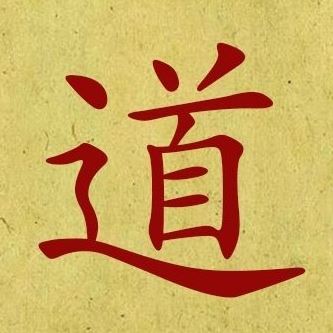
Born Before Heaven and Earth
Laozi said,
There is something, an undifferentiated whole, that was born before Heaven and Earth. It has only abstract images, no concrete form. It is deep, dark, silent, undefined; we do not hear its voice. Assigning a name to it, I call it the Way.
The foregoing is from an ancient Chinese scripture called the Wenzi, or Understanding the Mysteries. Wenzi, "Master Wen," was reputed to have been a student of the more famous Laozi, the author of the Tao Te Ching. These days, Modern Scholars have discovered that neither of these men existed, and could not have authored the texts attributed to them. Those of us who are not cursed with the intelligence of Modern Scholars are dumb enough to know that existence isn't limited to physical incarnation, nor authorship to an individual committing his thoughts to writing. That's beside the point, however.
Dionysius the Areopagite is another great sage whose existence has been rejected by Modern Scholars; indeed, one could say that Modernity itself begins in the rejection of Dionysius. Here is what he says about God, in his Mystical Theology:
We maintain that it is neither soul nor intellect; nor has it imagination, opinion reason or understanding; nor can it be expressed or conceived, since it is neither number nor order; nor greatness nor smallness; nor equality nor inequality; nor similarity nor dissimilarity; neither is it standing, nor moving, nor at rest; neither has it power nor is power, nor is light; neither does it live nor is it life; neither is it essence, nor eternity nor time; nor is it subject to intelligible contact; nor is it science nor truth, nor kingship nor wisdom; neither one nor oneness, nor godhead nor goodness; nor is it spirit according to our understanding, nor filiation, nor paternity; nor anything else known to us or to any other beings of the things that are or the things that are not; neither does anything that is know it as it is; nor does it know existing things according to existing knowledge; neither can the reason attain to it, nor name it, nor know it; neither is it darkness nor light, nor the false nor the true; nor can any affirmation or negation be applied to it, for although we may affirm or deny the things below it, we can neither affirm nor deny it, inasmuch as the all-perfect and unique Cause of all things transcends all affirmation, and the simple pre-eminence of Its absolute nature is outside of every negation- free from every limitation and beyond them all.
Dionysius elsewhere calls it the Divine Darkness, and he tells us:
By the unceasing and absolute renunciation of yourself and of all things you may be borne on high, through pure and entire self-abnegation, into the superessential Radiance of the Divine Darkness.
And Wenzi says,
It is so ungraspable and undefinable that it cannot be imagined; yet while it is undefinable and ungraspable, its function is unlimited. Profound and mysterious, it responds to evolution without form; successful and effective, it does not act in vain. It rolls up and rolls out with firmness and flexibility; it contracts and expands wityh darkness and light.
Wenzi and his master Laozi call it the Way; Dionysius and his predecessors call it God. Proclus and Plotinus will call it the One. Did Plato call it the One or God? Argue amongst yourselves. It's clear to me that these two great and nonexistent masters were discussing the same thing in very nearly the same words, but the name they give it differs. The name matters: Approaching it as One, approaching it as the Way, approaching it as God, and you will follow a different path to it. But I believe that when you arrive at it, or as close as you can get to It, all names will have long since fallen away.


no subject
Date: 2024-05-05 04:07 pm (UTC)Recently finished reading Aristotle's De Anima, and the Areopagitica, in conjunction. Still digesting.
no subject
Date: 2024-05-06 08:16 pm (UTC)That's a reading combo that will re-arrange your psyche, probably for good. I'll be interested in hearing your thoughts... for that matter, I'm probably due for a re-read of De Anima sometime soon.
no subject
Date: 2024-05-06 11:13 pm (UTC)The combo... is just crawling up one leg of the spider so I can crawl down another. I read De Anima so I could then read the Areopagitica and have some sense of who/what Dionysios was addressing (might go back at some point and read Plotinus just to fill it in further). And then Lossky talks about the Areopagitica, so... his Mystical Theology seemed the reasonable next stone to jump to. But once I've done with Lossky, I'm gonna try to go down the various other trees he's drawing from: Nazianzen, Maximos the Confessor, Gregory of Nyssa, Palamas, etc. Or might lose steam because it's not lent anymore ;)
Dunno that I have anything incisive to say about any of them-- they're all worth the read on their own accounts, but mostly I'm trying to sort out a few tangential and idiosyncratic personal questions through reading, and doubt my gleanings would be of much general interest. But I highly recommend the reading project to anybody so inclined. Highly profitable! And betweentimes one often forgets that reading old Greeks in modern translation is way easier than reading, say, Shakespeare.
no subject
Date: 2024-05-06 11:14 pm (UTC)no subject
Date: 2024-05-07 10:04 pm (UTC)no subject
Date: 2024-05-07 11:31 pm (UTC)"On general education it is said, 'The acquisition of sciences is termed education, as it is written of Moses, that he was learned in all the wisdom of the Egyptians. But it is of no small importance, with a view to man's sound condition, that he should not devote himself to any sciences whatsoever, but should become acquainted with the education which is most profitable. It has ere now happened that men who have spent their time in the study of geometry, the discovery of the Egyptians, or of astrology, the favorite pursuit of the Chaldeans, or have been addicted to the loftier natural philosophy which is concerned with figures and shadows, have looked with contempt on the education which is based upon the divine oracles. Numbers of students have been occupied with paltry rhetoric, and the solution of sophisms, the subject matter of all of which is the false and unreal. Even poetry is dependent for its existence on its myths. Rhetoric would not be but for craft in speech. Sophistics must have their fallacies. Many men for the sake of these pursuits have disregarded the knowledge of God, and have grown old in the search for the unreal. It is therefore necessary that we should have full knowledge of education, in order to choose the profitable, and to reject the unintelligent and injurious. Words of wisdom will be discerned by the attentive reader of the proverbs, who thence patiently extracts what is for his good."
It lacks the amusingly irritated tone of the bit I remember though. If I find it again I'll post it. He is not kind to the philosophers in the first installment of the Hexaemeron, for sure. He notes:
"The philosophers of Greece have made much ado to explain nature, and not one of their systems has remained firm and unshaken, each being overturned by its successor. It is vain to refute them; they are sufficient in themselves to destroy one another."
and
"...do not let any one compare with the inquisitive discussions of philosophers upon the heavens, the simple and inartificial character of the utterances of the Spirit; as the beauty of a chaste woman surpasses that of a harlot, so our arguments are superior to those of our opponents. They only seek to persuade by forced reasoning. With us the truth presents itself naked and without artifice. But why torment ourselves to refute the errors of philosophers, when it is sufficient to produce their mutually contradictory books, and, as quiet spectators, to watch the war?"
no subject
Date: 2024-05-07 11:33 pm (UTC)