I Introduction

The traditional Christian fast involves abstention from meat and meat-products, and very often also alcohol, for an extended period of time. The traditional fasts have multiple purposes and consequences, some of which are publicly acknowledged, others esoteric, secret, or officially denied.

In the first case, the fast is a method of training the Will and restraining the appetites. Now, the word "appetite" needs a bit of unpacking. In traditional usage, it doesn't refer merely to the desire for food. Appetite is, rather, one of the three parts of the soul; its Greek name is Epithymia. (The other two are Thymos, the spirit or energy, and Nous, which includes the thinking mind and the parts of the mind that extend above thought, into the heavenly realm.) Appetite or Epithymia includes all of the desires that arise from our bodily nature, whether for food, water, sleep or sex, or for less tangible goods such as power or social inclusion. These latter appetites are often ignored but are extremely important; just as the desire for food arises from the body, so the desire for inclusion in a group arises from being in a body, specifically, of a social primate.

Epithymia is not wrong or evil in and of itself, but it has its proper role and its proper purpose. Moreover, its tendency is to overwhelm the higher parts of our soul, including the reason, to control our behavior and drive us to actions that we do not choose and which are often harmful to us. Mastering our appetites is, therefore, the key to spiritual development; to be ruled by Epithymia is to be a beast in the form of a man. This insight is at the foundation of Western philosophy in all of its classical forms, whether Christian, Jewish, or Pagan.

The traditional fast has other purposes as well. The human body is made of meat, and it is the case that abstinence from meat can aid the mind in withdrawing from the body. This is why veganism is so strictly prescribed in those spiritual traditions which are particularly concerned with leaving the physical world by the fastest possible means, such as Chan Buddhism. In Christian thought, the world is not inherently bad or evil, only Fallen. The Christian, therefore, abstains from meat during particular seasons, in order to withdraw his gaze for a time from the material world, toward the Divine.

Abstinence from alcohol has a similarly practical purpose. The higher part of the mind, as we have said, is called the Nous, and at its summit it extends beyond the ordinary human soul and into the divine realm. The nous is sometimes, by Orthodox Christians, called the "eye of the soul," because its role is to perceive spiritual realities. The more the nous is clear, the more the soul is able to perceive the presence of God, the angels and saints, and the spiritual world generally.

Now, alcohol taken in even small amounts has a clouding effect upon the nous. This was well understood in ancient times, when it was very common for diviners to interpret messages from the gods by looking to dreams. The interpreters of dreams knew that those that occur under the influence of alcohol are unreliable. As Apollonius of Tyana explained to the King of India,

as a faculty of divination by means of dreams, which is the divinest and most godlike of human faculties, the soul detects the truth all the more easily when it is not muddied by wine, but accepts the message unstained and scans it carefully. Anyhow, the explainers of dreams and visions, those whom the poets call interpreters of dreams, will never undertake to explain any vision to anyone without having first asked the time when it was seen. For if it was at dawn and in the sleep of morning tide, they calculate its meaning on the assumption that the soul is then in a condition to divine soundly and healthily, because by then it has cleansed itself of the stains of wine. But if the vision was seen in the first sleep or at midnight, when the soul is still immersed in the lees of wine and muddied thereby, they decline to make any suggestions, and they are wise.
 
And so we see that in the traditional fast, the Christian takes steps both to withdraw his mind from the physical world and open it to the Spiritual. 

It is critical to note that fasting never takes place all on its own, or for its own sake. An Orthodox friend of mind shared on social media a meme that went, "Remember that if your Fast doesn't include prayer and almsgiving, it's just a diet." As fasting is to Epithymia, so almsgiving is to Thymos and prayer to Nous. Almsgiving purifies the Thymos, and directs its energy toward healing, rather than conflict. In the traditional way of looking at things, the strength of the Thymos ought to assist the Nous in governing the appetites, as the knights assist the king in governing the kingdom. Almsgiving at once mollifies the Thymos and divinizes it, by imitating the work of God Himself, who gives freely of Himself to all. Prayer, of course, is direct contact with spiritual reality. And so we see that the traditional Fasts are deliberate, regular spiritual operations, carefully designed to bring about contact with God, His angels and saints, and the spiritual world generally. 

II Fasting and Feasting

Every action has an equal and opposite reaction; this is as true in the life of the mind and in society as it is in physics. Traditionally, every fast, without exception, was followed (and usually preceded) by a Feast. Just as the fast lasted for many days, so did the Feast, and the joy of the Feast was enhanced by the rigors of the Fast. 

From a spiritual perspective, we can see that the purpose of the fast was not simply to enhance the feast in the form of having an even more enjoyable party. No-- the Fast is a withdrawal from the world into Heaven, and the Feast is a re-descent into the world. But one doesn't simply give up the glories of Heaven. If so, the Feast is an occasion of sin, and that would be a rather terrible way to celebrate the holiest days of the year! It must be the case, rather, that the Feast represents a kind of divinization of the physical world. It's as though we gather the treasures of Heaven during the Fast, and bring them down to Earth during the Feast. 

III A Second Fall and the Need for a New Fast

The traditional Fast is good, and it is a complete practice all by itself; if you find yourself willing and able to undertake it, you don't need anything else. Traditional Christian literature, particularly that of the Orthodox but also of the pre-Desecration Latin Church, is as much a guide as you need. 

It is, however, my view that many of us today would benefit from a new and different form of fasting. This is-- rather emphatically-- not because of a preference for new things for their own sake or any belief in the superiority of contemporary over traditional thinking. Far from it! One only has to spend time reading books written before the Twentieth Century to see how utterly degraded the modern mind has become. That said, there are at least two good reasons for working with the new fast I'm describing, either instead of or in addition to the traditional. 

The first reason is simply that many people are unable to fast in the traditional manner. This isn't a new or a modern notion, either-- in those traditions which still carry on the most rigorous forms of fasting, no one, even among clergy, is actually permitted to follow the full fast without the guidance and supervision of a competent spiritual director. On the one hand, the extreme form of fasting can be an occasion for spiritual Pride, which is always to be avoided; on the other, many people simply cannot handle the rigors of a vegan diet or restricted food portions for very long. Even in traditional Catholic societies in which the Lenten Fast consisted of one 8-ounce meal per day, men like coal miners, farmers and construction workers were given dispensation to eat more, lest they pass out and injure or kill themselves on the job! 

The second reason is more complicated.

The following is a myth, and should not be taken as a description of real events.

When Adam and Eve ate from the apple, they knew that they were naked, and they therefore weaved clothing for themselves; for this, they were expelled from Eden.

Now, prior to this event, Adam and Eve, and humanity as a whole, for which they stand in-- were pure spirits. Now, the apple is contact with the material world; the clothing they made are bodies made of flesh; and the expulsion from Paradise is the descent of the soul into matter. The process of salvation is the re-ascent into heaven and the release from bondage to the material world. 

Starting in the 18th Century with the rise of Industrialism, proceeding apace through the Nineteenth and the Twentieth Centuries with the advent of authoritarian high modernism, Corbusian urban planning and brutalist architecture, and finally culminating in the Twenty-First with the advent of entire virtual realities, humanity has undergone a Second Fall. In the old Occult writings, there is discussion of a sub-plane of being below the material plane, sometimes called the Sub-Natural; this plane is to nature as Hell is to the surface of the Earth; it is, thus, the natural habitation of demons. What has happened since the Industrial Revolution, and especially since the Digital Revolution, has been the descent of humanity from the Natural world down one plane further, into the Sub-Natural.

The Industrial Revolution began in Britain in the 18th century. Simultaneous with this event and in the same part of the world, the Druid Revival began. The Druid Revival was and remains a spiritual tradition focused on Nature, and it's critical to note how new this was at the time. Our older traditions do not deny the beauty of the natural world. In the Middle Ages, the world of Nature was believed to be the first of the two books authored by the Holy Spirit, the second being the Bible; in the thought of Plotinus, the beauty of the natural world is an image of the Perfect Beauty of the Eternal Realm. That said, a nature-oriented spirituality per se did not really exist in the Western world until the Industrial Revolution made it necessary. It is my view that it is, today, even more necessary, and this is the purpose of the new fast, which is a fast from digital technology. As the traditional fast aims to withdraw the consciousness from the Natural world to the Supernatural by abstinence from meat, so the new fast aims to withdraw the consciousness from the Subnatural to the Natural by abstinence from technology. 

IV The New Fast: Preliminaries

The nature of the new fast will vary for every person, as everyone's engagement with technology differs, as does their ability to abstain from it. A computer programmer will both have more need and more difficulty in fasting from technology than a professional wilderness guide! And so I'm going to discuss my own experience here, being aware that it may not have universal applicability.

On Ash Wednesday this year, I began my technology fast. It included total abstinence from any form of social media or blogs, and absolutely any news or politics of any kind, excepting only weather reports. 

I chose to emphasize news and politics for a very simple reason: I am addicted to them. There is no better way of saying it than that. Alcoholics Anonymous has a list of 12 questions they ask potential alcoholics to consider. They suggest that if you answer "Yes" to four or more questions, you may have a problem with drinking. If you swap out the words "drinking" or "alcohol" for "politics," "news," or "Twitter," and modify the questions just a bit, I could easily answer "Yes" to 10 of them!

Now, the literature on addiction and recovery from substances is very worth reading, even if you don't have a problem yourself. You very quickly learn that part of the definition of "addiction" is "an obsession of the mind." That word, "obsession," is a very interesting one. Today we think of it as simply being an inability to stop thinking about something. But in earlier times it was understood to be the inability to stop thinking about something, because of constant attacks upon the mind by demons! It is my experience, having worked with people in recovery from alcohol and drugs, that substance addiction is very, very often demonic in nature. One of the ways that you can tell that this is the case is that, very often, addiction has a spiritual cure. The planes are discrete, and not continuous; a spiritual cause has spiritual effects, and not material ones. It's my view that in those cases where an addict is unable to recover by sincerely working with AA or a similar program, such as the Buddhist-oriented Refuge Recovery, the addiction itself is rooted in a physical cause, such as a genetic abnormality. Such unfortunates are better off seeking medical intervention, or confinement, than a meeting. 

In any case, my personal addiction was and is to news and politics. I can tell you when and where this started. It was 1999, and President Bill Clinton had just announced an American air war in Yugoslavia. I was 16 years old, a loyal Democrat of the old ethnic-white Catholic sort, devoted to President Clinton and naively patriotic. What is more, I had been raised by movies like Top Gun and Star Wars to believe that an air war was about the coolest thing that could ever happen. The news media were about as delighted as I was to have something interesting to talk about, after a decade of boring economic growth and relative peace, and so CNN and Fox News both filled their time with round-the-clock coverage of every NATO bombing run and sortie. When TV reports got old, one could supplement them with then still quite new news websites. And so I spent hours a day, every day, reading and watching everything related to the war that I could get my hands on. 

It's probably worth noting that my views of the conflict itself changed over time, so that by the Serbs' surrender on Day 78 I was a newly-minted radical Leftist, opposed to the war, to Clinton, and to, well, whatever else I could find to oppose. But this hardly matters, because the point of all of this was never the content of the news, or the political ideas it was reading, or my supposed opinions about them. I do not live in Yugoslavia; I didn't then, and I don't now. I lived in a small town in Pennsylvania. While the events of the Kosovo War were technically "real," in the sense that they were happening, somewhere, to someone, they were not in any real sense happening to me, and so the "news" had nothing to do with my actual life. It functioned instead, to distract me from my life. The thoughts that it provided me, and that the thousands and thousands of pages of political books and websites and tweets and memes I have read since then provided me, were not and are not my thoughts, and have nothing to do with the actual world of my lived experience. 

What were my actual thoughts, about my actual life? Since-- with some important exceptions, that I'll get to-- I spent hours a day, every day, reading politics and news, from 1999 until now, I really had no idea.

V The New Fast: A Report

I began the fast, as I said, on Ash Wednesday, which was March 2nd of this year. 

The first thing I noticed was an immense sense of relief. Both the hysteria of the media and the intensity of their subject matter have massively increased since the late 90s, as you well know. To neither know nor to be able to find out what was happening in the Ukraine War, the economy, or any of the other ten thousand things that the media shriek about felt like setting down an enormous burden that I didn't know I was carrying. And so the first effect of the fast was to greatly decrease my stress level and increase my happiness. It would not surprise me to find out that my blood pressure decreased as well.

The second thing that happened were several rather enormous improvements in my material circumstances. On March 2nd I began the fast. On March 4th we completed the process of buying the house we've been renting. On March 27th I started a new job-- my first full-time job since the Pandemic began two years ago-- and doubled our household income. Of course, both of these were culminations of processes which had been underway for some time, but it's been my consistent experience that, when you clear the mind and raise the mental state, life in general becomes easier. That was certainly the case this time around. We managed to buy the house despite circumstances massively arrayed against us, and we pushed it through before the recent raising of interest rates. The job I took was one of four I was offered; I interviewed for them all and accepted the one I liked best. While I can't say for certain that the news fast contributed to any of this, it certainly didn't hurt things. 

The third consequence was simply that I was able to get a lot more done, especially in the areas of reading and study, as you might expect. During Lent, I made my way through the first half of the Divine Comedy (reading a canto per day, starting at Septuagessima), Ficino's Book of the Sun and the third of his Three Books on Life, the whole of the Corpus Hermeticum, Porphyry's Cave of the Nymphs and Life of Pythagoras, and much of Cicero's De Natura Deorum. I brewed about 15 gallons of beer. I also completed certain spiritual workings I had undertaken years earlier, and had an unexpected, and rather massive, blessing come to me in this area-- the culmination of something I've been working toward for a decade, though I'm not able to talk about it in detail just yet. And, what is worth more than all of this, I had more time to focus on my family, though this, too, is a private matter. 

Above all else, the quality of my thoughts changed. Instead of thinking stressful and angry thoughts about Ukraine, corporate wokesterism, inflation, high gas prices, or any of the other news items that often dominate my consciousness, I thought about spiritual matters, the nature of the gods and of God, and how magic works. Please remember that thought is a phenomenon of the Astral Plane. Patterns of thought are, to the Astral Plane, what places or ecosystems are to the Physical Plane. To think about gods is to spend time among them, while to think about war is to to be at war. Now, to switch metaphors, thoughts are grown from books as trees are grown from seeds; sow your mind with books about God and reap a divine harvest; sow it with angry tirades about the blacks and the Left and the whites and the Republicans, and you will reap mental poison.

Now, I want to note that I didn't spend all this time feeling good, or thinking happy thoughts. Sometimes I was angry, and in fact, on those occasions, I was actually very angry indeed. I don't regard this as a bad thing-- I believe that forcing myself to stay away from media-based distractions meant that I had to encounter my actual feelings in these circumstances. I'm far, far from sainthood, nor is my life perfect. There are things that apparently bother me a great deal, from which I was using the news to distract myself, without even realizing it. It's a lot easier to be angry at Joe Biden, who you'll never meet and can't affect in any way, than a neighbor or family member, who you see every day and have to learn to get along with!

On the other hand, I did have a few encounters with modern political ideas that I simply couldn't avoid, and these were far more upsetting than usual, I think precisely because the fact that I couldn't avoid them means that they are actually affecting my life. It's one thing to hear in the abstract about corporate virtue signaling. It's quite another when your 10 year old picks out Disney's latest for our Friday Night Movie, and it turns out to be an anti-white propaganda film. 

VI Conclusion and Notes for Future Practice

Considered simply as an experiment, with myself as subject, the New Fast succeeded beyond all expectations. One of my chief concerns was that, following Easter, the rebound effect would propel me back into full-time news-addiction, but this has not happened-- not yet, at any rate. I have read a bit of news and listened to one political debate (between Patrick Deneen and Michael Anton, who are about as far apart as two different shades of chartreuse), and I can feel even this limited engagement lowering the quality of my thoughts. The full-scale addiction has not returned, but we will see if it does. In any case, I'm certainly going to follow either this or an even more rigorous fast during Saint Michael's Lent (Aug 15-Sept 29) and Advent.  

Of course, I invite everyone reading this to participate in a Technology Fast of their own devising, though, again, it needs to be said that the nature of the fast will vary from person to person. Someone who rarely watches the news but spends 5 hours a day playing Minecraft will not not benefit from abstaining from CNN. If you're the sort of person who doesn't touch the computer (in which case, how are you reading this?) but can't function without a radio or TV blaring in the background, it's time to turn it off and learn to engage with silence. 

The great, remaining question, to my mind, is how to feast. One of the discoveries I made while fasting is that not all of my internet use is toxic or destructive. There are certain spiritual groups on Facebook that I genuinely missed and which I'm glad to re-engage with now, and there are certain blogs which enhance my life by the reading. I am currently trying to let the recoil effect from fasting push me to engage with these groups in a healthier manner than before, but as these are early days yet, there is still much data to be gathered. 


Spring Ember Days

The Ember Days of Spring fall on March 9th, 11th, and 12th this year.

If you aren't familiar with her Days or don't remember the details, refer back to my post on the topic back during the Winter Embertide.

Spring Ember Days: The Element of Air

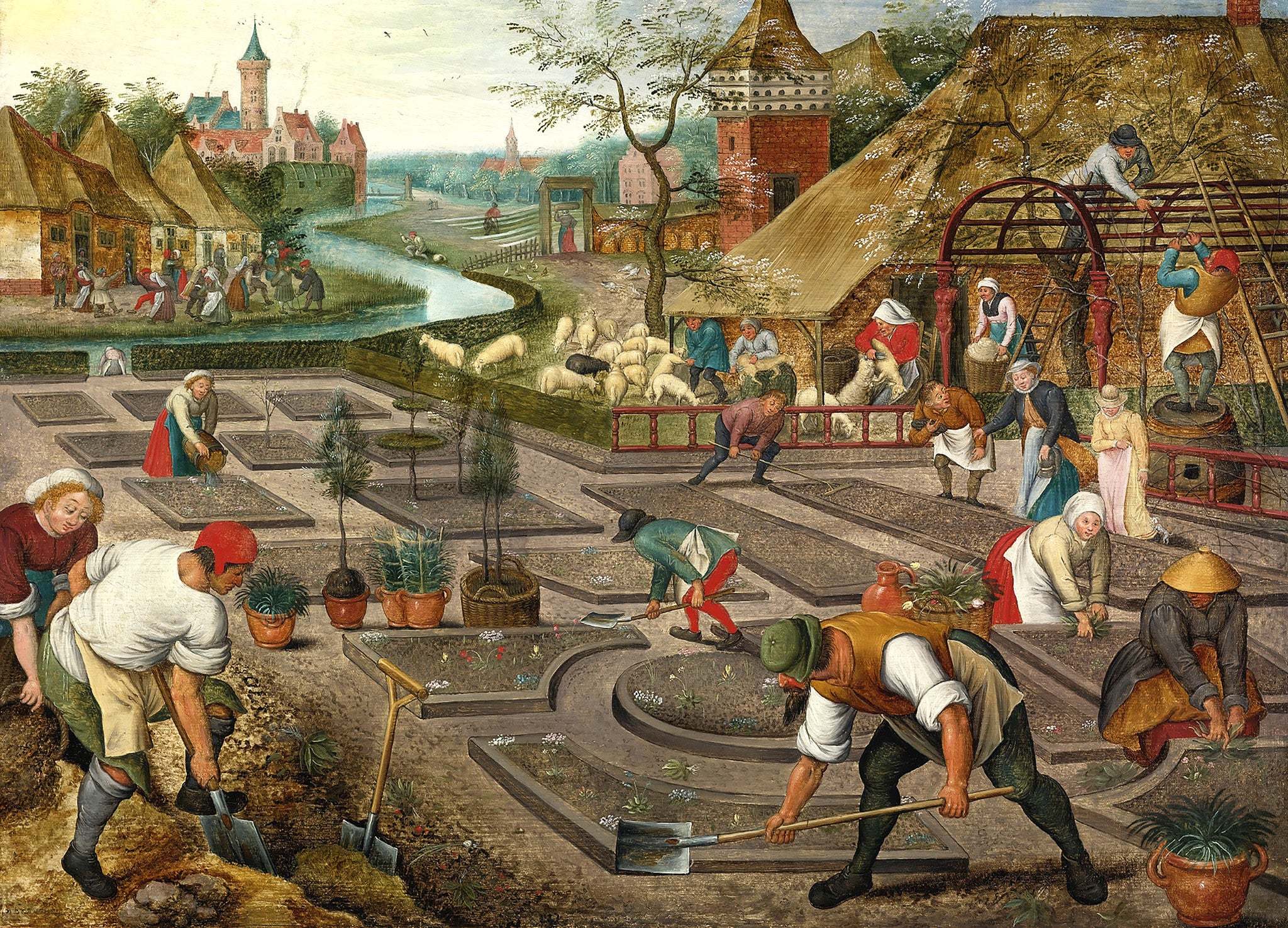
In Esoteric thought-- and in the ordinary way of thinking, for people on earlier eras-- the Springtime is linked to the element of Air. Air is understood as heat and moisture. Air also has the following associations:

Among times, the Dawn; infancy in a lifetime; the mind in man; atmosphere, weather and wind in nature; the flower in plants, and seeds born on the wind, and also all such plants as dwell in the air; among herbs, all those hot and moist by temperament; among animals, birds and all flying creatures; among professions, those related to the Air, including pilots, astronomers, meteorologists, and all those who work with their minds, or who make their living by communication; in society, it is the economy and all means of transportation, production, and exchange; among planets, it is Jupiter and Mercury, though others say the Sun; among numbers, the number 2 and all its permutations; among solids, the octahedron.

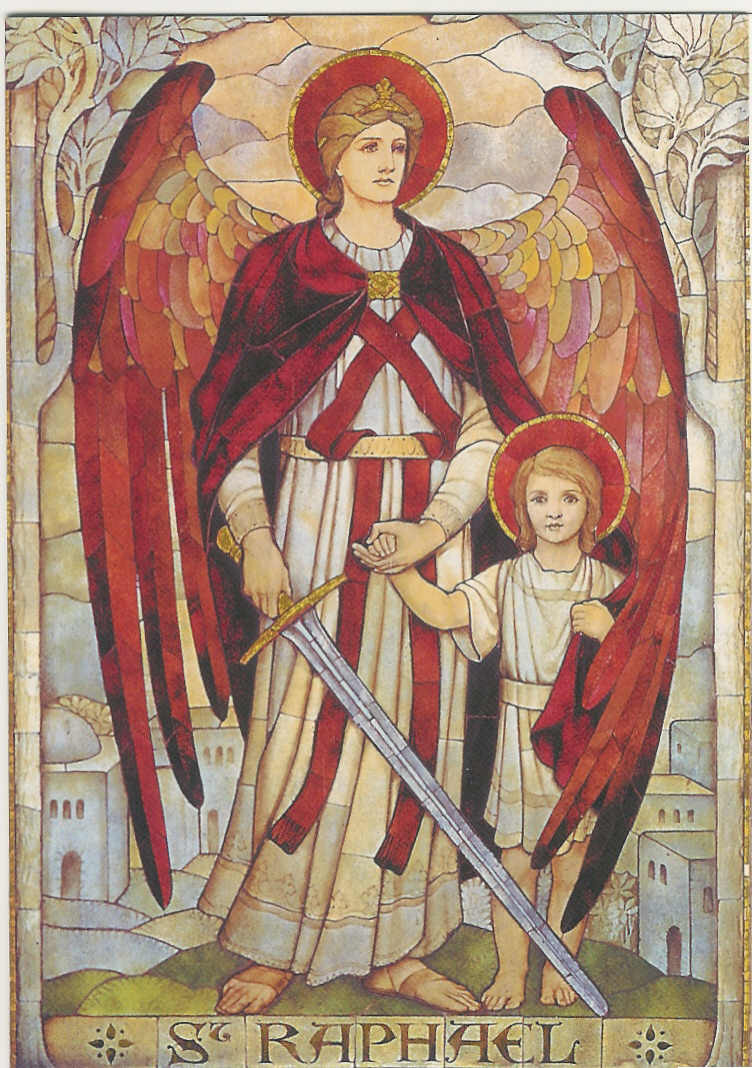
Every element is ruled by an archangel. It's worth taking a moment to consider the meaning of the word "angel." The word means "messenger." Augustine tells us that "angels" is their title; their nature is spirit. In the Christian tradition, mainstream as well as esoteric, they are given the government of the physical world and human society. At the same times, they are called "messengers." This is a bit of a paradox-- you wouldn't give the president of a country the title of "chief mailman." So what is going on here?

The resolution of the paradox is this: The angels govern the elements of the material world and the universe as a whole as an expression of the divine will. In earlier times, it was said that the whole of Nature was one of two books written by the Holy Ghost; as such, all of creation is a kind of message from God. And the angels that govern creation are the message-bearers.

The Ember Fast

This week, extend whatever fasting commitment you've made to Wednesday, Friday, and Saturday. In addition, make at least one additional effort towards lightening your impact on the Earth. You might make an effort to reduce your own contribution to air pollution. As Air rules the system of economic exchange in society, you might keep a closer watch on your spending this week, and try to support local businesses and those which follow sound environmental practices. On at least one of these days, spend some additional time in Nature. Allow yourself to be aware of the Air element as it manifests in the wind and the atmosphere and in everything that is in motion, as well as those creatures that are specifically governed by it. You might also consider donating to an Air-oriented charity, such as an organization dedicated to helping children learn to read or speak, or any organization dedicated to bird conservation.

Prayer and Meditation

At least once, and preferably during all three days, practice a meditation like the following:

1. Make the Sign of the Cross

2. Say the Our Father, 3 Hail Marys, and Glory Be.

2. Perform the asperges with holy water and the censing with incense, using the prayers previously given. In a pinch, you can use ordinary water into which a little bit of salt has been added. Before using it, make the sign of the cross over it and ask God for his blessing.

3. Pray the prayer of the Holy Spirit:

Come, Holy Spirit, fill the hearts of Thy faithful and enkindle in them the fire of Thy love.

Send forth Thy Spirit and they shall be created, and Thou shalt renew the face of the earth.

Let us pray.

O God, Who didst instruct the hearts of the faithful by the light of the Holy Spirit,
grant us in the same Spirit to be truly wise, and ever to rejoice in His consolation,
through Christ, our Lord. Amen.

4. Kneeling or seated, take a few moments to relax your body and clear your mind with rhythmic breathing. Then call to mind the Air element and the Spring season, and everything pertaining to them. Offer a prayer, such as the following:

Oh God, I thank thee for all the gifts of the element of Air. For movement and change, the lengthening days and the Spring rains, and all the gifts of the air and the mental world world. And I pray that thou wilt send thy holy archangel Raphael, who governs the element of Air, to be with us at this time. Holy Saint Raphael, archangel who governs the element of Air, grant that the gifts and virtues of Air, willingness and wisdom, honesty and lightness of spirit may be manifest in our lives. And grant, too, that the unbalanced manifestations of Air, including concupiscence, dishonesty and unreliability, may be kept far from us. Through Jesus Christ our Lord, amen.

5. Take a moment to visualize the gifts and virtues of Air manifesting in your life. Then close your meditation with more rhythmic breathing.

6. If you like, you can repeat the asperges and the censing.

7. Close with a suitable prayer or prayers, followed by the sign of the cross. The Fatima Prayer is a good option:

O my Jesus, forgive us our sins, save us from the fires of hell. Lead all souls to Heaven, especially those in most need of thy mercy. Amen.

Click here to support this blog.


Meménto, homo, quia pulvis es, et in púlverem revertéris.

Ash Wednesday

Ash Wednesday marks the official beginning of Lent. The great tradition of Ash Wednesday is, of course, its namesake, the ashes placed on either the crown or the forehead. 

In the traditional rite, the ashes are blessed by a series of 5 prayers. The first reads as follows: 

Almighty and everlasting God, spare those who are penitent, be merciful to those who implore Thee; and vouchsafe to send Thy holy Angel from Heaven, to bless + and sanctif+fy these ashes, that they may be a wholesome remedy to all who humbly implore Thy holy Name, and who accuse themselves, conscious of their sins, deploring their misdeeds before Thy divine mercy, or humbly and earnestly beseeching Thy sovereign goodness; and grant through the invocation of Thy most holy Name that whosoever shall be sprinkled with them for the remission of their sins may receive both the health of the body and safety of the soul. Through Christ our Lord, Amen.

The prayers conclude:

Grant us, O Lord, to begin with holy fasts the campaign of our Christian warfare: that, as we do battle with the spirits of evil, we may be protected by the help of self-denial. Through Christ our Lord, Amen.

Ashes are then placed on the forehead or on the crown, with the words: 

Meménto, homo, quia pulvis es, et in púlverem revertéris

or

Remember, man, that thou art dust, and to dust thou shalt return.
 
Lenten Magic

What we have is a magic ritual of some power. First, ashes are prepared, and these are made from the palm fronds blessed on the previous palm Sunday. Thus the years are linked to one another, and the triumph that will come at Palm Sunday linked to the crucifixion that will follow it. The priest summons an angel to bless the ashes, turning them into remedies for both body and soul. The faithful are blessed by the ashes with a prayer that they specifically be given the power of self-denial in order to combat evil spirits. They are reminded that they are dust and to dust they will return.

Each component of this rite would yield a great deal to meditation. 

Let's talk a bit about dust. 

Genesis 2:7 tells us:

The Lord God formed man from the dust of the earth. He blew into his nostrils the breath of life, and man became a living being.

In these two sentences we see the whole anatomy of the human being. 

We start with God, who, as we know, is Being Itself; the first term is existence.

Next comes the form, which God holds in his mind.

The form is impressed onto the dust.

And the breath enters in from God himself, bringing life.

God is being; the form is spirit; the breath is soul; the dust is matter.

Matter itself is without form and without life. Moreover, the lowest parts of us, the passions that we share with all animal life, arise from the body, and are thus closest to matter and entangle us with matter, which is merely dust. By remembering that we are dust, we remember three things:

First, our bodies are dust, and the cravings, attachments, pains, pleasures and everything we seem to "need" which arise from them are also mere dust.

Second, the dust itself, utterly formless, is still sustained in its very being by God, as is everything in the universe; underneath the dust, as it were, is God-- and so God is at the root of our being. Too often we confuse our innermost nature, seeing dust where we should see divinity; let us look past the dust to That which is beyond. In doing so, we gain the ability to do battle with the evil spirits, who use our lower nature to delude us, but have no power over higher things.

Third, even as dust, the lowliest thing, is not deprived of the presence of God; even as, remembering that we are dust, we remember that we are of God; so may we remember that by humility we will triumph, whereas by Pride we will be cast down. For
 
He hath shewed strength with his arm.
He hath scattered the proud in the conceit of their hearts;
He hath put down the mighty from their seat
and hath exalted the humble and meek.
 
A blessed Lent to one and all.


Welcome to Lent

Today is Shrove Tuesday, which means that Lent begins tomorrow. Lent is the great Penitential season of the Church, in which we prepare ourselves for the great feast of Easter.

Lent is, above all, the greatest of the Christian fasts.

The Purpose of Lent

In the old tradition, every feast is preceded by a fast, every fast followed by a feast. This is the rhythm of life; as Spring follows Winter and Summer gives way to Autumn, so does the liturgical cycle precede from fast to feast, from feast to fast. The Lenten season is especially the season of penance, and before we go any further, we ought to talk about what that means.

The Lenten season lasts 40 days, as Jesus fasted 40 days in the desert following his baptism. Discussing this, Dom Prosper Gueranger tells us:

Thus does our Saviour go before us on the holy path of Lent. He has borne all its fatigues and hardships, that so we, when called upon to tread the narrow way of our Lenten Penance, might have His example wherewith to silence the excuses, and sophisms, and repugnances, of self-love and pride. The lesson is here too plainly given not to be understood; the law of doing penance for sin is here too clearly shown, and we cannot plead ignorance;- let us honestly accept the teaching and practise it. Jesus leaves the Desert where he had spent the Forty Days, and begins his preaching with these words, which he addresses to all men: Do penance, for the Kingdom of heaven is at hand [St. Matth. iv. 17]. Let us not harden our hearts to this invitation, lest there be fulfilled in us the terrible threat contained in those other words of our Redeemer: Unless ye shall do penance, ye shall perish [St. Luke, xiii. 3].
 
Now, in the verse in Luke's Gospel referenced, "do penance" is metanoēte. This refers back again to metanoia, "the changing of the nous." Let's recall our psychic anatomy: The nous is the highest part of the soul, the part that extends upward into the realm above the soul. Some of the ancient writers refer to nous as "the eye of the soul," because it sees the spiritual reality directly. In our current condition, our nous is clouded, and our attention is fixed on the things of the material world, which is a mere shadow of the True Reality of Spirit. Lent is a season for metanoia, changing the condition of our nous and re-directing our attention away from the things of this world, toward the spiritual world. Another word for this re-direction is conversion.

But why does penance have to be difficult?

Lent and the Law of Rhythm

Here is a little bit of Occult Philosophy, from an early 20th century text called :

 
The pendulum of the clock swings a certain distance to the right, and then an equal distance to the left. The seasons balance each other in the same way. The tides follow the same Law. And the same Law is manifested in all the phenomena of Rhythm. The pendulum, with a short swing in one direction, has but a short swing in the other; while the long swing to the right invariably means the long swing to the left. An object hurled upward to a certain height has an equal distance to traverse on its return. The force with which a projectile is sent upward a mile is reproduced when the projectile returns to the earth on its return journey. This Law is constant on the Physical Plane, as reference to the standard authorities will show you.

But the Hermetists carry it still further. They teach that a man's mental states are subject to the same Law.
Easter is the greatest feast of the Christian church. To say that is not to say that it's a great party-- it's far more than a good time. During the Easter Triduum we enter into and participate in the crucifixion, death, and resurrection of Our Lord. To truly enter into the mystery of Easter is to exalt our spirits far beyond any pleasure of the flesh or any wonder of the astral or psychic worlds.

The Kybalion continues:
 
[The ancient masters] teach that before one is able to enjoy a certain degree of pleasure, he must have swung as far, proportionately, toward the other pole of feeling. They hold, however, that the Negative is precedent to the Positive in this matter, that is to say that in experiencing a certain degree of pleasure it does not follow that he will have to "pay up for it" with a corresponding degree of pain; on the contrary, the pleasure is the Rhythmic swing, according to the Law of Compensation, for a degree of pain previously experienced either in the present life, or in a previous incarnation.

In other words, the difficulties and austerities of Lent become a kind of slingshot, intended to launch us upward as far as we can go at Easter. It follows that the more we enter into the penitential side of Lent, the more effectively we will be "launched upward" at Eastertime.

Again, remember that it isn't just any pain we seek, or any pleasure; this isn't sadomasochism. Moreover, we must be very careful not to limit our works of penance during Lent to the material body, because if we do, this will lead directly to sin. How? Because the slingshot will propel us from pain to pleasure, and if all we've done is to give up a destructive pleasure, we will find ourselves mired in it all the worse come Easter! In order to have lasting results, the focus of our penance must be spiritual, and not material, or not merely material.

Lent and the Training of the Will

We also train and fortify our will. Now, the will gets a bad rap among many modern Christians. Rightly noting our Lord's words, "Thy Will, not mine be done," they therefore conclude that we ought not to have a will of our own, and . But this is based on a misunderstanding of our will and its nature.

Discussing the nature of God, Plotinus writes that His will and his essential being are the same.

The Good, then, exists; It holds Its existence through choice and will, conditions of Its very being; yet It cannot be a manifold; therefore the will and the essential being must be taken as one identity; the act of will must be self-determined and the being self-caused; thus reason shows the Supreme to be its own Author.

Our very existence is provided for us by God, "in whom we live and move and have our being." To exist at all is to exist on account of God. Just as God's being is not a separate thing from his Will, our own true will is also identical with the core of our being. Now, from this it is apparent that our will is not the same thing as our passions or our desires, as many think. In fact, it's very often exactly the opposite! Just as our being is derived from God's being, our true will is derived from God's will and is God's will. So there isn't a contradiction between our will and God's will-- When we say to God, "thy will, not mine be done," we mean "May I be as you intend me to be, which is what I truly am."

The Lenten Fast

The traditional Lenten fast-- which was kept by the church, remember, until the 1960s-- was very severe. One was to eat one vegetarian meal per day, along with two small snacks; a cup of coffee and some plain toast in the morning were permitted as well. Now, this obviously wouldn't work for many-- coal miners, construction workers, and other people who did hard physical labor were excepted from the fast, as were the very young or old and the sick. Today, in churches that still keep the traditional forms of the fast, it's still the case that no one is allowed to undertake the fast without spiritual direction. Unguided, it's too easy to either push yourself too far, so that you fail; or to turn it into an occasion for pointless self-harm; or to approach the fast in a spirit of pride, which is entirely contrary to the intention.

Father Jean Croiset discussed this issue in his Devotion to the Sacred Heart:

It is true that sanctity does not consist in exterior penances, and that they are not incompatible with hypocrisy. But it is not so with interior mortification. Not everyone can fast and wear a hair shirt, but there is no one who cannot be silent when passion prompts him to reply, or vanity to speak. The desire to learn news or to know what is going on or what is being said can be the subject of continual mortification, which is as meritorious as it is ordinary. If they are interrupted 100 times in a serious employment, they will reply 100 times with as much sweetness and civility as if they had not been busy. Interior mortification is always a certain mark of true piety, and it is more necessary than exterior mortification. The ill humor of a person with whom we have to live, the imperfections of a friend, the ingratitude of others can give great opportunity for patience. The inconveniences we suffer may be small, but he mortifications on these occasions is not small. Great graces and even sublime sanctity usually depend on the generosity with which we mortify ourselves constantly on these little occasions.
We can all participate in the traditional fast to at least a limited extent, by abstaining from meat, rich foods, and alcohol, at least during Fridays, and better yet, during Mondays, Wednesdays, and Fridays, throughout Lent. Some will attempt the full fast. Others will fall somewhere in the middle.

I wrote during Advent that I believe that the most important form of fasting that we can engage in during this time is fasting from technology. Online news, social media, video games, and screens in general are the great addictions of our time; moreover, they, far more than meat or even alcohol, turn our attention away even from God's physical world, toward a creation of the human mind at its worst. The material world is the Shadow World; the internet is the Shadow of Shadows. Refer back to the post introducing Advent, and consider what sort of fasting is right for you.

Rhythms

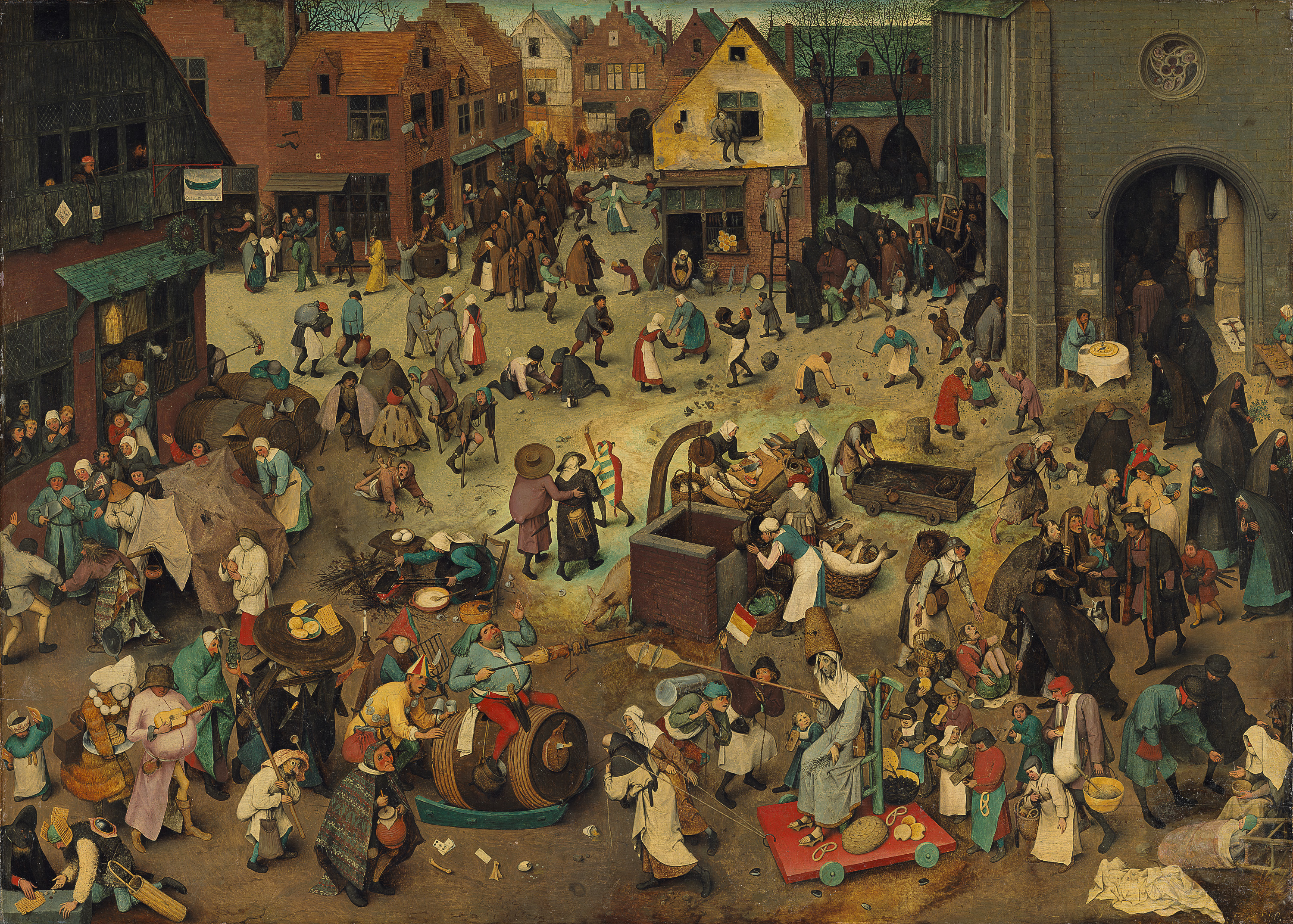
Today is Shrove Tuesday, but you probably know it by its more common name, Mardi Gras. Today is the last day of a season called Gesimatide. You'll notice that I skipped that part this year, as indeed I did, for the sake of simplicity; my feeling is that we need to start by re-learning the Big Stuff, and then we'll paint in the details. Gesimatide is traditionally the Carnval season in Catholic countries-- a joyful season, following in the wake of the previous joyful season of Christmas. (For the purpose of this blog, we're more or less skipping straight from Christmas to Lent, but the rhythm is the same: Joy is followed by Sorrow. And what will follow Sorrow?

The Glory of Easter.

This pattern, an initial Joy at the awareness of the divine; followed by a plunge into Sorrow as we purge ourselves of our sins; followed by the Glory of divine union is found over and over again in the Christian tradition.

Practice During Lent

Fasting is not the only part of practice. An Orthodox friend of mine on social media shared a meme to the effect of "If your fast isn't accompanied by prayer and almsgiving, it's just a diet."

During Lent, commit to prayer daily, and to regular charitable works. Morning and evening prayer is best, if you can manage it; for many of us, morning practice is as much as we can manage, given our schedules. Dom Prosper Gueranger provides a useful guide to Lenten prayer practice here, and we'll discuss what a good prayer rule during Lent should look like as we continue.

For now, consider the following as a guide to daily prayer:

1. The Sign of the Cross, as described in an earlier post.

2. An Act of Contrition, suitable to your particular spiritual path.

3. Spiritual reading and meditation. This is a great time to take up one of the great classics of Western spirituality. Don't pick something that you will read in one sitting-- pick a book you can read slowly, a little bit at a time, every day. Many of the old classics, such as The Imitation of Christ or True Devotion to the Blessed Virgin Mary are written in short, numbered sections with exactly this sort of practice in mind.

4. Any additional devotional practices-- a rosary, a litany, or whathaveyou.

This is also the time for giving. Lent is a time to give freely of ourselves, as God gives of himself freely. I w

These three practices, fasting to restrain the appetites, prayer to open the mind to God, and giving to turn the heart to charity, work together to accomplish the Great Work of the conversion of the soul.


Click here to support this blog.

Profile

readoldthings

December 2024

S M T W T F S
1234567
891011121314
1516 17 18192021
22232425262728
293031    

Syndicate

RSS Atom

Most Popular Tags

Style Credit

Expand Cut Tags

No cut tags
Page generated Dec. 28th, 2025 09:03 am
Powered by Dreamwidth Studios