The Metaphysics of Reincarnation, Part 4
Nov. 27th, 2023 09:40 pm![[personal profile]](https://www.dreamwidth.org/img/silk/identity/user.png) readoldthings
readoldthings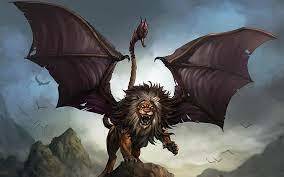
I thought we would get to Aristotle today, but I'm afraid there's one more stop we need to make. Because the truth is, this isn't a two way fight, between the reincarnationists and the anti-reincarnationists. Within the reincarnationist camp, there is a major dissenting opinion, and it's time we discussed it.
The Demiurge
Plato's Timaeus is an accoiunt of the creation of the universe by a good God called the Demiurge or "craftsman." Plato is somewhat coy about the Demiurge's identity, saying in the dialogue that it's unclear what his true name is. Proclus later interpreted the Demiurge as Zeus-- or, rather, the first of gods named Zeus and sharing in the attributes of the Zeus of earlier mythology. Christian Platonists, of course, interpreted the Demiurge as Christ. What both the Christian and the pagan Platonists had in common is that they agreed with Plato's statement that, above all else, the Demiurge, the Creator of the cosmos is good.
But there were some who disagreed.
The word "Gnostic" refers to a wide variety of Christian and semi-Christian religious dissidents who flourished in the first few centuries after Christ. The Gnostics were never anything like a unified tradition; indeed, modern academics debate over whether the term "Gnostic" is really useful at all, given the wide variety of different traditions that can be gathered under that one label. What we're going to discuss here is one strain of Gnosticism, which we can call the Radical Dualist tradition. Of these, the most extreme were a sect known as the Sethians, and their later descendants, the Manichaeans and the medieval Cathars.
The central point of Dualist Gnosticism is quite simply that the Demiurge is evil. The Secret Book of John, a Sethian text, gives an elaborate account of the spiritual beings that existed prior to the creation of the material universe, concluding with a feminine power named Wisdom or Sophia. Except for the first Power, each of these primordial spirits is part of a mated pair, and it is in union with their appropriate partner that they give rise to the next pair. Sophia, unfortunately, decides to try to give birth without her partner, and brings forth a monstrous being:
Because she had unconquerable Power
Her thought was not unproductive.
Her thought was not unproductive.
Something imperfect came out of her
Different in appearance from her.
Because she had created it without her masculine counterpart
She gave rise to a misshapen being unlike herself.
Sophia saw what her desire produced.
It changed into the form of a dragon with a lion’s head
And eyes flashing lightning bolts....
She named him Yaldabaoth.
Yaldabaoth is the chief ruler.
He took great Power from his mother,
Left her, and moved away from his birthplace.
He assumed command,
Created realms for himself
With a brilliant flame that continues to exist even now.
This dim ruler has three names:Yaldabaoth is the first.
Saklas is the second.
Samael is the third.
He is blasphemous through his thoughtlessness.
He said “I am God, and there is no God but me!”
Since he didn’t know where his own Power originated.
Yaldabaoth goes on to form the material world as a prison for human souls, which he rules over with the aid of his demonic Archons. The elaborate cosmology of the Sethian tradition is nearly a mirror-image of Proclus, with both the Hebrew God and the many gods of the pagan world gathered together into a single demonic system. In this system, reincarnation occurs as in the account of Plato-- but in keeping with the Gnostic inversion, reincarnation is a disaster pure and simple. In the thought of the Sethians, Christ's mission was precisely to liberate us from imprisonment in the material world. As the Secret Book of John goes on to explain:
I said, Master, where will the souls [of the saved] go when they leave their flesh?
He laughed and said to me, The soul in which there is more power than the Contemptible Spirit is strong. She escapes from evil, and through the intervention of hte Incorruptible One she is saved and taken up to eternal rest.
I said, Master, where will the souls go of people who have not known to whom they belong?
He said to me, The Contemptible Spirit has grown stronger in such people while they were going astray. This spirit lays a heavy burden on the soul, leads her into evil, and hurls her down into forgetfulness. After the soul leaves the body, she is handed over to the authorities who have come into being through the Ruler. They bind her with chains and throw her into prison. They go around and around with her until she awakens from forgetfulness and acquires knowledge. This is how she attains perfection and is saved.
He laughed and said to me, The soul in which there is more power than the Contemptible Spirit is strong. She escapes from evil, and through the intervention of hte Incorruptible One she is saved and taken up to eternal rest.
I said, Master, where will the souls go of people who have not known to whom they belong?
He said to me, The Contemptible Spirit has grown stronger in such people while they were going astray. This spirit lays a heavy burden on the soul, leads her into evil, and hurls her down into forgetfulness. After the soul leaves the body, she is handed over to the authorities who have come into being through the Ruler. They bind her with chains and throw her into prison. They go around and around with her until she awakens from forgetfulness and acquires knowledge. This is how she attains perfection and is saved.
Note well: The speakers in this dialogue are supposed to be Saint John the Evangelist and the resurrected Jesus.
Matter and Spirit
There is an ambivalence around matter, to be sure, in both the Christian and Platonist traditions. Christians believe in the Fall of Man, and see the world since that time as stained by sin. Plato famously compared the material world to an underground prison and the body to a tomb. Probably Plotinus took the Platonic pessimism as far as it could go when he declared matter to be the principle of evil. But even Plotinus did not achieve the radical dualism found especially in the Sethian tradition and its descendants, the Manichaeans and Cathars.
In many ways the Gnostic tradition resembles the Platonic. Indeed, one of Plotinus's chief complaints against the Gnostics was precisely that they'd taken the basic ideas of Platonic philosophy and bent them out of all proportion, multiplying the fundamental principles of spiritual reality to the point of absurdity. But the chief difference is precisely the answer to this question-- Why does reincarnation occur? For the Platonist, the answer is that we return to material incarnation until we learn to transcend it. We are here either through our own fault, in looking toward matter rather than spirit (Plotinus), or else because it is simply the nature of souls like ours to descend into embodiment for a time, until we work our way out (Proclus). For the Gnostics, we are here through precisely no fault of our own. We are prisoners, as Plato many times suggested, but not of good or just jailers. We are, in effect, in an earth-sized concentration camp, and it is our duty to escape.
A Matter of Temperament
I suggested at the beginning of this series that certain distinctions in philosophy really do seem to come down to temperament. To quote Coleridge again, "Every man is born an Aristotelean or a Platonist." And so I'm willing to believe that it may be a matter of temperament-- but I personally can find absolutely nothing appealing in Gnosticism. To my mind, the entire tradition, from the Secret Book of John through the even more elaborate works of the Manichaeans and the medieval Cathars, looks like nothing so much as a UFO suicide cult.
I do sympathize with Plotinus's dim view of matter. Actually, if you want to know the truth, my sympathy for Plotinus seems to correlate exactly with the number of birthdays I've celebrated; at 40 it's far greater than when I first encountered his work at 30. So perhaps by 50 or 60 something in Secret John will start to resonate for me. For now, though, I share it here only in order to give an alternate account its due.
The two possibilties we have seen are: 1. There is rencarnation. 2. There is no reincarnation.
But here is a third possiblity, or, rather, an alternate first possibility: There is reincarnation, and it sucks.


no subject
Date: 2023-11-29 01:56 am (UTC)Anyhow, what I wonder is whether applying the Big Five would give a more granular view on healthy vs sick minded. At first glance, it sounds like the big difference is neuroticism and extraversion, but I wonder if the other three play a role.
no subject
Date: 2023-11-29 07:11 pm (UTC)Anyway, thanks for reminding me to finally start reading that William James book. I ordered it awhile back and it's been sitting on my bookshelf awaiting that initial spark of motivation for me to crack it open.
no subject
Date: 2023-11-29 09:51 pm (UTC)That seems reasonable to me. In my prior comment, I was assuming reasonably high Openness for both flavors of very religious people mentioned, but it strikes me now that James's examples are almost all folks who have had some kind of conversion/return to religiousness, so maybe that's selecting from a particular pool. Someone who starts out with faith and never questions it would be more likely to have high conscientiousness, but would almost certainly stick with whatever the dominant faith of his society is.
Anyway, thanks for reminding me to finally start reading that William James book.
Happy to help! :) I'm finding it very good, and it's wonderfully even-handed in discussing, well, a great variety of religious experiences. That being said, it is late 19th century prose on a dense subject, so it's slower going than I might like to admit.