Advent and Almsgiving

Take heed that ye do not your alms before men, to be seen of them: otherwise ye have no reward of your Father which is in heaven.

Therefore when thou doest thine alms, do not sound a trumpet before thee, as the hypocrites do in the synagogues and in the streets, that they may have glory of men. Verily I say unto you, They have their reward.
 
But when thou doest alms, let not thy left hand know what thy right hand doeth:
 
That thine alms may be in secret: and thy Father which seeth in secret himself shall reward thee openly.

Matthew 6:1-4

In the Christian tradition, almsgiving isn't optional; in the words of the Gospel quoted above, Jesus doesn't say "If you give alms, do so in secret"; he says when you give alms, do so in secret.

The practice of giving alms has a number of important effects on the soul and on the spiritual development. Let's take a moment to review the anatomy of the soul, and then talk about why we give alms, and how almsgiving can be used strategically to bring about changes we desire in our world and our lives.

Psychic Anatomy

In the old tradition inherited by the Christian fathers from the Platonists before them, the soul is understood to consist of three parts. In Greek, these are called nous, thymos, and epithymia. Now, the Nous refers to our minds; it includes our reason and our opinions, but at its highest, it is our capacity to perceive spiritual reality. Thymos is hard to translate-- it is often rendered "spirit," but this is used in the sense that we would talk about "a spirited horse," or about someone being "in good spirits," rather than "spirit" as in "eternal soul." Its best translation in English is probably "heart," in the sense that this term is used in sports. Epithymia, meanwhile, is appetite, and includes all of the appetites, drives, and passions of our bodies.

Each of these components of the soul has its proper mode of functioning, and each has its particular disorder. The appetite wants to rebel and become our master, driving us to indulge every craving for food or drugs or sex or facebook it can come up with. The nous wants to cloud over and forget its true nature, becoming a mere repeater of worldly opinion instead of a seer of heavenly truth. And the thymos? Well, the thymos just wants to fight.

The work of spiritual advancement is called repentance in the Gospels. This is a translation of the Greek word metanoia, which literally means "to change the nous." Through this work of metanoia we change every aspect of our souls, re-orienting them away from the created world and toward eternal things. For each component of the soul, there is a particular spiritual discipline given to us as a sort of medicine, to heal and restore it to its proper functioning. For the nous, we are given prayer; for the epithymia, fasting; and for the thymos, almsgiving.

(There is a very good talk on this subject from an Orthodox perspective here. If you have more time on your hands, you can also read about these things in Plato's Republic and Phaedrus.)

Fridays In Advent

Advent, as we have seen, is a penitential season. This means that we make use of it to double-down on our works of repentance, to purify our souls and prepare them for the coming of Our Lord at Christmas-- which is, as we've seen, itself a preparation for the coming of the Lord to us at our own deaths, and to the whole world at the End of Time.

And so we fast from food and other material goods such as technology to discipline our appetites; we re-commit ourselves to prayer, to open the eye of our souls to the vision of God--

And we give, to purify our hearts and participate in the nature of God, who by His very nature gives being to all that exists.

Fridays are particularly good days for giving, for the following reasons:

1. Friday is a penitential day. Friday is the traditional day for fasting in the Catholic Church; until the 1960s, Catholics were expected to abstain from meat on this day throughout the year and to keep the full fast during penitential seasons.

2. Friday is associated with the Sacred Heart of Jesus. Each day of the week has its traditional spiritual association-- as we'll discuss in detail at a later time. Friday is particularly dedicated to the Sacred Heart of Jesus. By giving alms on this day, we imitate Jesus, who freely gave of himself, first, to bring the world into being; second, at Calvary, to redeem us; third, at all times, to sustain our ongoing existence and that of the whole world and everything in it. Remember that, in the magical way of looking at things, two things never resemble each other by "accident" or "coincidence." To imitate Christ is to participate in the very being of Christ.

3. Friday is the Day of Venus. In the astrological tradition, every day is linked to one of the seven classical planets. Friday-- in Latin, "Dies Veneris," "Day of Venus"-- is associated with Venus, the planet of Love and Beauty. In Christian Astrology, the planets are visible signs given by God to reveal something about His nature to us; each planet is governed by an angel, and is associated with a particular Christian virtue. The angel of Venus is named Hanael or Anael, and its particular virtue is Charity.

The Magical Uses of Almsgiving

Alms can, and should, be given at any time, to anyone, for any reason, with the only limit being that set by morality. It's a good habit to give for no reason at all, at no particular time-- Leave the occasional 50% tip; give a homeless person an unusually large bill; find a charity dedicated to a cause you rarely think about, and given them a hundred dollars. In a real sense, this is the highest form of charity, and we ought to engage in it regularly.

That said, there are also good reasons to give alms at certain times, and to certain people and organizations. And we can also use other methods to increase the power of our offerings.

1. Timing. Spiritual timing occurs in a couple of different forms. We have the liturgical calendar, including feast days and seasons of fasting. We have the traditional dedication of particular days and months to particular saints and causes. And we have the astrological cycle mentioned above. All of these days are like power points on the wheel of the year; appropriate activities, done at these times, are strengthened and enhanced by the energy of the time.

2. Saints and Offerings. We can increase the power of our offerings by making them in the name of a particular saint or angel. We usually do this in order to bring about specific purposes, related to the saint or angel's patronage. For example, St. Joseph is the patron of workers. We can make offerings to a church or charity named for him when we ourselves are looking for a job. We can also make the offering in his name to something under his patronage like a job training program, even if it isn't named for him. Similarly, St. Raphael the Archangel is the patron of healers; St. Francis is the patron of animals and ecology; St. Therese is an unofficial patron of alcoholics; St. Michael watches over police, soldiers, and firefighters; and so on.

3. Manifestation. It is a spiritual truism that whatever we put out into the world also manifests in our own life. It's not, as people sometimes say, that it "returns" to us-- because that implies that it goes somewhere else and then comes back. It is, rather, the case that whatever energy we participate in, for good or ill, manifests within us at that exact moment. If we bless another person, we are ourselves blessed; if we forgive, we are forgiven; if we give, we receive what we have given. Thus, if there is a change that you want to bring about in your life, giving to others will allow it to come to you as well. This is one reason why we should give what we can to our churches or spiritual leaders-- we want the grace and the teaching that they have to offer to manifest in our lives, and so we participate in sustaining them.

Time For Giving

Today, spend some time in prayer and meditation, and then make a donation to an organization, charity, or individual suitable to you. You can make a ritual out of this, first following the guide to prayer and meditation that I've posted here before, and then donating in the name or the cause of a suitable saint; or you can simply send a few dollars to a church or a nonprofit through their website. Always add a blessing, and always give without expectation of reward-- the reward has already manifested in your life by the very act of giving! "Thy Father which seest in secret shall reward thee openly."

I'm also, for the first time, including a Donation button at the end of this post. To be honest, I feel somewhat uncomfortable doing so-- but, as I just said, we give to our churches and our teachers in order to share in the life of their teachings. I think that the work that we're doing here is important, and if you feel the same way, I want to give you the chance to participate in it directly!

Click Here to Donate!


The Immaculate Conception

December 8th is the Feast Day of the Immaculate Conception, which is the conception of Mary. This feast always falls during Advent, and so is the first Marian feast of the year. And that is proper, as it is the feast of her conception, the moment her soul descended into the material world.

Now, the Eastern Churches also celebrate the conception of the Virgin Mary on this day, but they don't use the term "Immaculate Conception." This term is specifically used in the Western Church to refer to Mary's being conceived without original sin.

The idea of "original sin," meanwhile, has different meanings in the East and West, so let's talk about that for a moment.

Original Sin, East and West

In both Eastern and Western Christianity, the original sin is the sin committed by Adam and Eve when they disobeyed God's command and ate from the fruit of the Tree of Knowledge, at the suggestion of the serpent. Everyone agrees on that, but here the two branches of Christendom part ways. In the East, the belief has always been that, at this moment, Sin and Death entered into the world. It's as if the transgression itself opened a kind of doorway. Sin and Death, now, aren't just actions or ideas-- in a sense they're real beings, who did not have access to our world before our First Parents' transgression, but now do. The consequences of the Original Sin, then, are twofold: First, Sin is now in the world. We've become capable of it, we are always tempted by it, and almost all of us fall into it. The second consequence is quite simply that we die, since Death has been allowed into the world.

The West takes a rather harsher view of Original Sin. Following St. Augustine, the teaching of the Western Church for many centuries is that every baby born into this world is, already, themselves, guilty of the sin of Adam and Eve. For this reason, infant baptism is raised almost to the level of an emergency, as Baptism into the Christian Church is the only thing that can free us from the guilt of original sin. Lacking Baptism, a baby who dies prematurely is unable to enter into Heaven. Where it actually goes is a matter of debate; some, including Augustine, held the position that unbaptized babies descend immediately into Hell, while others believed that they departed to a middle realm called the Limbo of the Infants (Limbus Infantium) where they enjoyed every possible natural happiness, but were denied the Beatific Vision itself.

Now, because the Christian West holds that every infant is conceived in sin and guilt, it was necessary to develop the doctrine of the Immaculate Conception. According to this view, God intervened in Mary's conception, removing the stain of original sin from her, in order to create an unblemished vessel for the incarnation of Jesus. Many of the Church Fathers write that she was restored at the moment of her conception to the Original Justice of humanity before the Fall.

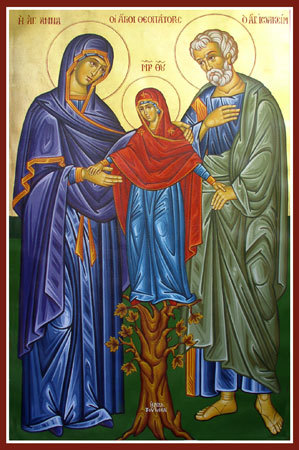
As the Christian East does not view original sin as a particular guilt possessed by every human infant, they did not require special intervention by God to render Mary's conception sinless. They still celebrate her conception, though, as a miracle accomplished by God, who granted a child to Sts. Joachim and Anna, the parents of the Virgin Mary, in very old age.

Original Sin for Esoteric Christians

Readers who belong to one of the mainstream churches, or simply agree with their Mariology, are welcome to take any of the positions described above regarding the nature of original sin. The perspective of this blog is rather different, though, and I want to explore that here.

According to the perspective of Esoteric Christianity, original sin has at least three different meanings:

1. Past Life Karma. Our perspective is that none of us is here for the first time. As Plato wrote in the Phaedo, everything existing comes from its opposite; death comes from life, and the living come into this world from the dead. We aren't meant to remain here, but to transcend this world and return to the vision of God, from which our souls departed unnumbered aeons ago. The fact that we are here, though, living in this world in which Sin is possible and Death comes to us all, shows us that we still have work to do. Only the sinless can enter into the presence of God-- and so the fact that we are reborn here shows that we still have the consequences of sins committed in prior lifetimes to work out. Borrowing a term from Eastern philosophy, this is often referred to as our karma or past-life karma.

2. Collective Karma. We human beings are not isolated individuals. We participate in society from the moment of our conception, when we share a body with our mother. We are dependent on and are part of our mothers, our families, our towns, regions, and nations. All of these collectives of human beings share a kind of collective mind and a collective soul, and every member of the collective participates in that soul. To one extent or another, we also all participate in the karma of the collectives into which we are born, for good or ill; the sins of our people, however defined, are, in a sense, ours. This manifests in our lives as the patterns of thought, reaction, emotion, and behavior that are programmed into us by our families and our cultures, and which we manifest automatically. A major part of the work of spiritual development is the work of freeing the original spirit from the conditioning of its culture.

3. Humanity's Karma. There is an odd, possibly false, but fascinating idea that one finds scattered around 19th century occult literature. This is the idea that the old legends about the Fall of Man that one finds in many ancient sources refer to a real event, many long millennia ago, in which human beings deliberately contacted the Demonic Plane. Demons, according to this way of thinking, are leftover souls from previous universes who refused the hard work of spiritual evolution. All that is left of those souls are these kinds of shells or husks, driven entirely by passion with no capacity at all for reflective consciousness. Like living addictions. They're incapable of growth or change; they seek only to quench desires that are unquenchable, and to make any soul they encounter more like them. Because of this, they were walled off from the rest of the universe in some odd corner of the Astral Plane. And that's where human beings found them and released them, for purposes unknown. And so the rest of us get to spend the rest of our time as human beings dealing with an Astral Plane in which the ordinary human difficulties of cultural programming (the world) and unruly passions (the flesh) are compounded by the presence of evil spirits (the devil) who feed on and encourage our worst impulses.

The Immaculate Conception for Esoteric Christians

If Mary was conceived without Original Sin, she was conceived without being subject to any of the three forms of original sin described above. What would that mean?

First, she had worked out all of her individual karma through many lifetimes of spiritual practice. When she returned to material incarnation, it was as a being free from any debts from previous lifetimes.

Second, because she was such an advanced soul, she never allowed herself to be subject to cultural conditioning. Now, every source shows us that she did willingly and gladly participate in her culture. But she did so as a free spirit-- one who can choose one's own thoughts and actions, rather than having them chosen for you.

Third, she was not subject to the influence of malevolent spirits. How could that be? In old China, when a mountain was known to be infested with demons, they would find a Taoist adept and send him to the mountain. There he would find a cave, sit, and meditate. It was said that a great meditator could calm every demon and unquiet ghost within a thousand li. It's likely that, in life, Mary would have been just such an adept, spreading peace through the whole world by her mere existence.

Only such a being could become the vessel that could contain the Living God, the channel for all the grace poured out by God into the universe. Today we celebrate her entrance into the world of matter and her great role in the history of salvation.

Prayer and Meditation

Today, take the Immaculate Conception itself as the theme for your meditation-- either the mainstream or orthodox version, or the esoteric interpretations that I provide.

It's worth noting, too, that Our Lady of the Immaculate Conception is the patron saint of the United States of America. If you happen to have any concerns about the current direction or ultimate fate of this country, today is a good time to make that known in prayer.


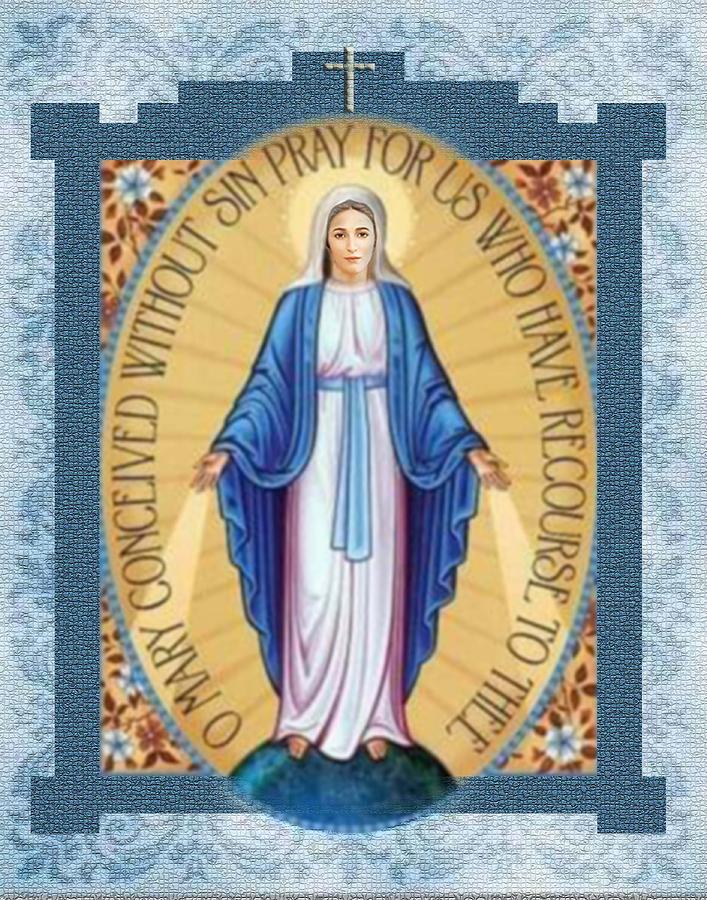
O Mary, conceived without sin, pray for us who have recourse to thee.


Happy Second Week of Advent!

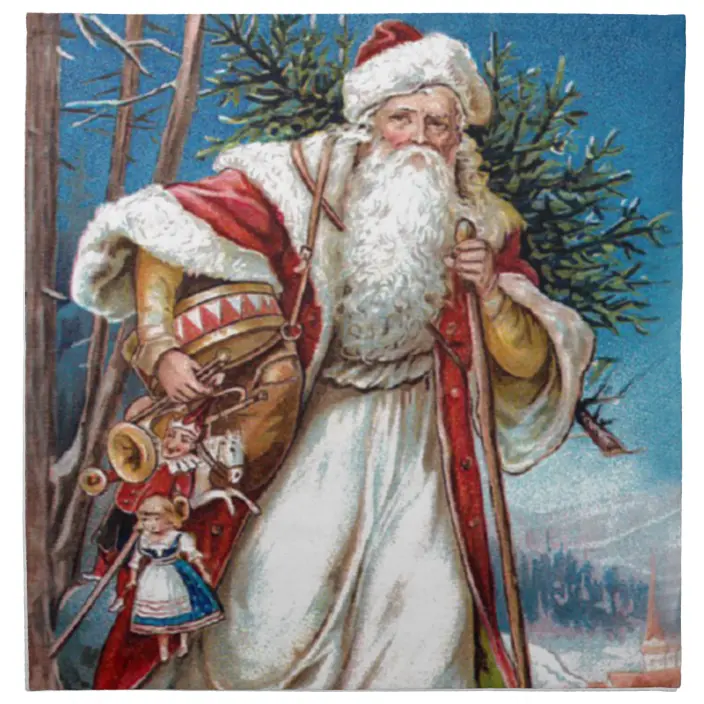
Today, as many of you know, is the Feast of Saint Nicholas. This saint has been venerated for quite a long time, and associated with the Christmas season and gifts for children since long before his current incarnation as Santa Claus. Let's talk about him, and the customs associated with his feast day.

The Life of Saint Nicholas

The historical Saint Nicholas was a 4th century Christian bishop, and the truth is that we know very little about his life.

That isn't really the truth, though. If you start paying attention, you will find that the phrase "we know" is, like its cousin "is known," used constantly in modern life to talk about historical and scientific topics. What these words really mean is "This is the current consensus among college professors and those members of the ruling elite who look to college professors to define the world for them." And so, the current consensus among college professors and their sycophants is that Nicholas was a bishop from the Greek town of Myra who may or may not have attended the Council of Nicea in 325 A.D., and may or may not have punched the heretic Arius in the face over the latter's denial of the full divinity of Jesus Christ.

In the Esoteric tradition, our perspective is that Myth is more important than History. History happens once, and is over; Myth never happens, but occurs again and again and again. Myth unfolds the reality of spiritual things at a level the human mind can grasp, and it describes patterns the patterns that underlie our reality.

It can be said that Myth exists at one of the levels of being in between the world of Time that we experience and the Eternal Reality of God. They are outside of the Time that we know-- and yet they are not purely eternal. They come into being being at a particular moment in history. They change and evolve, their characters and the relationships between them shifting between geographic regions and eras of the world like the characters in a dream. And yet, they continually impact the the world we experience-- in this case, by impacting the behavior of human beings.

The Saints are human beings who, through their spiritual practices, have ascended beyond the realms of Time and Matter to the higher worlds. As such, their biography, even when it is known, matters far, far less than the legends that gather around them.

Here are some of the legends of Saint Nicholas.

The Real Life of Saint Nicholas


Once there was a man who had lost his money through the machinations of the devil. Now, this man had three daughters, and, with no dowry to provide for their marriages, he would be forced to sell them into prostitution. Hearing about hte girls' plight, Nicholas resolved to help, but his mdoesty was such that he would not do so openly. And so, under the cover of darkness, he snuck up to the family's house and tossed a gold purse through the window. Upon discovering it the next day, the girls' father was overjoyed. He immediately provided his oldest daughter with a dowry, and she was able to marry.

Upon hearing of the success of his first outing, Nicholas repeated the action a second time, and so the second daughter was able to marry. But the third time, the father resolved to resolved to stay awake and catch his secret patron in the act. Upon discovering that it was the bishop Nicholas, the man fell to his knees and kissed the saint's feet. Nicholas admonished him to keep his charity a secret. Of course, the admonishment was ignored, otherwise I would not be able to tell you about it.


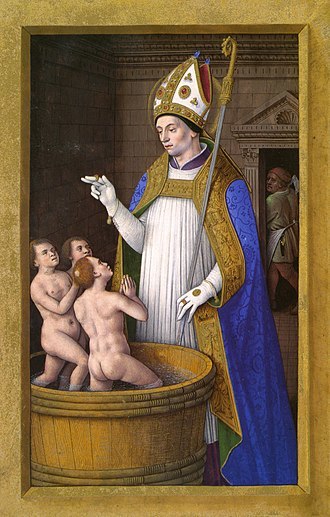
Another time, three children were playing in the field, and forgot to keep an eye on the Sun. As there were no street lights then to tell the kids to get home before dark or to light their way back home, the children found themselves quite lost. Fortunately, they came across a lighted butcher's shop on the road. Unfortunately, no one had told them that, in fairy tales, little children should be all means avoid lonely houses while lost in the woods, especially if they are lit up and welcoming, and especially if the nature of the house has anything at all to do with food. The butcher who kept the shop welcomed the children, fed them dinner, and provided them with a place to sleep for the night. Then he crept into their room, chopped them into pieces, and stored their salted bodies in a barrel.

Seven years later, the good bishop Nicholas happened to be wandering through the land. He came to the butcher shop and demanded to be let in. When he spied the barrel, in which the children's salted bodies were still aging, he demanded the butcher open it. Then he made the sign of the cross over it and said "Arise, oh children!" And the children got out of the barrel just as alive and well as the day before they'd got into it.


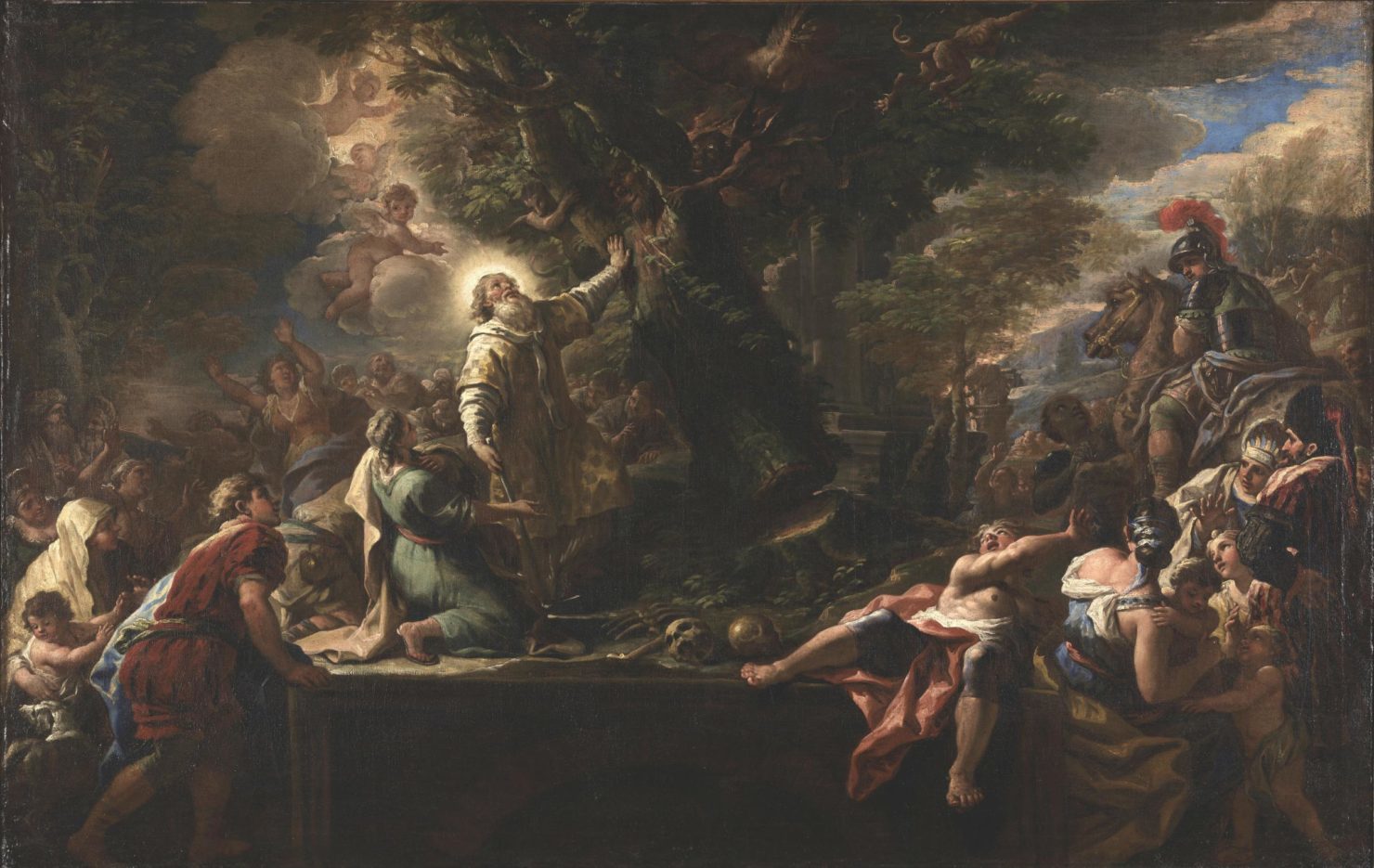
Another time, Saint Nicholas heard about a tree which was possessed by a demon. Resolving to do something about it, he took an axe and cut the tree down. Now, ordinarily, such a thing is not sufficient to drive a demon off, but when the axe is swung by a saint, it does the job. Word of the saint's miracle spread throughout the region, so that several other villages suffering from demonic trees called upon Saint Nicholas, and he cut those down, too. And that's all that anyone really has to say about that.

Someone reading this is upset that Nicholas cut trees down, and even more upset about the idea that a tree spirit could be evil. Let me tell you, as one who has experienced many tree spirits who were not evil, that there are some tree spirits out there who are very evil indeed, and others who simply hate human beings. If you happen to run into one of these latter trees, you can be sure that your Greenpeace membrship will not impress them-- but an invocation of Saint Nicholas just might!

The Practices of Saint Nicholas Day

In earlier times, many of Saint Nicholas's Christmas Eve duties were performed on the eve of his Feast Day. It was only later, with the spread of Protestantism, that his cult was rolled into Christmas itself. 

I have in my collection a fine old volume entitled  Christmas in Ritual and Tradition, by Clement A. Miles. Writing over a century ago, Miles is quick to interpret everything interesting in Christianity as a "pagan survival," but if you can ignore that, he presents an enormous wealth of information on the subject of Christmas traditions. Regarding St. Nicholas Day, Miles writes:  

St. Nicholas's Eve is a time of festive stir in Holland and Belgium; the shops are full of pleasant little gifts: many-shaped biscuits, gilt gingerbreads, sometimes representing the saint, sugar images, toys, and other trifles. In many places, when evening comes on, people dress up as St. Nicholas, with mitre and pastoral staff, enquire about the behaviour of the children, and if it has been good pronounce a benediction and promise them a reward next morning. Before they go to bed the children put out their shoes, with hay, straw, or a carrot in them for the saint's white horse or ass. When they wake in the morning, if they have been “good” the fodder is gone and sweet things or toys are in its place; if they have misbehaved themselves the provender is untouched and no gift but a rod is there.
 
In various parts of Germany, Switzerland, and Austria St. Nicholas is mimed by a man dressed up as a bishop. In Tyrol children pray to the saint on his Eve and leave out hay for his white horse and a glass of schnaps for his servant. And he comes in all the splendour of a church-image, a reverend grey-haired figure with flowing beard, gold-broidered cope, glittering mitre, and pastoral staff. Children who know their catechism are rewarded with sweet things out of the basket carried by his servant; those who cannot answer are reproved, and St. Nicholas points to a terrible form that stands behind him with a rod—the hideous Klaubauf, a shaggy monster with horns, black face, fiery eyes, long red tongue, and chains that clank as he moves.
 
In Lower Austria the saint is followed by a similar figure called Krampus or Grampus; in Styria this horrible attendant is named Bartel; all are no doubt related to such monsters as the Klapperbock. Their heathen origin is evident though it is difficult to trace their exact pedigree. Sometimes St. Nicholas himself appears in a non-churchly form like Pelzmärte, with a bell, or with a sack of ashes which gains him the name of Aschenklas.

Notice the two features of Saint Nicholas: He only brings presents and candies to good children, leaving a rod for the bad ones; and he is accompanied by a goblin or monster who carries off the worst. 

Never doubt, by the way, that St. Nicholas actually did these things. He is no longer a man in a body, but a spirit and a saint. Unlike us sojourners here in the world of Matter and Time, spirits are not limited to a single body, and will happily make use of whatever body is provided for them. Of course, they often require that certain conditions are met before they'll descend into a human body-- such as dressing up as a bishop, or donning a red coat and a red fur-trimmed cap. 


Practices for Saint Nicholas Day

Most children in America and, I suspect, the rest of the Anglophone world, are unacquainted with St. Nicholas Day. At a Catholic school near where I live, the children leave stockings outside the hall during their last period of the day, at which time they are filled with candy by the principle. And I know that converts to the Eastern Orthodox Church (often via the Antiochian archdiocese) often celebrate after the traditional manner. It probably isn't going to be possible to shift the entire tradition of St. Nicholas back to his feast day, and it may not even be desirable to do so.

That said, we can still take steps toward reincorporating the old practices into our family Christmas celebrations. Last night was the appropriate night to leave out stockings or shoes for candy, but it can be done today as well. I'll confess that the only reason that I didn't have my kids do it last night is that I was so tired I forgot-- we spent the weekend preparing the house for Christmas, which meant deep cleaning, rearranging the living room, cutting down the tree and stringing the lights for it. By the end of the day yesterday I could barely see straight. So, on the drive to school this morning, I casually mentioned to my son that it was the custom in earlier times to leave shoes out for St. Nicholas, but that I didn't know if it worked because I'd never done it. "I wonder what would happen if we tried it?" I said. "Maybe we should leave the biggest shoe we have outside and see what happens?" he said. That was several hours ago and the shoe has yet to be filled with candy-- but, on the other hand, I have yet to finish writing this blog post and go to the grocery store.

Meditations for Saint Nicholas Day

Set up your prayer space or altar with a Saint Nicholas icon or prayer card, if you have one. Enter into meditation the usual way, opening with the sign of the cross and additional prayers. Then either concentrate on the icon or simply bring the saint to mind. If you like, you can visualize one of the stories from the life of Saint Nicholas. Then, imagine him coming to your home-- perhaps as he used to in the olden days, on his white horse in his bishop's robe, rather than his new guise, in order to invoke older meaning. Imagine him blessing the house and bringing gifts to all-- but understand that the gift that he brings is not a material thing, but the spirit of giving freely of oneself.

And there is another gift he brings, too. St. Nicholas is the patron, especially, of children, and is well-loved by them. Recall that Our Lord himself teaches us that we will only enter into the kingdom of Heaven if we do so as little children.

Truly, I say to you, unless you turn and become like children, you will never enter the kingdom of heaven.
 
This is a deep, mystical teaching, and it would take time to unpack it here; we're getting to it in the Gospel of Matthew discussion, and so the full meaning will have to wait until then. For now, though, consider that children arrive on this Earth directly from the presence of God, and the work of learning to function in ordinary human society is also the work of obscuring the light of Heaven from our eyes. Imagine that the gifts of St. Nicholas are not merely given to children, but given to all of us, to awaken the part that is child-like in all of us. This is the part that the Taoist tradition calls the yuan shen, or "original spirit"-- the part of our being that stands beyond all the conditioning of our culture and the experiences and traumas that shape our latter habits of thought and mind.

In meditation, imagine the experience of experience of the Christmas Season awaken us to our true being, and let this be the true meaning of the gifts of St. Nicholas. If your St Nicholas icon or holy card has a specific prayer, you can close with that, or with your own prayer, such as: 

Oh God, we thank you for Saint Nicholas, and we pray that he may visit our homes this year, and awaken us to the joy of freely giving, and awaken, too, the original and child-like spirit within all of us, that we may become as the little children are, and enter into the Kingdom of Heaven. Good Saint Nicholas, patron of children, sailors, and the helpless, pray for us this day. Amen. 

Happy Saint Nicholas Day!


The Second Coming

As we've discussed, Advent means "coming." In it we remember and re-live the First Coming of Christ. But we also prepare for his Second Coming. 

Now, it's probably the case that modern Christians, particularly if they are of the esoteric bent, either don't think about the Second Coming much, or don't want to think about it. But there really is no getting around it-- It's a central part of the Christian tradition as a whole, and a central part of Advent in particular. In the Christian tradition, Jesus is coming again, at an hour unknown to us, to judge the living, and the dead, and the world by fire. 

So let's talk about the end of the world.

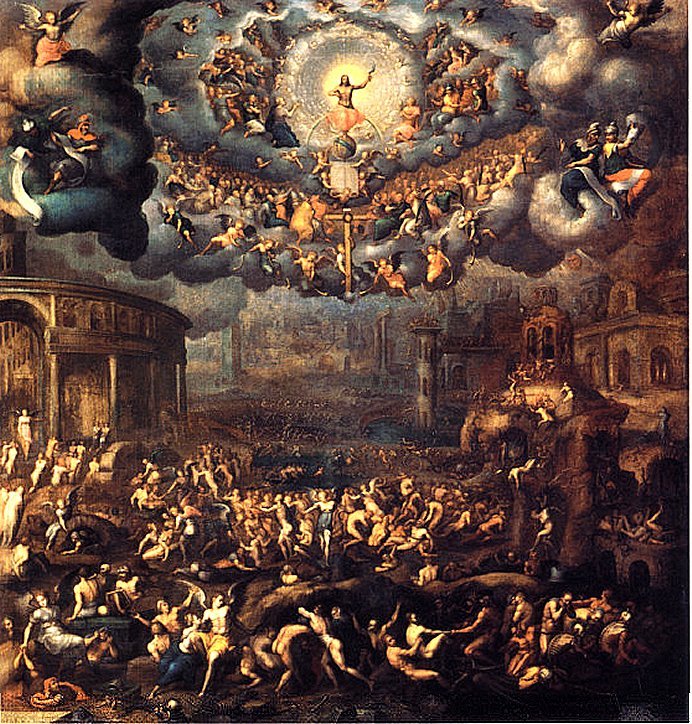
The Final Judgment

11 And I saw a great white throne, and him that sat on it, from whose face the earth and the heaven fled away; and there was found no place for them.
 
12 And I saw the dead, small and great, stand before God; and the books were opened: and another book was opened, which is the book of life: and the dead were judged out of those things which were written in the books, according to their works.
 
13 And the sea gave up the dead which were in it; and death and hell delivered up the dead which were in them: and they were judged every man according to their works.
 
14 And death and hell were cast into the lake of fire. This is the second death.
 
15 And whosoever was not found written in the Book of Life was cast into the lake of fire.

Apocalypse 20:11-15

The perspective of this blog is that the Bible is Myth, and the Christian tradition must be understood mythically.

As I'm fond of repeating, Myths never happened, but always are.

That is to say: A myth is a story which expresses a fundamental principle of nature, human life, or reality itself in a form the human mind can grasp.

When we understand the teachings of the Christian tradition mythically, and then apply them as guides to spiritual practice, we have what we call Occultism or Esotericism.

How To Understand the Second Coming Esoterically -- And How to Misunderstand It

If myths never happened, but always are, then the end of the world is something that is always happening

On some level, we all know this. The only constant in our world under Heaven is change. Think of your own life-- Is it different now from the way it was ten years ago? One year ago? How about a month ago? How about last week? I bet if you think about it, it isn't even the same as it was an hour ago. Sometimes the changes that we're talking about are very big. I have friends and loved ones who were alive ten years ago but are no longer with us today; on the other hand, I have other friends who I had not yet met, and family members who had not even been born! I bet you do too.  All change is an ending. The places, people, habits, thoughts and emotions, even the larger cultural patterns that characterize are world, and that truly are our individual worlds, are changing, and ending, all the time. All change is a kind of death, a kind of apocalypse.

The mystic traditions of the East refer to this constant process of change and dissolution as anicca, or impermanence. The awareness of anicca is a central feature of many Eastern systems of spiritual development. The proper response to anicca is detachment from impermanent things, which is to say, from all things. Attachment leads to dukkha, or suffering. This must necessarily be the case, as all the objects of our attachment are always melting away, always dying. 

Now, many Eastern systems stop at this point, framing the goal of the spiritual life as the awareness of anicca and the release from attachments in general.* In the West, we have always had a different approach. The Western Mysteries say that, yes, everything in the world of Becoming is characterized by anicca, impermanence, but there is a world beyond the world of Becoming. This is the world of Being, which is permanent. The correct objects of our attachment are not the illusory things of the world of becoming, but the real things of the world of Being. 

It's actually more correct to say that there are many worlds beyond the world of Becoming, each a little more stable, solid and permanent. Above, beyond, beneath, and upholding it all is the One, that eternal permanence beyond even Being itself by which all the worlds are held together, and from which the great fire of existence constantly pours through creation. In Christianity we call this power God the Father.

We say that Christ is returning. For those who are ready, his arrival will be as the arrival of the bridegroom at the wedding feast. For those who are not ready, his coming will be as the coming of a thief in the night. 

This is not meant to terrify us; God isn't an abusive father coming home to beat us up if our room isn't clean. These images are tools and they are meant to teach us. How do we live, and who do we become, if we live in the awareness that Christ could return at any moment? If, at any moment, the book of life will be opened, and we will be judged according to our deed?

The Unpredictable Apocalypse

There are some ends-of-the-world that we can predict. Cycles exist in history and astrology; we can see them coming, have a sense of their general shape and tenor, and plan accordingly. Strauss and Howe accurately predicted that a generational crisis was coming to America, way back in 1996. Now, no one knew the exact shape the crisis would take-- and we still don't, as it is still unfolding, all around us. In the same way, nobody in the middle of September knows exactly what Winter will be like that year. Will it be long and cold, snowy and wet, warmer than usual? We can't know that in advance, but we can know that Winter will come, and prepare accordingly.

There are other apocalypses that cannot be predicted. You never know when a sudden economic downturn will put you out of work, or a natural disaster will render large parts of your state or country uninhabitable. You never know when you'll get that phone call telling you that someone you love has died. The only way we can prepare for these crises is by maintaining ourselves in a constant state of readiness, by forming and maintaining conscious contact with God, and the Heavenly world.

A Word to the Wise

By the way-- never doubt that the end of the world could also simply happen, exactly as your Catholic grandma or your fundamentalist neighbor thinks it will. If the last few years haven't taught you that you have no idea what's really going on in the world, you haven't been paying attention. And besides that-- it's the central claim of the Christian religion that, at a particular moment in time, the world of Myth erupted into the world of History. This is the life, death, and resurrection of Jesus Christ. Did it really happen, as a historical event? I think so, but I also think it's far more important to understand it as Myth than as History. That said, if it can happen once, it can happen again. 

Meditation

During Advent, we unite ourselves with the changing tides of Nature in order to prepare our spirits for the return of Christ. 

At least on Fridays during Advent, perform the following meditation.

1. Opening

A. While seated in front of your altar or prayer space, with a candle lit and incense burning (if you like). Begin with the Sign of the Cross. Remember to do this slowly and reverently. 

B. Say the Our Father, Three Hail Marys, and the Glory Be.

C. If you like, perform the asperges with holy water and censing with incense, as described in the post on Advent Sunday.

2. Profession of Faith

Return to your seat, and make a profession of faith suitable for you and your practice. Here are several options:

The Nicene Creed

I believe in one God,
the Father almighty,
maker of heaven and earth,
of all things visible and invisible.
 
I believe in one Lord Jesus Christ,
the Only Begotten Son of God,
born of the Father before all ages.
God from God, Light from Light,
true God from true God,
begotten, not made, consubstantial with the Father;
through him all things were made.
For us men and for our salvation
he came down from heaven,
 
and by the Holy Spirit was incarnate of the Virgin Mary,
and became man.
 
For our sake he was crucified under Pontius Pilate,
he suffered death and was buried,
and rose again on the third day
in accordance with the Scriptures.
He ascended into heaven
and is seated at the right hand of the Father.
He will come again in glory
to judge the living and the dead
and his kingdom will have no end.
 
I believe in the Holy Spirit, the Lord, the giver of life,
who proceeds from the Father and the Son,
who with the Father and the Son is adored and glorified,
who has spoken through the prophets.
 
I believe in one, holy, catholic and apostolic Church.
I confess one Baptism for the forgiveness of sins
and I look forward to the resurrection of the dead
and the life of the world to come. Amen.

The Confession of Faith of Saint Patrick

There is not, nor ever was, any other God – there was none before him and there shall not be any after him – besides him who is God the Father unbegotten: without a source, from him everything else takes its beginning. He is, as we say, the one who keeps hold of all things. And his Son, Jesus Christ, whom we declare to have always existed with the Father.
 
He was with the Father spiritually before the world came into being; begotten of the Father before the beginning of anything in a way that is beyond our speech. And ‘through him all things were made’, all things visible and invisible. He was made man, and having conquered death was taken back into the heavens to the Father.
 
‘And he has bestowed on him all power above every name in heaven and on earth and under the earth, so that every tongue may confess that our Lord and God is Jesus Christ’. In him we believe, looking forward to his coming in the very near future when he will judge the living and the dead, and ‘will repay each according to his works’.
 
And ‘the Father has plentifully poured upon us the Holy Spirit’, the gift and pledge of immortality, who makes those who believe and listen into ‘sons of God’ the Father and ‘fellow heirs with Christ’.
 
This is whom we profess and worship, One God in Trinity of sacred name. Amen.

The Profession of Faith of the Liberal Catholic Church

We believe that God is Love and Power and Truth and Light;
that perfect justice rules the world;
that all His sons shall one day reach His feet, however far they stray. 
 
We hold the Fatherhood of God, the Brotherhood of man,
we know that we do serve Him best
when best we serve our brother man.
 
So shall His blessing rest on us and peace for evermore.
 
Amen.

3. Confiteor

Now is the time to make a humble confession of your sins. When doing so, remember the purpose of Confession. It is not to harm us. It is to heal our souls by, first, removing any foreign element; second, restoring the soul to its original wholeness; and, third, re-aligning the soul with the path of spiritual evolution whose summit is God Himself. 

You can do this simply by calling to mind your sins, and then praying one of the formulae given below. Afterward, take a moment to imagine a current of holy fire descending from Heaven. Imagine it pouring into you, burning away the black impurities of sin, and restoring you to wholeness.

Roman Catholic Confiteor

I confess to almighty God, to blessed Mary ever Virgin, to blessed Michael the Archangel, to blessed John the Baptist, to the holy apostles Peter and Paul, and to all the saints, that I have sinned exceedingly in thought, word, and deed: through my fault, through my fault, through my most grievous fault. Therefore I beseech blessed Mary ever Virgin, blessed Michael the Archangel, blessed John the Baptist, the holy apostles Peter and Paul, and all the saints, to pray to the Lord our God for me.

May almighty God have mercy on us*, and, our sins being forgiven, bring us to life everlasting. Amen.
 
May the almighty and merciful Lord grant us pardon, absolution, and remission of our sins. Amen.

Liberal Catholic Confiteor

O Lord, Thou hast created us to be immortal and made us to be an image of Thine own eternity; yet often we forget the glory of our heritage and wander from the path which leads to righteousness. But Thou, O Lord, hast made us for Thyself and our hearts are ever restless till they find their rest in Thee. Look with the eyes of Thy love upon our manifold imperfections and pardon all our shortcomings, that we may be filled with the brightness of the everlasting light and become the unspotted mirror of Thy power and the image of Thy goodness; through Christ our Lord. Amen.

May God the Father, God the Son, God the Holy Spirit, bless, preserve and sanctify us; may the the Lord in his loving kindness look down upon us and be gracious unto us; may the Lord absolve me from all our sins and grant unto us the grace and comfort of the Holy Spirit.  Amen.

*In both these versions of the Confiteor I'm preserving the first person plural form from the mass, in order to remind us of the fact that we are never alone in this journey. If it feels more appropriate to you to use the first person singular-- that is, "I," "me," in place of "we," "us"-- please do so.

4. Meditation on the Second Coming

Now is the time to enter into meditation. Do this as described previously, first taking time to relax your body and still your energy with a few minutes of rhythmic breathing. 

Then, call to mind the images from the Book of Revelation from the beginning of this post. See the return of Christ; imagine it happening tomorrow, or next week-- or right now. Imagine the Book of Life being opened, and your deeds read out before the assembly of Heaven and Earth. Who are you, at this moment? How have your actions shaped your present life? Who were you intended to be? What place have your works in this life merited you in the next? 

Remember that the "next life" is a term with many meanings. It means the eternal fate of your immortal spirit, once all of time is over and done. It means your next incarnation, which will allow you to work out the consequences of your actions in this life and learn from any mistakes you may have made and failed to correct. It means the life that you will live from the moment you get up from your meditation chair and begin the rest of your day. Who will you be? Who are you meant to be?

Call to mind that healing, divine fire that descended during the Confession. Who will you be-- now that have been restored to wholeness and the grace of God?

5. Closing

Take a moment to visualize the best possible outcome for all of the various next lives that you will live. Pray that it may be so, and ask for the guidance of your Guardian Angel. Pray that, as the austerities of Advent prepare you for the coming of the Christmas season, so too you may be willing to suffer what you must in this life, for the sake of the next. This is also a good time for any other particular prayers or devotions you may want to add.

Afterward, return for a few minutes to simple, rhythmic breathing, awareness of the presence of God. Close with a suitable prayer and the Sign of the Cross. 


The Meaning of the Christmas Tree

The Tree is the best known symbol of the Christmas season. These days, most Americans, from what I can tell, put up their tree as soon after Thanksgiving as they can manage, and light and decorate it that day. Traditionally this was not done; the tree would be put up near Christmas and not lit or decorated until after Mass on Christmas Eve. Certainly that was the custom in my family, but especially if you have young children, you may find it hard to buck the trend. (I'll be getting my tree this Sunday and decorating it that evening.)

As with the Advent Wreath, the Tree can be understood on many different levels. Let's discuss a few of them now.

The Tree is the mightiest creature in the plant kingdom; it stands in relation to herbs and vegetables as humans do to animals. In the forest, every tree becomes a kind of world unto itself, providing a living space for hundreds of creatures, from insects to birds and mammals. As such, it is a symbol of the entire world of Nature which has been created by God, and even of the cosmos beyond our world. In many traditional cosmologies, our world is one of many, all of which hang from a single great Tree; the Christmas Tree thus symbolizes the power which unites all the worlds, drawn into the smaller world of our own homes. And in Western Esotericism, it symbolizes the Tree of Life, the great symbol of the unfolding process of creation that is at the heart of the Cabala.

Like all green plants, trees turn sunlight into energy. In this way they literally turn sunlight into their bodies. As we eat of their fruits, or of the flesh of animals who have eaten of them, we then turn that sunlight into our own bodies. The Sun Himself is an icon of the Hidden Sun of Spirit, which is Christ. As the body of Christ nourishes our spirits, the body of sunlight, which is all plant and animal food, nourishes our bodies. 

The Christmas Tree is always an evergreen, usually a fir or a spruce. As its leaves stay green even in the darkest months, we are reminded of the eternal reality of God, and of the eternal presence of God which can guide us even in the darkest times.

You can and should use the practice of meditation to go deeper with any of these ideas and explore new ones, whether from traditional sources or your own personal inspiration. 

How to Use Real Trees Responsibly

Our world needs more trees in it, not fewer, and so many people prefer an artificial tree to a real one. If that's the case for you, you can still use the material in here. The artificial tree still expresses the symbolic ideas, and it can still be ritually blessed, as described below. 

I personally prefer real trees, though; it's quite simply the case that a living tree has power, as in magical power, that an artificial tree does not and cannot have. But a tree is a living being. Apart from any environmental concerns, that means it must be treated respectfully, just as an animal must be treated respectfully. Let's talk about how to do that. 

Cut Down Your Own Tree

If at all possible, find a farm in your area that allows you to cut down your own tree. This has a great number of advantages. First, you're supporting local agriculture, and putting your money and time into your local economy and the land where you live. Second, it allows you to put your energy into the tree from the very beginning. You find the tree yourself, and you do the work of cutting it down and hauling it to the barn to pay for it. By doing this, you mix your energy, which is the very substance of your body, with that of the tree. That's very important on an esoteric level, as we'll discuss presently.

Understand You Are Working Alchemy

One of the great secrets of magic is that we are all doing magic all the time. Now, that branch of magic by which physical things are transformed and led to express their hidden spiritual nature is known as Alchemy. Usually when we hear that word, we picture medieval wizards working in secret laboratories in high towers under the moon. But Alchemy, like magic as a whole, is something we practice all the time. Every act of cooking is a work of alchemy, and every cook is an alchemist. This is a secret that good cooks as well as good psychics know-- every meal contains a trace of the person who prepared it. Eat a meal cooked in a filthy kitchen by someone who hates you and doesn't want to be doing the work, and you'll feel it, if you have the least bit of sensitivity; eat a meal made with love in a clean and happy kitchen by a cook who cares about their work, and you'll feel that too.

In just the same way, the process of taking a tree from nature and transforming it into a living symbol of the Christmas season is a great work of alchemy. As such, it must be undertaken with the greatest care. Before you even leave the house, take a few minutes to still your mind and say a prayer. You can ask Saint Francis, as patron of ecology, or the archangel Uriel, as the archangel who governs the Earth element, to guide you in your day's work. Play Christmas music in the car on the way to the farm-- good Christmas music, the kind that inspires you and invokes the Spirit of the Season. (For me, in an ideal world, that would mean something like Adrian Willaert's Christmas Vespers. Since my wife and kids have to share the car with me, Frank Sinatra's 1948 Christmas album works well enough!)

Now, don't stress about maintaining the right mood or the right attitude-- that's the best way to make sure you won't! Just do the work to the best of your ability and aim to enjoy yourself, but also to act in the energy of the Christmas season, and to invoke the divine to guide your actions.

Bless Your Tree

When you find your tree, talk to it. Tell it your intention-- "I'm cutting you down to place you in my house. You will be covered in lights, and be a symbol of joy and an icon of the Great World Tree itself."

I like to carry a water bottle with me, filled with water or something else-- wine is traditional, but coffee will do, and hot chocolate might be even more appropriate-- so that I can surreptitiously pour out an offering to the spirit of the land. Actually I do this anywhere I go hiking.

When you get the tree home, bless it. The United States Conference of Catholic Bishops provides a functional blessing ceremony, which you can use as is or modify. I personally prefer to use the methods of ceremonial magic to invoke divine light into the tree. Here is another option:

A Simple Blessing Ceremony

For this ritual, all you need is yourself and your tree. If you want, you can provide yourself with holy water and incense. 

Before the tree, make the sign of the Cross, and then pray the Our Father, Three Hail Marys, and Glory Be, as we've discussed.

If you have holy water, hold it aloft and say the words, "Cleanse me with hyssop, oh Lord, and I shall be clean; wash me, and I shall be whiter than snow; have mercy on me, oh God, according to thy great mercy." Then sprinkle holy water in the four corners of the room, 3 times each.

If you have incense, hold it aloft and say the words, "Let my prayer be directed, O Lord, as incense in thy sight, the lifting up of my hands as an evening sacrifice." Wave the incense three times to each quarter of the room.

(If you have two participants, they should alternate the following section, with the person leading the rite as the reader. If you only have one person, they can do all the reading. When you see a +, make the sign of the cross over the tree, visualizing it in the form of brilliant white light descending from Heaven above.)

Reader: Our help is in the name of the Lord.
Response: Who hath made the Heavens and the Earth.
Reader: Let us pray.

Reader: Oh God, who made the Heavens, and who made the Earth to bring forth vegetation, and the tree to bring forth the fruit of its kind, we pray for your blessing + be upon this Christmas Tree. Let your divine light fill it, that it may bring light, and joy, and peace our home during this Christmas season. Let it be a visible reminder to us of the gifts of Nature and of the realty of the Life Eternal during this time of cold and darkness. Let its spirit be blessed, and may the blessing of Almighty God bring fertility to the soil and the land where it was grown and peace and prosperity to the people of that land. Through Jesus Christ, Our Lord.

Response: Amen.

The tree is sprinkled three times with holy water, and censed three  times with incense.

Reader: We thank thee, O Lord, for the gift of this tree. May thy blessing 

Response: Amen.

Close with the Sign of the Cross.

Use Your Tree!

Whatever you do, do not be one of those people that throws the tree out on the curb on the 26th of December. In the first case, it should stay up and lit through Epiphany, on January 6th. But more to the point, you should not throw it out at all. Every part of your tree can and should be used.

But how?

Many different ways. You can toss a handful of twigs and needles into a pot of water on the stove and bring it to a boil; let it go all day and it will fill your house with the scent of evergreen. Or boil for a few minutes to make a tea which is both tasty and rich in Vitamin C. You can use dried-out twigs with needles as incense-- be careful with this, as the needles will burn very quickly. And at the end of the season, you can chop it into firewood. I like to burn the very last of the Christmas tree on Candlemas, which is the true finale of the Christmas season.

You can also eat your tree. A fine book written a few years ago discusses this in detail. At minimum, you should consider making at least one round of Christmas Tree Tea-- this is a way of bringing the magical energies of the tree directly into your body.

A (very, very) Simple Christmas Tree Beer

Start by boiling a gallon of water on the stove. Add one to one and a half pounds of either molasses (light is better; you can use blackstrap but it will taste salty) or maple syrup.

Add green needles from your tree. Exactly much is up to you-- not too much, and not too little. You want it to have the flavor and scent of the tree. Continue boiling for 5-10 minutes.

Take the pot off the stove, and cool it down as rapidly as you can to room temperature; the easiest way to do this is to put it in a sink full of cold water.

Now, pour into a gallon jug, and add sufficient cold water as necessary to make one total gallon of liquid.

Add one teaspoon of Fleischmann's bread yeast. Shake.

Best practice is to cap it with a plug and an airlock, like this. In a pinch, you can put a screw-on cap, fitted loosely; loosen it more once a day to release any excess gasses.

In 2-4 weeks, it will be ready to drink. Boil 1/4 cup of sugar in a cup of water, cool and add to the mix. Then siphon into bottles, and allow 1-2 weeks to carbonate. Enjoy!


Finally, a word of warning: Be very careful when consuming trees! Not every evergreen is healthy for humans. Yew trees are deadly poisonous; cedars can kill you in large amounts. Know what type of tree you have before putting it in your body.


Introduction


Advent begins the Christmas season, and it begins the Christian Wheel of the Year. The first day of Advent is always a Sunday, and the markers of Advent are the four Sundays before Christmas. This means that Advent varies in length from year to year. This year, Christmas falls on a Saturday, and so Advent lasts nearly four full weeks! On the other hand, if Christmas falls on a Monday, Advent is only three weeks long, plus the final Sunday. 

This year, the First Day of Advent is today, November 28th. 

The Intention

The name Advent comes from the Latin adventus, and means "coming." During the season of Advent, we are preparing for the coming of Christ into the world. 

The world during Advent reflects the world prior to the coming of the Christ-- it's cold and it's dark, and the powers of Nature are at their most inimical to human life. The Sun, that living icon of the power of the Most High God in the physical world grows dimmer by the day, until it seems that Creation itself will be undone and the Chaos that was before the beginning will triumph over all.

In this dark season, we prepare our spirits for the hoped-for return of Light to the world. We do this through fasting, prayer, and almsgiving. We also prepare our homes for the Christmas season.

Fasting, and the Second Fall

Advent is traditionally a season of fasting and abstinence. In Catholicism, these are technical terms which have slightly different meanings. "Fasting" specifically means limiting the amount of food taken, while "abstinence" means limiting the type of food taken. Historically, the "fast" specifically meant that food should be limited to one 8-ounce meal per day, taken around noon. Two small snacks were also permitted,along with a bit of bread (without butter) and coffee in the morning if desired. The "abstinence" portion specifically means abstinence from meat.  In practice, these two nearly always go together, and so we can use the term "fasting" as a catch-all. 

These days, the Western churches do not impose a specific fasting requirement during Advent. This is, of course, a sign of their degradation, but it also presents an opportunity. There are many ways to do a fast, and the lack of a universal requirement allows us to experiment. But before we get to that, let's talk about the reason for fasting in the first place.

Fasting has two major purposes. The first is, quite simply, to withdraw our souls from the material world. The physical body is-- to put it plainly-- made out of meat. When the diet is limited to vegetable products, it becomes easier for the soul to focus on the non-physical world. This is why full-time veganism is practiced in those spiritual traditions that are especially interested in "getting off the planet" as quickly as possible, particularly various types of Buddhism and, in earlier times, Manichaeism.

The second purpose is to train the will. The desire for food is one of the functions of the lower part of the soul, called "Epithymia" in the traditional writings, or, simply "appetite." Epithymia isn't limited to food, though. It also includes sexual desire, and, more generally, everything in our being that urges us toward pleasure, safety, and comfort. In the Christian tradition, the Appetite isn't necessarily evil, but it has its proper place, and that place is under the firm control of the higher parts of the soul-- the will and the reason. 

As I wrote above, we don't have a specific fasting rule at this time, and that gives each of us a bit of latitude in coming up with one appropriate to our needs and situation in life. I'm going to suggest 3 possible levels of fasting, with different degrees of intensity; you're welcome to pick one of these, or come up with one of your own. First, though, we need to talk about about another level of asting.

The Second Fall

The following is myth.

In the time of Jesus and his near-contemporaries such as Plato and Gautama Buddha, the lowest level of reality on which human beings had their existence was the physical level, or the world of Nature. As such, the spiritual systems of the time focused on transcending physical reality. This is the reason for the rules of fasting and vegetarianism present in many of these traditions-- as the material world was the lowest level of our existence, its transcendence was our immediate concern.

In the last few centuries, though, matters have gotten worse. Starting with the industrial revelation, accelerating with the digital revolution and culminating in the advent of virtual reality, humanity has undergone a Second Fall. These days we spend most of our time not in nature, and not withdrawn from it to a higher level of existence, but below it. We sit in temperature controlled rooms staring at illusions on screens like the one you're looking at right now, and the urges that bombard our Epithymia are not for food or sleep or even sex but just for more screens-- another like on Facebook, another infuriating tweet, another level in a videogame. 

We have fallen from Nature to the level below Nature, the Sub-Natural. 

The existence of such a plane of being is hinted at in hte old occult writings, and what they suggest is troubling indeed. The old models of the world in which Heaven is above us and Hell below are metaphors meant to describe the environment we really inhabit in terms the human mind can grasp. The true Heaven is not above but present to us all the time, if we can find it. Similarly, Hell is not below our feet-- and the Sub-Natural, being below Nature, is not far from Hell. 

In order to rise to Heaven, then, our task now is not merely to transcend the Physical. We have to start by returning to the Physical. For this reason, nature-based spirituality is especially appropriate for people in the modern world. 

I therefore suggest that every fast should include an element of technology fasting. This can be as simple as turning the phone and the computer off for the evening, or as advanced as spending a full day without using technology of any kind. Start where you're at and start with what you can do.

Three Fasts

The traditional days for fasting are Mondays, Wednesdays, and Fridays. The modern church limits such fasting as it prescribes to Fridays; more recent traditions have Wednesdays and Fridays. For our purposes, we can make Friday the main focus of our fasting, with Wednesday and Monday-- or, for the seriously dedicated, the whole rest of the week-- available to expand our practice as we grow in strength of will.

Level 1. On Wednesdays and Fridays for the rest of Advent, eat a pescatarian diet. Take no alcohol during these days, and do not snack between meals. After dinner, turn your cell phone off except for its calling function-- i.e., no apps or text messages-- and turn the computer off as well. 

Level 2. Follow all of the above practices. On Fridays, limit the diet to one small, vegan meal of no more than 8 ounces of food. In addition, you may have two small snacks, and start your day with a piece of bread or bagel without butter, and a hot drink of your choice. On Fridays use no digital technology of any kind, unless you need to answer the telephone (with your voice). This means no TV either! Also on Fridays, after dinner, turn off all of the lights in your house, and spend the evening using only candlelight. 

Level 3. Follow all of the above practices, but extend them to Mondays and Wednesdays as well. In addition, see if you can come up with one extra act of technological sacrifice. If you have a fireplace or woodburning stove and your health and that of your family permit, see if you can go without running the heat one night of the week. If not, at least turn it down two or three degrees, or more. Wear a sweater and a cap instead. If you can possibly get away with it, do not drive anywhere during one of these days, or on Saturdays. One or more of these days, don't use any heat at all in the shower (this feels a lot better than you can imagine, once you get used to it).

You're welcome to practice one of the three of these, a mix of practices from each of them, or some other fast all of your own!

In addition to the above, you should set aside 10-15 minutes every day for prayer and meditation, and the same length of time, every day, to spend out of doors in a natural setting. During both of these times ignore your cell phone. Turn it off, put it on silent, or leave it at home.

Extra Days

We will talk about this in due time, but you should know that Wednesday the 17th of December, Friday the 19th and Saturday the 20th are special fasts known as Ember Days. Be prepared, that week, to add Saturday to your days of fasting! 

Traditions and Customs

There are many special customs and traditions associated with Advent. Most of them will have their own posts, but today let's talk about one of them.

The Advent Wreath

The great symbol of Advent is the Advent Wreath. You can see a picture of it in the header of this post. An Advent wreath is set with four candles: three are violet, and one is rose colored. Traditionally, every color has its own symbolism, and each station of the Wheel of the Year has its particular color. For now, two colors concern us.

Violet is the color of suffering and penance. If that sounds unusual, consider that traditionally, it was viewed as a variant of black. These days black is more or less a heavier version of violet. The three violet candles on the wreath symbolize Advent as a penitential season, reminding us that in these days we wander in darkness, waiting for the birth of the savior.

Rose is the color of joy and happiness. There is one rose candle set amidst the violet candles, symbolizing hope for a renewed world and a reminder of the prophesied savior.

Notice the ratio here: We have three violet candles and one rose candle. This teaches us something about the nature of Advent. It is primarily a penitential season, but it is a joyous season as well-- the trick is to not let the joyous element of the season overwhelm the penitential aspect. There will be time enough for celebration later. 

Beyond the candles, every element of the Advent Wreath can be understood symbolically. The wreath itself is a circle, the symbol of eternity; the four candles symbolize the four elements of the world of matter, and their colors, the nature of life here below; the greenery is produced by sunlight manifesting in evergreen trees, symbolizing the eternal spirit dwelling in the world of matter; the fire slowly burning the candles away is the fire of time, drawing us inexorably upward toward the Eternal Fire which is God. 

The Advent wreath should be set at the dinner table or some other suitable location. Every Sunday, a new candle is lit. The first and second Sundays are violet, the third is rose, and the fourth is violet again. 

The wreath itself should be blessed, and particular prayers are said every time a new candle is lit. You can find a good set of prayers here. You can also come up with your own.

Prayer and Meditation

Finally, let's talk about prayer and meditation. These should be part of your life already, but if not, this is a fine time to start!

Later, I'm going to do a full post on this subject. For now, I want to suggest that, at minimum, the cycle of the Our Father, Three Hail Marys, and the Glory Be should be said in the morning. This should be followed with a period of suitable reading and meditation. (I will also do a longer post with specific instructions for meditation, but in the meantime, this is as good a guide as any). Scripture, especially the readings for the day; spiritual handbooks such as the Imitation of Christ; or specific books of daily meditations can all be used. 

A Guide to Christian Meditation

A basic prayer practice might look like the following.

1. As soon as possible after rising, find a comfortable place where you can sit quietly in privacy for a short while. It's best if you have a crucifix and other holy symbols in eyesight, but in a pinch, the edge of your bed will do. 

2. Close your eyes, breathe in slowly and exhale fully. Make the sign of the cross slowly and reverently. 

3. With the same degree of reverence, pray the Our Father, the Hail Mary 3 times, and the Glory Be. Enter into the prayer, saying each word deliberately and with intention-- not just uttering the syllables by rote. If there are any particular prayers or devotions to saints that you're personally working with, now is the time to pray them, with the same degree of deliberate intention.

4. Take a minute to read. Alternatively, if you're practicing first thing in the morning, you can do your reading the night before; the ideas will marinate in your unconscious mind while you sleep.

5. Remaining in a seated posture, take a few minutes to relax the muscles of your body, starting with your head and working your way down to your feet. Then take another minute or two to breathe deeply and rhytmically. Poised relaxation is the state you want to achieve. 

6. Bring to mind any idea that jumped out at you from your readings for the day, or another suitable theme for meditation-- the season of the year, the meaning of Advent, the life of a saint whose feast it is are all appropriate. Spend 5-10 minutes thinking about this topic. Your mind will wander; when it does, just gently bring it back to your theme.

7. Close with a few more minutes of breathing, and a suitable prayer. The Come Holy Spirit, the Prayer of Saint Patrick, or the Saint Francis Prayer are all good choices. 

8. Close with the Sign of the Cross.

This should be done every day, along with extra time spent in the out of doors, as described above.

That's all for today. As the weeks go on, we'll discuss the deeper meanings of all of these practices, and more. Happy Advent everybody!


Introduction

Welcome to a new feature of this blog, which I'm calling The Christian Wheel of the Year.

Over the last few decades, it's become very popular in pagan and occult circles to celebrate the turning seasons with magical practices, prayers, rituals and the like. Like much of modern paganism, these practices aren't new, and they also aren't re-creations of the actual practices of ancient paganism, most of which are lost to us. In reality they are derivative of the practices of traditional, sacramental Christianity, as it evolved over the centuries from the late classical era to our present day. If you look at the best known "pagan" seasonal cycle, the Wiccan 8-Fold Wheel of the Year, it's easy to see that every last festival on its calendar derives from the practices of Christian-- and, in particular, Catholic-- Europe. Western Christianity, meanwhile, has in many cases completely abandoned its own tradition, and Christians often believe the falsehood that their own traditions actually are pagan!

Now, it needs to be said immediately that this does not invalidate the Wiccan Wheel of the Year or its Heathen or Druidic siblings as as a spiritual practice for pagans. Not at all! Spiritual practices are rooted in the world of Myth, which is quite a different thing from the world of History; as such, it is commonly the case that a particular practice's "real" origin is different from the one that it claims. Traditions around the origin of spiritual practices should be treated as myths, not histories-- that is to say, as stories about the true nature of reality, meant to shape our minds and our habits in the physical world.

All that said, the fact is that there is a great longing in the modern world for traditional Christianity as it truly is-- neither disguising itself as paganism, nor abandoning its traditions in order to become a kind of bland chaplaincy for the Modern world. This need is being addressed by the Traditional Catholic movement, by the spread of Eastern Orthodox churches (who never abandoned their past) in the Western world, and the re-discovery of the great traditions by Protestants. But I have a strong sense-- and it's the sense that informs this blog-- that this need is also being felt by people who do not accept the traditional theologies of the Christian churches, even at their best. There is a group of people out there in the world who find more spiritual sustenance in Alan Watts, Dion Fortune or Eliphas Levi than Von Balthasar or John Henry Newman-- while at the same time also finding far more spiritual sustenance in the Rosary, the Tridentine Mass and the church cycle of fasts and feasts than in scrying the Tarot, casting Wiccan circles or worshiping pagan deities.

This is written with such people in mind. Starting today, the first day of Advent, I'm going to go through the Christian Wheel of the Year, discussing traditional fasts and feasts, saints' days, customs and seasonal cycles-- but always interpreted through the lens of the Esoteric tradition. Each post will discuss the feast or or feast in question, suggest an esoteric interpretation, and provide notes for practice, including prayer and meditation. I'll also include some ideas for Christian ritual practice, including the first outline of a system of Christian magic that probably wouldn't even get you into trouble in the most orthodox of churches. 

Sound good? If so, welcome aboard!

The Gospel of Matthew, Chapter 10, Verses 1 through 15 reads:
 

1 And when he had called unto him his twelve disciples, he gave them power against unclean spirits, to cast them out, and to heal all manner of sickness and all manner of disease.
 
2 Now the names of the twelve apostles are these; The first, Simon, who is called Peter, and Andrew his brother; James the son of Zebedee, and John his brother;
 
3 Philip, and Bartholomew; Thomas, and Matthew the publican; James the son of Alphaeus, and Lebbaeus, whose surname was Thaddaeus;
 
4 Simon the Canaanite, and Judas Iscariot, who also betrayed him.
 
5 These twelve Jesus sent forth, and commanded them, saying, Go not into the way of the Gentiles, and into any city of the Samaritans enter ye not:
 
6 But go rather to the lost sheep of the house of Israel.
 
7 And as ye go, preach, saying, The kingdom of heaven is at hand.
 
8 Heal the sick, cleanse the lepers, raise the dead, cast out devils: freely ye have received, freely give.
 
9 Provide neither gold, nor silver, nor brass in your purses,
 
10 Nor scrip for your journey, neither two coats, neither shoes, nor yet staves: for the workman is worthy of his meat.
 
11 And into whatsoever city or town ye shall enter, enquire who in it is worthy; and there abide till ye go thence.
 
12 And when ye come into an house, salute it.
 
13 And if the house be worthy, let your peace come upon it: but if it be not worthy, let your peace return to you.
 
14 And whosoever shall not receive you, nor hear your words, when ye depart out of that house or city, shake off the dust of your feet.
 
15 Verily I say unto you, It shall be more tolerable for the land of Sodom and Gomorrha in the day of judgment, than for that city.


Initiation, Again


At this point, our story shifts gears. So far, our focus has been on Jesus. Now, he begins to send forth his own disciples-- even as John, who proceeded him. Notice that he gives them the words "The Kingdom of Heaven is at hand." This shows us that the energy that was transmitted through John to Jesus is now being transmitted through Jesus to his followers. 

Magic, Again

The followers of Jesus receive their power from him. What does he bid them to do? Heal the sick, cleans the lepers, cast out demons, raise the dead.

To say it another way: Physical healing, spiritual healing, and restoration to life.

And he gives them the command: Take nothing with you. Provide for others-- and you will be provided for. Whatever you give returns to you; whatever energy you participate in will manifest in your own life. How many times have we learned this principle? (In my own life, I frequently find myself saying, "How many times must I learn this principle before I put it into action?")

The Power of the Group

Notice that Jesus gathers 12 disciples together. He doesn't have a single apprentice; he regularly ministers to crowds. The metaphor he uses to describe his gathered followers is "the kingdom of Heaven." Jesus does not act alone, but in a group.

Whenever human beings gather together, a kind of group-mind is formed. In Occult Philosophy we call this an egregore. It is literally a kind of shared psyche. Its members experience shared thoughts and emotions, are inspired by the same images, and frequently share what are called "psychic experiences."

My wife and I frequently utter the same sentence at the same time. More frequently, one of us says something at the exact moment the other is thinking of it. 

Now, most people experience this sort of thing in their own families-- even if they don't realize it. It's especially pronounced between husbands and wives, and between mothers and their children. But it occurs in groups of other kinds. Neighborhoods, towns, states and nations; sports teams, bowling clubs, churches and occult lodges all have egregores of their own. We participate in egregores whether we want to or not. 

I recently spoke to a friend of mine who is an occultist, a Roman Catholic, and a gamer. She told me that her gaming group has been sharing collective dreams. And so she's begun ministering to some of the members of the group who are agnostics or atheists. 

Her gaming group has become an egregore-- and, moreover, one with genuine psychic power. Note its characteristics:

1. A shared purpose;
2. Shared activity;
3. Shared imagery, (which, importantly, all the members actually enjoy);
4. Shared emotion;
5. Shared struggle. 

These qualities also properly characterize a Christian church. A particular church is a united organization with a collective psyche. That collective psyche or egregore is shaped by shared activity in the form of the mass; shared imagery, in the forms of sacred images, music, and even scents in the form of incense; the many shared emotions of the liturgical cycle and the re-enactment of the Passion at the mass; and the shared struggle against sin. 

To the extent that the modern church has abandoned these things is the extent to which it has failed in its mission, and accounts for plummeting levels of participation among Catholics. no imagery, no struggle, no community-- no egregore. 

Or perhaps it's better to say that, rather than no egregore, there is an egregore of isolation and meaninglessness. 

In earlier times, every town, region and country and even every tradesman's guild had both its own patron saint and its own guardian angel. As does every family. The invocation of the guardian angel and the patron saint is intended as a way to strengthen and bless the egregore with divine power and protection-- because without these things, an egregore can go bad.

Bad Egregores

13 And if the house be worthy, let your peace come upon it: but if it be not worthy, let your peace return to you.
 
14 And whosoever shall not receive you, nor hear your words, when ye depart out of that house or city, shake off the dust of your feet.
 
15 Verily I say unto you, It shall be more tolerable for the land of Sodom and Gomorrha in the day of judgment, than for that city.

Every family, every town, every nation has its own collective soul, and if that soul rejects God, which is to say Being, Order, and Goodness, it embraces the opposite of God, which is Evil, Chaos-- and Non-Being. "It will be more tolerable for Sodom and Gomorrha" in such cases-- because to reject God is ultimately to reject existence itself. 

We often find ourselves caught up in egregores that have gone bad-- whether it's our family or our town, our country or our political party. Even the egregore of a hobby or a music scene can reject God and embrace chaos and nonexistence. Under those circumstances it's necessary to remove ourselves from the influence of the egregore, lest we be carried along with it to destruction. But how do we do that? Jesus is about to tell us.


Today let's look at the rest of The Gospel of Matthew, Chapter 9.

9 And as Jesus passed forth from thence, he saw a man, named Matthew, sitting at the receipt of custom: and he saith unto him, Follow me. And he arose, and followed him.
 
10 And it came to pass, as Jesus sat at meat in the house, behold, many publicans and sinners came and sat down with him and his disciples.
 
11 And when the Pharisees saw it, they said unto his disciples, Why eateth your Master with publicans and sinners?
 
12 But when Jesus heard that, he said unto them, They that be whole need not a physician, but they that are sick.
 
13 But go ye and learn what that meaneth, I will have mercy, and not sacrifice: for I am not come to call the righteous, but sinners to repentance.
 
14 Then came to him the disciples of John, saying, Why do we and the Pharisees fast oft, but thy disciples fast not?
 
15 And Jesus said unto them, Can the children of the bridechamber mourn, as long as the bridegroom is with them? but the days will come, when the bridegroom shall be taken from them, and then shall they fast.
 
16 No man putteth a piece of new cloth unto an old garment, for that which is put in to fill it up taketh from the garment, and the rent is made worse.
 
17 Neither do men put new wine into old bottles: else the bottles break, and the wine runneth out, and the bottles perish: but they put new wine into new bottles, and both are preserved.
 
18 While he spake these things unto them, behold, there came a certain ruler, and worshipped him, saying, My daughter is even now dead: but come and lay thy hand upon her, and she shall live.
 
19 And Jesus arose, and followed him, and so did his disciples.
 
20 And, behold, a woman, which was diseased with an issue of blood twelve years, came behind him, and touched the hem of his garment:
 
21 For she said within herself, If I may but touch his garment, I shall be whole.
 
22 But Jesus turned him about, and when he saw her, he said, Daughter, be of good comfort; thy faith hath made thee whole. And the woman was made whole from that hour.
 
23 And when Jesus came into the ruler's house, and saw the minstrels and the people making a noise,
 
24 He said unto them, Give place: for the maid is not dead, but sleepeth. And they laughed him to scorn.
 
25 But when the people were put forth, he went in, and took her by the hand, and the maid arose.
 
26 And the fame hereof went abroad into all that land.
 
27 And when Jesus departed thence, two blind men followed him, crying, and saying, Thou son of David, have mercy on us.
 
28 And when he was come into the house, the blind men came to him: and Jesus saith unto them, Believe ye that I am able to do this? They said unto him, Yea, Lord.
 
29 Then touched he their eyes, saying, According to your faith be it unto you.
 
30 And their eyes were opened; and Jesus straitly charged them, saying, See that no man know it.
 
31 But they, when they were departed, spread abroad his fame in all that country.
 
32 As they went out, behold, they brought to him a dumb man possessed with a devil.
 
33 And when the devil was cast out, the dumb spake: and the multitudes marvelled, saying, It was never so seen in Israel.
 
34 But the Pharisees said, He casteth out devils through the prince of the devils.
 
35 And Jesus went about all the cities and villages, teaching in their synagogues, and preaching the gospel of the kingdom, and healing every sickness and every disease among the people.
 
36 But when he saw the multitudes, he was moved with compassion on them, because they fainted, and were scattered abroad, as sheep having no shepherd.
 
37 Then saith he unto his disciples, The harvest truly is plenteous, but the labourers are few;
 
38 Pray ye therefore the Lord of the harvest, that he will send forth labourers into his harvest. 

Instead of going line by line through this chapter, let's draw out the various themes that appear in it. 

Parables

One of the central features of the Zen tradition is the koan. These are short stories or riddles which are intended as themes for meditation. Koans are nearly always paradoxical, and to deeply enter into them is to leave behind the illusion of a world of fixed and stable forms. "Baso said to a monk, “If I see you have a staff, I will give it to you. If I see you have no staff, I will take it away from you." "What is the face you had before your mother and father were born?" "A monk asked Master Haryo, 'What is the way?' Haryo said, 'An open-eyed man falling into the well.'"

In the work of Plato, myths and allegories play a similar role. Plato's allegory of the cave is probably the best known. When you encounter a myth or allegory in Plato, you should imagine it surrounded by large red signs reading PAY ATTENTION. Nor should the myth or the allegory simply be read-- it must be read, re-read, and encountered in meditation.

This is how you should treat Jesus's parables. They should be read and re-read, considered in their own light and in the light of all his other parables, and in the context in which they appear in the story. 

In this section we are given the following parable:

No man putteth a piece of new cloth unto an old garment, for that which is put in to fill it up taketh from the garment, and the rent is made worse.
 
Neither do men put new wine into old bottles: else the bottles break, and the wine runneth out, and the bottles perish: but they put new wine into new bottles, and both are preserved.
 
This occurs right after Jesus describes himself as the bridegroom. I could give you my interpretation of these images, or a link to the traditional interpretation of any theologian or denomination that you like, but you'll get far more out of it if you do the work yourself. Take these passages and engage them in discursive meditation. What do they have to teach you?

Healing

Jesus continues his healing ministry. This is central to his message and his work; really it is his message, and his work. I've said a great deal on this topic already, but it's worth re-considering it every time we find it. The work of Jesus is to heal, which is to make whole.

Notice two things that are highlighted in this chapter:

First, in order to receive divine healing, which is whole-making, we have to be open to it. We ourselves must cooperate with the divine power in the restoration of our souls.

Second, who is it that needs healing?

"Only the sick need doctors." 

Healing (Often) Hurts

In the Gospel, Jesus's healings are accomplished quickly, without much ado. He commands the demon to depart, and it departs; he commands the girl to rise, and she rises. 

It's important to remember that we are in a myth, and that the central figure of the myth is the Son of God. In real life, healing is often a much slower and more painful process. Indeed, the full scope of healing-- the complete restoration of the soul to its proper wholeness-- is the work of a lifetime. Remember that the majority of the demons that we encounter in our daily lives consist of habits, addictions, and patterns of destructive thinking. They can be understood as demons, living things, in that they reproduce themselves; like living things, they tenaciously defend their existence. And the truth is that we don't want to be rid of them. We cling to our demons, our ghosts, our habits, our misbehaviors, our liquid or electronic drugs. They become part of us, and to cut them away causes extraordinary pain.

In the Gorgias, Plato discusses the nature of healing. There are-- he says-- two arts which are given for the improvement of the body, which are gymnastics and medicine. Each of these arts has a kind of toxic mimic, a facsimile which produces the appearance of success without the facts of it. These are fashion and what he calls "cooking," meaning confectionry or the making of sweets. In a memorable passage, Plato has Socrates imagine what it would be like if a cook were to try a doctor before a jury of children. 

Oh my boys, many evil things has this man done to you: he is the death of you, especially of the younger ones among you, cutting and burning and starving and suffocating you, until you know not what to do; he gives you the bitterest potions, and compels you to hunger and thirst. How unlike the variety of meats and sweets on which I feasted you!' What do you suppose that the physician would be able to reply when he found himself in such a predicament? If he told the truth he could only say, 'All these evil things, my boys, I did for your health,' and then would there not just be a clamour among a jury like that? How they would cry out!

We don't heal because we don't want to. Like children demanding ice cream for dinner, we want to cling to our vices because they are sweeter and easier than the harder way of virtue. I am no exception to this. 

Pistis

On certain occasions, a person sets down an addiction and takes up a new way of life all at once. This happens when they are well and truly ready for it. We see the model of this in the Gospel: "Your faith has made you whole." 

There are those who take this passage and interpret it to mean that, therefore, the only thing necessary for the Christian life is faith, by which they mean opinion. If you have the opinion that Jesus gave his life for you and you also agree that that was a fine thing for him to do, then you can expect to go to Heaven-- though not until after you die-- regardless of how you're living your life, your spiritual practices or the state of your soul. In the same way, if you don't share that particular opinion, no matter the reason, then, regardless of the way you're living your life or the state of your soul you're going to go to Hell-- again, though, not until after you're conveniently dead enough to be unable to offer any objection.

You won't be surprised to hear that I think Jesus is saying something more subtle and more interesting than that. 

The word he uses for "faith" here is "pistis," which does indeed refer to opinion. In the Republic, Plato suggests that the soul or psyche has four powers, of which two are higher, and two lower. The higher functions of the soul are, at the highest, the nous, of which we've heard so much already, and dianoia, the power through which we grasp intellectual objects. The two lower functions are opinion and image-thinking, by which he means sense perception. 

Now the higher functions of the soul are associated with the mental world, the lower functions with the physical world. Pistis, or opinion, is derived from the lower functions. But it is the way of things in the Platonic world that the higher shapes and forms the lower. We can change our pistis, which is our experience of the world. We start "from above," as it were, by aligning our wills and our psyches with a particular Spiritual Reality (this is usually called a "religion," and everyone has one, especially those who think they don't). We then let that Spiritual Reality shape how we interact with the physical world. This, in turn, shapes our experience of the physical world, which in turn reinforces our alignment with the Spiritual World.

This is what magical training and spiritual training of every kind is meant to do. The fact is that you don't see the world unmediated; in fact, there is no unmediated world. 

I studied Anthroplogy in college (for all the good it did me). I recall a professor in a Medical Anthropology class talking about how researchers in the field regularly found their bodies conforming to their subjects' medical views. It's a common view, for example, in many cultures that one shouldn't drink hot drinks in the winter, lest one become ill. In the winter, cold drinks should be taken, to balance the body's internal climate with that of the external world. That's exactly the opposite of how we do things in the United States, and on a scientific materialist view it's impossible. Nevertheless, researchers regularly found themselves developing sore throats if they persisted in drinking hot liquids in the winter in countries in which it was known to cause problems. 

Every system of magical training works this way, and this is why students are given regular ritual practice and the requirement to meditate on texts in their tradition. The more we immerse ourselves in a tradition and let it shape our experience of physical reality, the more it will shape our pistis. We will then find that, like the anthropologists becoming sick from drinking hot cocoa in January, we can heal ourselves by magical means, and so on. You know it's working when you start doing it automatically, without thinking it.

Some years ago I was immersed in qigong and related practices of Chinese magic, including 3 or more hours a day of regular practice. During this time I was also teaching a qigong class at the local park. On a particular weekend, I knew I would be unable to teach my class, because I was attending a 3-day weekend class of my own. Without thinking about it, I formed a ball of energy, charged it with the thought "Class is cancelled this weekend because Steve will be at class," and sent it to my student. The next time I saw him, he said, "I figured class would be cancelled this weekend, since you were at your class."

I doubt I could do that today, because I'm not immersed in that particular Spiritual Reality. If I want to return to it, I know how to. 

The Practice of the Christian Life

Historically, the Christian world was overflowing with practices meant to align the soul with the particular pistis of the Church. Much of this was abandoned during the Reformation, and still more was abandoned during the long slog of the Modern period. The Catholic Church preserved far more of the old practices than the Protestant denominations, but it abandoned and even forbade those practices during the Great Desecration of the 1960s and '70s. The result is that most Christians are immersed in the Spiritual Reality of late modern secularism. They are atheists for all intents and purposes. And they wonder why their prayers go unanswered. 

Studying the Gospels is good. Studying the Gospels and regularly attending church services is better. Doing the foregoing while also participating in the traditional practices is the key to developing the true Christian faith. 

Fasting and Feasting

Jesus is asked why his followers don't fast. He responds that there will be time enough to fast, once he is gone. The cycle of fasting and feasting was once a key part of the Christian life, and so it should be again. 

The season of Advent begins in two weeks. This was the traditional beginning of the Christian liturgical year. Advent-- what we now know as the "Christmas Shopping Season"-- was traditionally a fast, lasting the length of the four Sundays prior to Christmas. The Advent Fast culminates with a particularly strict fast on Christmas Eve. It is then followed by a 12 day feast. 

Announcement

Starting at the beginning of Advent, I'm going to add a feature to this blog. In addition to our Gospel study, we're going to go through the traditional Christian liturgical year. We'll discuss how traditional practices fit within the magical Platonist worldview of this blog, and how we can encounter them for ourselves and adapt them to the needs of our current day. If that sounds interesting, please feel free to join in the practice, and the discussion!
Posting has been light here lately because I've been dealing with several crises, including the passing of the friend I mentioned a few weeks back, and another death. Thank you for bearing with me!

Today I have a bit of time, so let's take a look at The Gospel of Matthew, Chapter 9, Verses 1-8.

1 And he entered into a ship, and passed over, and came into his own city.
 
2 And, behold, they brought to him a man sick of the palsy, lying on a bed: and Jesus seeing their faith said unto the sick of the palsy; Son, be of good cheer; thy sins be forgiven thee.
 
3 And, behold, certain of the scribes said within themselves, This man blasphemeth.
 
4 And Jesus knowing their thoughts said, Wherefore think ye evil in your hearts?
 
5 For whether is easier, to say, Thy sins be forgiven thee; or to say, Arise, and walk?
 
6 But that ye may know that the Son of man hath power on earth to forgive sins, (then saith he to the sick of the palsy,) Arise, take up thy bed, and go unto thine house.
 
7 And he arose, and departed to his house.
 
8 But when the multitudes saw it, they marvelled, and glorified God, which had given such power unto men.

As usual, there's a lot contained within these few words.

Healing

Once again we see Jesus healing the body by first healing the soul. For that, of course, is what is meant by the forgiveness of sins.

We've talked about this more than once already, but let's talk about it again.

The soul is intended to be a unity-- the unique expression of a particular Idea of human life. A virtuous soul is held in unity by the active presence of God; a sinful soul has removed itself from the awareness of the presence of God, and become disunited and chaotic. What was called sin or hamartia in ancient times is best understood, not as a series of unrelated "bad acts," but rather as a kind of addiction. In addiction, you see a person making choices that they don't want to make, often while actively telling themselves not to. And you see them making that choice over and over and over-- one drink, one smoke, one click on Facebook leads to the next, and the next, and the next. It spirals and snowballs, and the person loses control, until something intervenes. That something must come from outside the soul-- because it can't heal itself at this point-- and restore it to unity. It must therefore be something outside of the soul, powerful enough to act upon it and change it, and possessing the nature of unity. 

Now unity is the hallmark of the divine nature. God is The One, the eternal Unity from which all being is derived. The power to forgive sins, and therefore to heal the soul, is divine. The fact that Jesus has the power to forgive sins is the demonstration of his divine nature.

And this is why we ourselves become divinized by forgiving those who have sinned against us. 

Confession

I wrote before that this is the point and the power of confession in the Sacramental churches. Its purpose is not and has nothing to do with shame or guilt, but with the healing of the soul. In Confession, the pentitent unburdens himself before another, who has the power to forgive his sins; he walks out healed.

Sacramental Confession is not the only method of obtaining this healing. The Fifth Step in 12-step programs is very similar-- the recovering addict admits "to God, himself, and one other human being the exact nature of his wrongs." I can keep talking about this, and those who have experienced it will nod their heads, but those who have not may nod or not as they choose, but they can't know directly. 

The Misuse of Medicine

The power to heal carries with it the power to harm. When a patient puts himself in a doctor's care, he trusts that the doctor will administer medicines, and not poisons. Sometimes that trust is misplaced. Many people have heard of the case of "Dr. Death," a surgeon who, apparently, deliberately killed and maimed his patients.

In the exact same way, the power of Confession can be misused. We have seen a very great deal of this over the last few years, as the "Woke" movement has spread like a cancer through our society. The pattern is universal-- a public person makes an inoccuous statement. A mob decides they are guilty of some form of thought-crime, and demands an apology. The person, confused and aggrieved, refuses. Their resistance is quickly worn down, and they deliver a shameful, grovelling apology. They are not forgiven. (Here is a list of a few recent examples, if you can stomach this sort of trash.)

This template and paradigm of this appalling procedure was the Communist show-trial of the last century. The show trials took place in Russia under Stalin. During this time, many of the original leaders of the Soviet Union were put on trial for imaginary crimes. They were tortured;, confessed their crimes; and were executed. The confession of Nikolai Bukharin is representative of the type:
 

Citizen President and Citizens Judges, I fully agree with Citizen the Procurator regarding the significance of the trial, at which were exposed our dastardly crimes, the crimes committed by the "bloc of Rights and Trotskyites," one of whose leaders I was, and for all the activities of which I bear responsibility.

This trial, which is the concluding one of a series of trials, has exposed all the crimes and the treasonable activities, it has expaced the historical significance arid the roots of our struggle against the Party and the Soviet government.
 
Not a word that Bukharin says is true. There was no "bloc of Rights and Trotskyites," it did not engage in sabotage against the Soviet government and was not planning a coup, and Bukharin was not its leader. After making his Confession, Bukharin was shot. 

The false Confession is the demonic mimic of the true Confession, as Communism (and Leftism generally) is the demonic mimic of Christianity. The devil is the ape of God; he cannot create, only imitate. This is how you can tell them apart. In real Confession, the penitent tells the truth, and is forgiven. In false Confession, the penitent lies, and is not forgiven. Truth and Forgiveness are divine. Falsehood and Retribution are demonic. 

This is also how you can know that, in the ultimate end of things, all creation will be reunited to God, and all will be forgiven, no matter how far they have fallen. God is all Good, and there is nothing at all in Him that is of the nature of evil. 
Let's read the whole of The Gospel of Matthew, Chapter 8:

 
1 When he was come down from the mountain, great multitudes followed him.
 
2 And, behold, there came a leper and worshipped him, saying, Lord, if thou wilt, thou canst make me clean.
 
3 And Jesus put forth his hand, and touched him, saying, I will; be thou clean. And immediately his leprosy was cleansed.
 
4 And Jesus saith unto him, See thou tell no man; but go thy way, shew thyself to the priest, and offer the gift that Moses commanded, for a testimony unto them.
 
5 And when Jesus was entered into Capernaum, there came unto him a centurion, beseeching him,
 
6 And saying, Lord, my servant lieth at home sick of the palsy, grievously tormented.
 
7 And Jesus saith unto him, I will come and heal him.
 
8 The centurion answered and said, Lord, I am not worthy that thou shouldest come under my roof: but speak the word only, and my servant shall be healed.
 
9 For I am a man under authority, having soldiers under me: and I say to this man, Go, and he goeth; and to another, Come, and he cometh; and to my servant, Do this, and he doeth it.
 
10 When Jesus heard it, he marvelled, and said to them that followed, Verily I say unto you, I have not found so great faith, no, not in Israel.
 
11 And I say unto you, That many shall come from the east and west, and shall sit down with Abraham, and Isaac, and Jacob, in the kingdom of heaven.
 
12 But the children of the kingdom shall be cast out into outer darkness: there shall be weeping and gnashing of teeth.
 
13 And Jesus said unto the centurion, Go thy way; and as thou hast believed, so be it done unto thee. And his servant was healed in the selfsame hour.
 
14 And when Jesus was come into Peter's house, he saw his wife's mother laid, and sick of a fever.
 
15 And he touched her hand, and the fever left her: and she arose, and ministered unto them.
 
16 When the even was come, they brought unto him many that were possessed with devils: and he cast out the spirits with his word, and healed all that were sick:
 
17 That it might be fulfilled which was spoken by Esaias the prophet, saying, Himself took our infirmities, and bare our sicknesses.
 
18 Now when Jesus saw great multitudes about him, he gave commandment to depart unto the other side.
 
19 And a certain scribe came, and said unto him, Master, I will follow thee whithersoever thou goest.
 
20 And Jesus saith unto him, The foxes have holes, and the birds of the air have nests; but the Son of man hath not where to lay his head.
 
21 And another of his disciples said unto him, Lord, suffer me first to go and bury my father.
 
22 But Jesus said unto him, Follow me; and let the dead bury their dead.
 
23 And when he was entered into a ship, his disciples followed him.
 
24 And, behold, there arose a great tempest in the sea, insomuch that the ship was covered with the waves: but he was asleep.
 
25 And his disciples came to him, and awoke him, saying, Lord, save us: we perish.
 
26 And he saith unto them, Why are ye fearful, O ye of little faith? Then he arose, and rebuked the winds and the sea; and there was a great calm.
 
27 But the men marvelled, saying, What manner of man is this, that even the winds and the sea obey him!
 
28 And when he was come to the other side into the country of the Gergesenes, there met him two possessed with devils, coming out of the tombs, exceeding fierce, so that no man might pass by that way.
 
29 And, behold, they cried out, saying, What have we to do with thee, Jesus, thou Son of God? art thou come hither to torment us before the time?
 
30 And there was a good way off from them an herd of many swine feeding.
 
31 So the devils besought him, saying, If thou cast us out, suffer us to go away into the herd of swine.
 
32 And he said unto them, Go. And when they were come out, they went into the herd of swine: and, behold, the whole herd of swine ran violently down a steep place into the sea, and perished in the waters.
 
33 And they that kept them fled, and went their ways into the city, and told every thing, and what was befallen to the possessed of the devils.
 
34 And, behold, the whole city came out to meet Jesus: and when they saw him, they besought him that he would depart out of their coasts.

Healing, Teaching

Notice that there are two basic parts to Jesus's ministry, so far. He teaches a method of spiritual practice, and he heals afflictions. Now, these can be seen as two sides of a unified teaching. Jesus's method of spiritual practice-- which can be summarized with the single word metanoia, the changing of the nous-- is a method by which the soul raises itself to God. His healing ministry is the inverse of this-- now the power of God descends into the individual human being, healing him of disease or demonic possession.

Note that healing requires the active cooperation of the soul. "Lord, if thou wilt, thou canst make me clean." The inverse is, of course, true in the work of spiritual practice-- God is not an object, passively waiting for our approach. He draws near to us as we draw near to Him; He calls us to Him as 

Now, it's worth noting that Jesus is working miracles-- or what we might call practical magic. But notice the form they take. While he is, one must assume, capable of making his followers rich or getting hot chicks to show up at their apartments or scoring great deals at Target, he doesn't do this. Most of his work consists of healing or exorcism. 

Why is that?

As we are in a myth, the actions of every character reveal their essential nature, and the nature of that Eternal Power which they represent.

In English, we have a helpful etymological guide here. The words "healing" and "health" are related to the word "whole" and "wholeness." To heal is to make whole. An exorcism removes a spiritual entity foreign to the soul, and thus restores the soul to wholeness; a physical healing removes disease foreign to the body, and restores the entire body to wholeness. 

Part of Jesus's essential nature, then, is to make whole. Remember his name: YHVH saves. Wholeness is derived from Oneness, Oneness is the essential quality of the One, or God. "By the power of He who gives being to all that exists you are restored to wholeness."

This is the essence of Jesus's ministry, and it is also the meaning of the forgiveness of sins.

*It's often the case that etymologies like this turn out to be mere folk etymologies, and thus not technically correct. If that's the case here, mea culpa, but-- as is often the case-- the folk etymology reveals a hidden truth. 

Exorcism

It's worth taking a closer look at the casting out of demons. Now, most of the people reading this have an interest in the alternative end of spirituality, and I hardly need to convince anyone here of the existence of demons. Yes, they're real, yes, they're troublesome, and yes, they're common. On a different kind of blog I'd probably spend a bit of time discussing their reality and convincing you to take them seriously. Given the audience, though, I'd actually like to do the opposite. 

Real, honest-to-God evil spirits of the kind that receive blood sacrifices, cause murders and wars and pestilence, and so on really are real and you should know that. That said, they aren't especially common-- not even in this day and age. 

In another sense, though, evil spirits are extremely common; we encounter them every day, and they are great obstructions on the path. 

Remember our basic starting premises. The word "soul" encompasses all of our choices, thoughts, mental and emotional states and mental representations. As for "evil spirits"-- break the words down. Evil is that which is the opposite of the Good, which is God and which is the One; evil therefore is that which moves us toward disunity and away from Oneness and awareness of the presence of God. A spirit is any living entity which does not have a physical body and so exists at the level of soul-- that is, thought, emotion, imagination, behavior pattern. By "living entity" I mean, borrowing an idea from biology, any discrete form which replicates itself. 

On this way of looking at things, then, a song which is played once, gets "stuck in the head" (that is, represented by the mind) of its listener, who then plays it or sings it, transmitting it into the mind of another listener, where it replicates itself again and again and again, and so endures for years or generations is a living entity. An idea, a habit, a political theory, a philosophy of life-- all of these are living entities, or spirits. Any habitual behavior which replicates itself over and over in an individual, leading them away from personal unity and awareness of God is an evil spirit.

This way of looking at evil spirits isn't original to me, by the way. It's commonly expressed in Chinese Taoist and Buddhist writings, where the evil spirits are referred to as 鬼, "gui" or "ghosts." Traditional Chinese Medicine, where it hasn't been watered down to placate scientific materialists, includes the idea that ghosts are very often at the root of chronic illness. 

The point, though, is this-- Every healing can be seen as an exorcism, and every exorcism a healing. Evil spirits are habits which cause sinful behavior-- that is, behavior which moves us away from Oneness and the presence of God. The forgiveness of sins is an act of exorcism. This is why Confession and Absolution are so important in sacramental churches of every kind. It's not about punishment and condemnation, but exorcism and healing. 

Of Pigs and Ships

This chapter contains two very interesting miracle stories. In one, Jesus drives forth a crowd of demons-- but they beg him to be sent into the bodies of pigs. Jesus agrees, and the pigs, driven mad, run into the sea. Modern internet-atheists like to bring up this story to mess with Christians, and it's a good tactic because stories like this don't make very much sense on the kind of Modernity+God pseudo-Christianity that is common on the internet. If you go looking, you can find a thousand ways that people make sense of this story. I don't recommend this, though. Remember that we're in a myth. When we encounter something strange, it's better to read it, re-read it, enter into it in the imagination and let it transform us. It's not a poem with a hidden meaning, it's a myth which means what it is. 

The same can be said of Jesus calming the storm with his words. 

What kind of people are we if we live in a world where Jesus is present with us, and is the kind of God who drives demons into pigs at their request and commands the winds to be calm? 

When we find out, we shouldn't be surprised if the people of the everyday world ask us to depart from their lands, in the same way as the people of the city of the Gergesnes. 
The Gospel of Matthew, Chapter 7, Verses 13-29 reads:

 13 Enter ye in at the strait gate: for wide is the gate, and broad is the way, that leadeth to destruction, and many there be which go in thereat:
 
14 Because strait is the gate, and narrow is the way, which leadeth unto life, and few there be that find it.
 
15 Beware of false prophets, which come to you in sheep's clothing, but inwardly they are ravening wolves.
 
16 Ye shall know them by their fruits. Do men gather grapes of thorns, or figs of thistles?
 
17 Even so every good tree bringeth forth good fruit; but a corrupt tree bringeth forth evil fruit.
 
18 A good tree cannot bring forth evil fruit, neither can a corrupt tree bring forth good fruit.
 
19 Every tree that bringeth not forth good fruit is hewn down, and cast into the fire.
 
20 Wherefore by their fruits ye shall know them.
 
21 Not every one that saith unto me, Lord, Lord, shall enter into the kingdom of heaven; but he that doeth the will of my Father which is in heaven.
 
22 Many will say to me in that day, Lord, Lord, have we not prophesied in thy name? and in thy name have cast out devils? and in thy name done many wonderful works?
 
23 And then will I profess unto them, I never knew you: depart from me, ye that work iniquity.
 
24 Therefore whosoever heareth these sayings of mine, and doeth them, I will liken him unto a wise man, which built his house upon a rock:
 
25 And the rain descended, and the floods came, and the winds blew, and beat upon that house; and it fell not: for it was founded upon a rock.
 
26 And every one that heareth these sayings of mine, and doeth them not, shall be likened unto a foolish man, which built his house upon the sand:
 
27 And the rain descended, and the floods came, and the winds blew, and beat upon that house; and it fell: and great was the fall of it.
 
28 And it came to pass, when Jesus had ended these sayings, the people were astonished at his doctrine:
 
29 For he taught them as one having authority, and not as the scribes.

Three Ideas

In this section, the Sermon on the Mount concludes with three ideas. Let's examine each of them one at a time.

The Narrow Way

Jesus tells us that his way is a narrow one, and few will find it. To put it more plainly: Jesus's path is difficult. And if you've been paying attention so far, you know just how true that is.

This statement apparently causes quite a bit of agonizing in some corners of the Christian world. I unaware of this until I went looking for commentaries on this verse, but it makes sense. For many Christians, Heaven is a physical place which some of us will make it when we die. The rest of us are going to another place, a place of fire and torment without end. If this is the case, then these verses are terrifying. Jesus is basically saying "Most of you are going to be sent to Hell, so good luck with that."

And so, many Christians simply choose to ignore these lines, and believe that everyone or almost everyone is going to Heaven. Others choose to take them rather more literally, and assume that God really is going to send most people to Hell. The former type is preferable to the latter, who are frankly creepy, but in my view both are wrong. 

Reincarnation

The Phaedo is Plato's account of the last hours of the life of his teacher Socrates. The Phaedo opens with Socrates, in prison, about to be given the poison which will end his life. Several of his students are there, and they are full of fear and mourning, but Socrates tells them that he isn't afraid, and they shouldn't be upset. Instead, he says, every true philosopher will make haste to follow him. He then gives an account of the immortality of the soul and its experiences after death.

For Socrates, there are several options, once the soul is led by its guardian spirit into the Underworld. There is indeed what we would call Heaven and Hell, and Heaven is a place where the just are rewarded, and Hell is a place where the wicked are punished. Some-- in particular, those who have committed mass killings or who have committed blasphemy-- are sent to Hell (or, rather, Tartarus) for good, at least apparently. Most, however, will have a chance to return, once they have been purified. The just go to a place of reward, but this isn't permanent either-- it's merely a natural reward for their good deeds.

Eventually, all who have been judged in the Underworld return to Earth. Some return in human form, but others must return as animals:

And those who have chosen the portion of injustice, and tyranny, and violence, will pass into wolves, or into hawks and kites;—whither else can we suppose them to go?

But besides these, there is another option. 

Socrates tells us that there is a true Heaven, above our physical world. There the air that we breathe is as dense and dark as the ocean is, and we appear to the people who live there like bottom-feeding fish, dwelling in the mud. 
 
And in this fair region everything that grows—trees, and flowers, and fruits—are in a like degree fairer than any here; and there are hills, having stones in them in a like degree smoother, and more transparent, and fairer in colour than our highly-valued emeralds and sardonyxes and jaspers, and other gems, which are but minute fragments of them: for there all the stones are like our precious stones, and fairer still. The reason is, that they are pure, and not, like our precious stones, infected or corroded by the corrupt briny elements which coagulate among us, and which breed foulness and disease both in earth and stones, as well as in animals and plants. They are the jewels of the upper earth, which also shines with gold and silver and the like, and they are set in the light of day and are large and abundant and in all places, making the earth a sight to gladden the beholder's eye. And there are animals and men, some in a middle region, others dwelling about the air as we dwell about the sea; others in islands which the air flows round, near the continent: and in a word, the air is used by them as the water and the sea are by us, and the ether is to them what the air is to us. Moreover, the temperament of their seasons is such that they have no disease, and live much longer than we do, and have sight and hearing and smell, and all the other senses, in far greater perfection, in the same proportion that air is purer than water or the ether than air. Also they have temples and sacred places in which the gods really dwell, and they hear their voices and receive their answers, and are conscious of them and hold converse with them, and they see the sun, moon, and stars as they truly are, and their other blessedness is of a piece with this.

The practice of Philosophy is the way to this True Heaven; attaining it, one is no longer required to return to the Earth. For this reason Socrates, on the eve of his execution, tells his disciples to make haste to follow after him.

Does all of this sound familiar? Just the same idea is found in Buddhism, expressed (in a rather more concise form) by the Buddha himself in the Dhammapada:

Some are reborn in hell,
Some in this world,
The good in heaven.
But the pure are not reborn.

For both Plato and Buddha, the end goal is the transcendence of wheel of birth, death and rebirth-- even very enjoyable rebirths. But are they right?

Moral Monstrosity

Let's put the matter as plainly as we can.

If it really is the case, as many Christians hold, that we get a single chance at life, at the end of which we are judged; and that the judgment is final, with only two possible results, a Heaven of everlasting bliss or a Hell of eternal torment; then Christianity is a moral monstrosity. It's a stupid, petty, childish system of psychological torture unfit to be taken seriously by any adult.

We've now come to the end of the Sermon on the Mount, which forms the core of Jesus's teaching. Does he seem like the kind of man who would teach such nonsense? Does that seem like what he is saying here? 

An even better question-- Even if Jesus was saying that, does it seem true?

By Their Fruits Shall Ye Know Them

It's all so confusing, isn't it? there are so many spiritual paths, and paths within paths, all making claims which sound plausible enough. How are we to judge between them?

Fortunately, Jesus now gives us a very simple test by which we can know the truth or falsehood of any spiritual teaching whatsoever.

That test is this:

By their fruits shall ye know them.

For any spiritual path-- indeed, for any teaching or practice whatsoever-- if you want to know whether it works and how it works, all you need to do is look at what kind of people it produces.

Are they wishy-washy, preaching kindness and tolerance but with no backbone and quick to bow to whatever trend passes through the larger culture? Or are they rigid and angry, brimming over with hostility and with barely-concealed sexual constipation? Or are they kind and good, but with a deep reserve of strength and unwillingness to tolerate falsehood? Different forms of Christianity, and different spiritual paths outside of Christianity, can produce all three of these characters. Which seems best to you, and which does Jesus's Narrow Way seem most likely to produce, if it is truly practiced?

The Will of the Father

Remember.

The Father is the Good Itself, the Eternal Source of all existence. Heaven is the realm of the eternal Ideas, the spiritual forms which precede and govern the worlds of concrete thought and, finally, of matter. The Kingdom of Heaven is the community of all those souls which have raised themselves up to the presence of the Father, and now exist entirely on the level of the eternal Ideas. It is also that community of souls as they interact with one another in material form as they sojourn here on the Earth. 

The Will of the Father is that we be united to Him; it is also, at the same time, and without contradiction that we become precisely those beings which he intended us to be when he brought us forth into manifestation. As the Father is eternal and his Will is eternal, to unite ourselves to Him is akin to building a house with strong foundations; the ceaseless movements of impermanence here in the world of Becoming will not change us. To fail to do so is to build a house on a foundation of sand. The winds of the world will blow and we will fall. 

The Gospel of Matthew, Chapter 7, Verses 7-12 reads:
 
7 Ask, and it shall be given you; seek, and ye shall find; knock, and it shall be opened unto you:
 
8 For every one that asketh receiveth; and he that seeketh findeth; and to him that knocketh it shall be opened.
 
9 Or what man is there of you, whom if his son ask bread, will he give him a stone?
 
10 Or if he ask a fish, will he give him a serpent?
 
11 If ye then, being evil, know how to give good gifts unto your children, how much more shall your Father which is in heaven give good things to them that ask him?
 
12 Therefore all things whatsoever ye would that men should do to you, do ye even so to them: for this is the law and the prophets.

 
Practical Magic

Jesus is giving us a lesson in practical magic-- or, rather, two lessons. 

Ask, and ye shall receive-- receive, and ye shall have asked

Lesson 1 is simply this: Whatever you ask for, you shall receive. And so ask-- God is the source of everything, and he will give.

Two things to note, especially given the audience that I know I have here:

First, we don't need to consult the I Ching, the tarot, or the geomantic oracle before praying to God for a blessing. We don't need anyone's permission to pray, and we don't need to do a divination to be assured of success-- doing that just shows our own lack of faith. (That's the case regardless of any other value that divination might have.) 

Second, on some level, this also means that whatever we have received, we have asked for. If our lives are miserable, and if we find that most of our thoughts are negative, tending toward envy toward others, or self-hatred, or similar negativity, then we need to realize that we've asked for our misery. God is Spirit; thought is closer to spirit than matter; what we think we have a causal impact on our lives.

In particular, if we spend our time wallowing in hatred, we should not be surprised when misery comes our way.

This is true even if we feel justified in hating the people and things that we hate.

This is true even if we claim that our hate is directed only at the political system, or our religious enemies, or people we regard as really, really bad.

If we replace thoughts of hate and vengeance with thoughts of love and blessing-- and, yes, prayers for the same-- we can expect blessings and abundance to manifest themselves in our lives. 

Watch the Therefore

And here is Lesson 2.

Jesus says that we should ask God for what we need, and God will provide. And he then says "Therefore, treat everyone the way you want to be treated."

If God were a vending machine, dispensing goodies, then all we would need to do to get the goodies is to put our quarter in.

But that isn't it; God's not somewhere else. God, according to Jesus here, is and must be manifest in every human interaction. There are many forces at work in the world, for good and evil. We have a choice as to which forces we participate in. 

If we want blessing, then we must participate in the forces of blessing. If we participate in evil, then we will receive evil, as sure as night follows day.

Our Minds Are All Connected

One reason I'm emphasizing this is that I've been watching my mind more closely lately, and realizing just how out of control it often is. The last few years of my life have been chaotic beyond anything I could have imagined. I've known joys that I didn't know were possible, especially the birth of my daughter, but I've known sorrow and misery beyond anything I've ever experienced before. Sometimes I wallow in despair. Very often, my inner monologue goes in very dark directions, imagining sorrow and failure and argument and pain.

And I've got to tell you that I often struggle with rearranging my inner mental chatter. Shall I instead imagine things happening the way I want them to? By what right do I ask for what I want or the fulfillment of my petty desires? Am I God? 

No, I'm not. But Jesus tells us here: Ask and it shall be given to you. Therefore, do unto others as you would have done unto you. Every thought is an ask. Every thought is an action.

We already know this. Our minds are not isolated. Our thoughts are not isolated. All mind is connected. Mind is higher than matter, closer to the divine, and exists in a causal relationship to matter. If we spend our time thinking misery, we shall reap misery. If we spend out time thinking ill of others, we must not be surprised when ill fortune comes to us and others treat us badly without even knowing why they are doing it. The Chaldaean Oracles tell us that,

Not in matter did that Fire which is in the First Beyond enclose its active principle, but in mind, for the framer of the fiery worlds is the mind of minds.

That's one translation, anyway. If you've been paying attention so far, you know what Greek word is being rendered into English here as "mind," and how inadequate the English word is. 

Prayer Request

A good friend of mine was released from the hospital today. He has advanced lung cancer. His 39th birthday was a few weeks ago, and he's been struggling with cancer for the last 5 years. He is a good man, a devout Christian; in fact, he is one of the most sincerely spiritual people that I know. He is at peace with what may come, because he knows God and loves God. But he would still like to have more time on Earth with his wife. 

I'd like to ask my Christian readers to please say a prayer for him. All things are possible with God. 
Today a brief commentary on a short and enigmatic verse.

The Gospel of Matthew, Chapter 7, Verse 6 reads:

Give not that which is holy unto the dogs, neither cast ye your pearls before swine, lest they trample them under their feet, and turn again and rend you.

Again, a short saying and straightforward enough-- But what does it mean, and why?

To Know, To Dare, To Will, and...

In magical philosophy it is said that there are 4 great virtues-- To Know, to Dare, to Will, and

To Be Silent. 

If you're undertaking a magical working of any kind, no one else needs to know about it. In fact, you should try insofar as it is possible not even to talk to yourself about it. 

Magical silence has a number of purposes, but among them is this: Remember that our minds are not isolated from one another, nor confined to our own skulls, as in the materialist fantasy. Rather, they participate in the larger minds of our families and social groups, our countries and regions, and ultimately humanity as a whole. In these larger minds there are forces and currents that are far larger than we ourselves are-- indeed, much of what we call our "thinking" consists of collective thoughts playing themselves out in modestly idiosyncratic ways in our particular minds.

When we come into contact with a person or a group of people, we open ourselves to the psychic influence of whatever larger mind they are participating in. The more of our own thoughts and beliefs we reveal, the more we open our minds. If we live in an age-- or if we simply find ourselves in a place-- which is characterized by baseness and rejection of the spiritual, then we need to very carefully guard our thoughts around most people.

Cave People

Remember Plato's cave-- most people are prisoners, spending their time staring at shadows on the walls. Not only that, but they know nothing else, and they like it that way. Returning from the sunlight of the Real, we find ourselves blind in the cave and we grope about in the dark like imbeciles. To the cave people we look like fools, especially to those who love the cave and its shadows on account of having attained status there. If we tell them the truth that we have seen (Pray God, let us see it!) about the World Above, they will mock us, like hogs trampling pearls under their feet. And if we entangle our minds in theirs, they will pull us down with them, so that we too start to forget the spiritual and turn again toward the world of shadows. 
The Gospel of Matthew, Chapter 7, Verses 3-5 reads:

3 And why beholdest thou the mote that is in thy brother's eye, but considerest not the beam that is in thine own eye?

4 Or how wilt thou say to thy brother, Let me pull out the mote out of thine eye; and, behold, a beam is in thine own eye?

5 Thou hypocrite, first cast out the beam out of thine own eye; and then shalt thou see clearly to cast out the mote out of thy brother's eye.
 
This is another one of my favorite verses. It's also one that has gotten an enormous amount of attention over the years and the centuries, and I don't want to repeat things that you can hear anywhere else. 

So what can we say on this subject that is new?

The Eye of the Soul

As we've discussed here before, the highest part or faculty of the soul is called the nous or mind. Nous is akin to an eye which opens onto the spiritual world, directly beholding God and the spiritual reality. Part of our dilemma here on Earth is that our nous is more or less closed, and the work of spiritual practice is the work of opening it and teaching it to see clearly.

In his commentaries on Plato's Timaeus, Proclus discusses the various faculties of the nous. Nous proper is the direct apprehension of divine realities we've just discussed. Below this is dianoia, or discursive reasoning, and below this, doxa or opinion. 

Now it follows that lower things flow from higher things. If, therefore, our nous at its highest is dark or clouded, our reasoning will be flawed, and our opinions will be false. If we then attempt to help others, seeing that their own reasoning and opinions are false, we will do nothing but substitute our own false judgments and misapprehensions for theirs. Hypocrites indeed. 

The Mind Is In The Heart

In the West, a proper understanding of the nous disappeared some time after the Renaissance, when even Western religion sank into rationalism-- or, to say it another way, "dianoia-ism," the elevation of a lower faculty and forgetting or refusal of the higher. 


More recently, of course, many of us have collapsed into mere "doxa-ism," opinion-ism, which is what a vapid slogan like "Follow the Science" means and why people are so brutishly aggressive in the defense of their opinions.

The Christian East preserved the older understanding of the nous. And you will find that, when Orthodox thinkers talk about the nous, they don't locate it in the brain, even though it is mind. The brain is where dianoia takes place. They locate it, rather, in the heart. And so we see that it isn't our heads that we must clear, but our hearts; it is our hearts, rather than our minds, that we change in order to attain the kingdom of heaven that is within us. Everything flows from there.

The Conditioned Response

Let's take a brief trip East.

In Chinese Taoism the central principle of existence is the duality between Yin and Yang. Yin and Yang are sometimes misunderstood in the West, where earlier Christian translators took them for good and evil and assumed that Taoism was a kind of pantheism in which God was both good and bad at once. This is not correct. Yang is hard, masculine, mobile, hot, light, and active; Yin is flexible, feminine, fixed, cold, dark, and passive.  Yin and Yang are both "good," in that both are necessary for existence: lacking yang, you would be stuck to the floor,; lacking yin, your molecules would fly apart! "evil," which is the same as disease or imbalance, arises when either one goes to excess. Thus a person, a house, a family, or a society may suffer from either yang excess, which leads to chaos, conflict, and instability, or yin excess, which leads to weakness, sluggishness and stagnation.

Now, one of the most common representations of yin and yang is the pair of Earth and Heaven.

As in the system of thought we are discussing, Heaven and Earth don't refer-- or don't exclusively refer-- to the actual physical Heaven and Earth.

Rather, "Earth" in this case means ordinary, everyday experience; "Heaven" means the higher consciousness of the spiritual realm, sometimes called the Mind of Tao. In the Quanzhen (Complete Reality) school of Taoism, the work of spiritual practice begins with "repelling yin and fostering yang." Not because yin or Earth is seen as evil, but, rather, that it must be that the higher consciousness must rule over the lower. To put it in more familiar terms, the higher mind must be awakened, and the lower faculties, from dianoia on down to epithymia, must act in obedience to it. 

Thomas Cleary comments: 
 

The mind of Tao and the human mind are also associated with 'real knowledge" and "conscious knowledge." Real knowledge is held to be nondiscursive, immediate knowing, originally inherent in the human being and not the product of learning. Conscious knowledge is the everyday awareness of ordinary life, formed by training and experience. The Taoist aim is to open consciousness and thereby allow greater access to reality, bypassing mental habits, stabilizing conscious knowing by real knowledge so that it is not subject to distorting influences. This is also expressed in terms of making real knowledge conscious and conscious knowledge real.

This is from Cleary's introduction to his translation of Understanding Reality, a 19th century Taoist meditation manual which is itself a commentary on an earlier medieval document. 

Many Paths

The more I explore, the more convinced I am that there is a single spiritual truth toward which many religious and philosophical systems point. The quest for the individual soul is to find the path that is right for them, through learning and experience. Having attained what Jesus calls the Kingdom of Heaven and what the Quanzhen school calls the Mind of Tao, the divinized soul can then return to Earth to guide the rest of us along their path. 
The Gospel of Matthew, Chapter 7, Verses 1-2 reads

 
1 Judge not, that ye be not judged.
 
2 For with what judgment ye judge, ye shall be judged: and with what measure ye mete, it shall be measured to you again.


OK.

I have no idea why this passage is creating such a block in my mind.

But it is, which is why you haven't heard form me in a week. I meant to do Matthew 7:1-12. But we're not doing that today. We're going to do Matthew 7:1-2.

And here is what I want to say about it.

Judgment

Jesus tells us to "judge not, lest we be judged."

On the surface, the meaning is simple enough. He's telling us not to judge-- well, no, he isn't telling us that. He's telling us that if we're going to spend our time judging people, we need to prepare to have the exact same standard applied to ourselves.

Why is that? Is it because God, or one of his angels, is always looking over our shoulder, taking note of everything we do wrong and preparing a fitting punishment.

No, of course not. At its best, that's a helpful metaphor; at its worst, an idiotic fairy tale.

As with everything else, when we engage in judgment, we find ourselves judged automatically.

Just as when we forgave, we were forgiven.

To my mind, this is one of the core components of Jesus's teachings. Whatever we give, we also receive. Not by a special intervention of God, and not necessarily in the future. We receive as we give, at the moment we give-- Forgiveness, justice, meekness, mercy, hatred, anger, judgment, lust--

They're all energies, and whichever energy we choose to participate in will be the energy that manifests in our own lives.

Automatically.

There are many applications of this principle, besides the obvious.

Among them: Is there something that keeps manifesting itself in your life, for good or for ill? Is there some unpleasant thing you keep encountering, despite no effort on your part? I know a woman who reliably gets terrible service nearly every time she goes out to a restaurant. I know a man who keeps finding that people treat him with unprovoked condescension. I know a woman who seems to get everything that she wants, without needing to worry about it.

Each of them is doing something to bring these things into their lives.

What keeps appearing in your life? What would you like to appear, that isn't?

There is more to this verse than that; you could spend a week on it. But I've already done that, and I'd rather post this now, and carry the discussion forward into the rest of the chapter tomorrow. See you then!
The Gospel of Matthew Chapter 6, Verses 19-23 reads

19 Lay not up for yourselves treasures upon earth, where moth and rust doth corrupt, and where thieves break through and steal:
 

20 But lay up for yourselves treasures in heaven, where neither moth nor rust doth corrupt, and where thieves do not break through nor steal:
 

21 For where your treasure is, there will your heart be also.
 

22 The light of the body is the eye: if therefore thine eye be single, thy whole body shall be full of light.


23 But if thine eye be evil, thy whole body shall be full of darkness. If therefore the light that is in thee be darkness, how great is that darkness!

24 No man can serve two masters: for either he will hate the one, and love the other; or else he will hold to the one, and despise the other. Ye cannot serve God and mammon.
 

25 Therefore I say unto you, Take no thought for your life, what ye shall eat, or what ye shall drink; nor yet for your body, what ye shall put on. Is not the life more than meat, and the body than raiment?
 

26 Behold the fowls of the air: for they sow not, neither do they reap, nor gather into barns; yet your heavenly Father feedeth them. Are ye not much better than they?
 

27 Which of you by taking thought can add one cubit unto his stature?
 

28 And why take ye thought for raiment? Consider the lilies of the field, how they grow; they toil not, neither do they spin:
 

29 And yet I say unto you, That even Solomon in all his glory was not arrayed like one of these.
 

30 Wherefore, if God so clothe the grass of the field, which to day is, and to morrow is cast into the oven, shall he not much more clothe you, O ye of little faith?
 

31 Therefore take no thought, saying, What shall we eat? or, What shall we drink? or, Wherewithal shall we be clothed?
 

32 (For after all these things do the Gentiles seek:) for your heavenly Father knoweth that ye have need of all these things.
 

33 But seek ye first the kingdom of God, and his righteousness; and all these things shall be added unto you.
 

34 Take therefore no thought for the morrow: for the morrow shall take thought for the things of itself. Sufficient unto the day is the evil thereof.

Permanent Things

Jesus opens this passage by telling us to "lay up our treasures in Heaven." As we often discuss here, Heaven isn't another place, and we don't go there when we die. Heaven is a condition of being, and our goal is to attain that condition here and now, while we sojourn on the Earth.

We are reminded here, that the things of the Earth are impermanent. Here moth and rust corrupt, thieves break and steal. Heaven is permanent, because Heaven is Eternal-- and this is a critical point. To the modern mind, "Eternity" means "for a very very very long time." In fact, that is not what it means at all. Eternity is not a long time, or the longest time; it isn't even forever. Eternity is outside of time.

As Plotinus writes,

That which neither has been nor will be, but simply possesses ever-being; that which enjoys stable existence as neither in process of change nor having changed -- that is Eternity...

Eternity, thus, is of the order of the supremely great; reason proclaims it to be one with God, God made manifest, God declaring what He is; a Life limitless in the sense of being all the life there is, a Life which possesses itself intact forever, a Life instantaneously infinite.

Can we fully achieve Eternity in Time, Heaven on Earth? No, not quite-- otherwise there would be no Earth, only Heaven. But we can live our live our lives in such a way that we carry Heaven with us. When we do this, we will find death to be as simple as putting off a garment.

But how?

Take No Thought of the Morrow

In Platonic thought, Time is only a moving image of eternity. All the forms of physical things in this world are themselves only the shadows and traces of higher things, the eternal ideas which shape the living world.

Since everything eternal has its reflection in time, so eternity itself has its reflection in time. What is this reflection?

Well, we only have three options, since time consists only of three parts. These are, of course, the Past, the Present, and the Future.

Now, remember that Eternity is not the same as forever, or for a very long time. Since Time extends into the Past either forever, or for a very long time; and into the Future either forever for a very long time, neither Past nor Future can have anything to do with Eternity.

But the Present-- What is its duration? In a real sense, it has none. No matter how much you subdivide the moment, you never come to a length of time which is small enough to be the present-- by the very fact of having length, it isn't the present. In this way, the Present is the image of Eternity within Time-- Like Eternity, it has no duration, and no interval.

Plotinus again:

We must, then, have ourselves some share in Eternity, since there can be no understanding without some point of contact, and what contact could there be with the utterly alien?

That point of contact is the present moment itself; this is what Jesus is teaching us in these verses.

Becoming Present

Plotinus asks,

What if one should never laps from this vision [of eternity], held by the spell of its grandeur, capable of it because of a nature itself unfailing, or, if, pressing towards Eternity, one were then to rest in it, assimilated to it, co-eternal with it, contemplating Eternity and the Eternal by what is eternal in the self?

Let's remind ourselves of a few things.

Jesus has taught us that we must change our nous. He has taught us that the Heaven is within us. He has taught us that by purity of heart, we will see God.

Here, he teaches us that we must focus on Eternity, not Time, using the metaphor of "laying up treasure." He tells us that if we do so, our hearts will be open to Heaven-- "where your treasure is, there your heart will be also." And he tells us to give no thought to tomorrow-- which implies that we should also give no thought to yesterday, either.

This tells me that we must make a spiritual practice of presence. And that means meditation

Meditation

Many readers here are probably familiar with the practice of discursive meditation, which is the form of meditation taught by John Michael Greer. Rather than stilling the mind, as Eastern systems of quiescent meditation systems do, discursive meditation consists of actively focusing and using the mind, usually through the contemplation of a spiritual text. 

Discursive meditation is a wonderful practice and I strongly recommend it. I practice it myself; most mornings I begin my day by sitting down with The Complete Works of Plato, reading 5-10 pages, and then meditating on what I've read. If you're a Christian, you can practice discursive meditation using the Gospels or other part of the Bible or a spiritual text like The Imitation of Christ or True Devotion to the Blessed Virgin Mary. I have several books on my shelf of meditations meant specifically for clergy that I plundered from a defunct Catholic seminary. If you've never tried it, I strongly encourage it; you will find both the texts and your relationship with the subject of those texts coming alive as never before.

In my view, though, and it's a view derived from my experience, discursive meditation is not enough. Mr. Greer tends to deride Eastern forms of quiescent meditation, particularly the forms of "mindfulness meditation" that have become popular in recent years, as mere "mindlessness meditation." I strongly disagree. I believe that active meditation and passive meditation-- or meditation and contemplation, to give them their older and more proper names-- are like two wheels of a cart. Both are necessary. My experience is that if I practice only discursive meditation, I come up with extraordinary insights, but at other times of the day I'm unable to stop my mind from brooding over past mistakes or injuries or worrying about the future. My experience of people who only practice quiescent meditation, on the other hand, is that they often appear unable to think at all-- and so find themselves at the mercy of whatever thought forms and mental currents are passing through the popular culture. 

In the modern world, with most of our traditions in disarray, we often have to cobble a spiritual practice together out of pieces drawn from different sources. Zazen, transcendental meditation, or Taoist zuowang are forms of quiescent meditation that pair well with discursive meditation. It's worth noting, though, that the Western tradition has its own form of quiescent meditation. The traditional meditation practice called lectio divina, or "divine reading," has 4 stages:

1. Lectio, or reading, in which a passage of scripture or a spiritual text is read;
2. Meditatio, or meditation, in which the passage is turned over in the mind;
3. Oratio, or prayer, in which the meditator turns to God for additional insight; and finally
4. Contemplatio, or contemplation, in which thought is released and the meditator rests in the stillness and presence that is the active presence of God. 

In this way of doing things, active meditation and passive meditation both have a part to play-- and notice that it is God that acts as the bridge between the two. 

Our problem is that our minds are out of control. It's as if we're born with a severe case of restless leg syndrome. No matter what we do, our legs are constantly spasming, flipping and flopping us all over the place. Discursive meditation teaches us how to get our legs under control, so that we can go somewhere. Quiescent meditation-- or contemplation, to give it its proper name-- teaches us how to still our legs, so that we can rest. 

Consider the Lilies

Most of what I've written here so far is within the bounds of Christian orthodoxy, supplemented by Plotinus and Plato. Now I want to step outside that orthodoxy, just a bit. 

Occult Philosophy holds that the essence of every human soul is a kind of kernel of existence called the divine spark. This is the basic seed of existence around which our expanded capacities for action and mental representation are built. In theory, the sparks are eternal, and they begin their existence at the level of spiritual reality, in the presence of the Divine. That sounds great, doesn't it? And it is. The trouble is that it's a sort of trance-state; the sparks exist in the presence of God, but they live as if they were in a dream, unable to experience reality as an objective structure extending beyond themselves.

In order to become the sorts of beings that can not just experience but will and choose and understand, they need more. They go forth from the divine, and descent down the planes of existence, through the noetic level, the astral and etheric levels, until they finally descend to the level of physical reality....

And become a rock.

Yes, according to this way of looking at things, you were once a rock. A rock has physical existence, but nothing else. But because of its origin in the Spiritual Plane, it has the potential to become something else.

Ever so slowly, over long ages, the being that was once a rock takes on more complex capacities. It exists for a time as a crystal-- a rock, that is, in which the elementary form of growth has begun to evolve. 

And after a time-- how long, who knows?-- the crystal is destroyed, and the spark within it is released. The spark can now take on a more complex form. It becomes a simple plant: A being in which the capacity to eat and grow is added to the capacity for physical existence. Over time, the plant too evolves more complex capacitis. It becomes a tree-- a kind of plant in which the rudiments of conscious experience are awakening. 

And then the tree is cut down, and the spark is born again as an animal. Now the spark begins to gain the capacities of more complex mental representation, and above all, movement. 

But there is a price: When existing as a plant, the divine spark was able to live off of sunlight and nutrients drawn from the soil. Now, it must eat other forms of life. It must kill in order to exist. Before, it only suffered evil. Now it commits evil. 

On and on, through the long ages of animal existence, the soul is forced to do appalling, unimaginable things. As a hawk it tears babies out of their mother's arms and devours them. As a lion it destroys entire families. As a mouse, it eats its own young.

And so, ever so slowly, the soul gains the knowledge of good and evil. It gains this through experience-- it suffers both evil and good, and it does both evil and good. 

Now, all this must sound familiar at this point. The state of original, blissful but trance-like presence of God is the Garden of Eden. The Tree of the Knowledge of Good and Evil is material existence. When Adam and Eve eat of the Tree, they descend into matter. Then they hear God coming, and they are ashamed, because they are naked. Their nudity isn't physical nudity; it's existence as naked souls. And so they weave clothes for themselves: That is to say, they clothe themselves in matter, taking on material existence for the first time. 

The soul at the animal level has suffered evil and good, and has done evil and good. It still lacks one thing, which it can only gain at the human level of existence. And that is the capacity not merely to act, but to choose its actions

The work of the human soul is to become capable of commiting acts of both good and evil, from a place of knowledge and deliberate action, not mere reaction. 

What? We should learn to be evil? That sounds terrible, doesn't it?

But consider: When a wolf eats a deer, it is evil for the deer-- but it's good for the wolf. But it's also good for the plants, because if the deer population grows to excess, the local plantlife will be destroyed. And the next thing that will happen after that is that the deer will starve to death. And so when a wolf eats a deer, it's evil for the deer, but it's good for the wolf, the plants, and, ultimately-- for the deer as a whole. 

The wolf does this unknowingly. In the human, the capacity for knowledge has awakened-- but it is not complete. The complete knowledge of good and evil is held by the beings that create and sustain the system of life that contains the wolf, the deer, and the plants-- that is to say, the gods. The work of the human level is the work of awakening to both the knowledge and the use of good and evil in the governance of the universe. That is what is meant by becoming divine. 

This is also why Plato writes that humans who do evil are reborn as the animals they resemble. Such people have not sufficiently integrated the lessons of the animal level of existence, and so, like bad students sent back a grade, they need to go back and try again. 

And those who have chosen the portion of injustice, and tyranny, and violence, will pass into wolves, or into hawks and kites;—whither else can we suppose them to go?

When Jesus calls to mind the lilies, and the birds, he is reminding us of our stages of existence as animals and plants. Like the lilies, like teh birds, we should let go of our concern for the future and focus on the present only. In the present moment we find the image of eternity which is the image of God and the presence of God within ourselves. And so we can turn ourselves, our wills and our actions entirely over to God, the Eternal Reality within us. 

This work of contemplation-- stilling the mind, focusing only on the present moment, and resting in stillness and divine presence-- creates in us the capacity to choose. 

Isn't that a contradiction? We're enjoined on the one hand to trust ourselves entirely to the care of God, and on the other hand to develop in ourselves the capacity to choose our actions, and even become gods! 

This is not a contradiction at all, and, indeed, the two things are consequences of each other. How this is so should be clear, if you've been following up to this point. 

The Gospel of Matthew, Chapter 6, Verses 16-18 reads

16 Moreover when ye fast, be not, as the hypocrites, of a sad countenance: for they disfigure their faces, that they may appear unto men to fast. Verily I say unto you, They have their reward.
 
 
17 But thou, when thou fastest, anoint thine head, and wash thy face;
 

18 That thou appear not unto men to fast, but unto thy Father which is in secret: and thy Father, which seeth in secret, shall reward thee openly.

Epithymia

Why fast?

Remember the three components of the soul, according to the Platonists: Nous, Thymos, and Epithymia. Nous is the mind, but especially that part of the mind which extends beyond thought, becoming a window into the Eternal World. Thymos is the spirited part, the will or energy. And Epithymia is the appetite.

Now, when we start on the path, each part of the soul must be brought into balance-- and as they have different functions, there is a discipline and a balance proper to each.

When the appetite is unrestrained, it leads the soul to disaster, and is the root of our entanglement with matter-- and that which is worse than matter. As Plato writes in the Phaedo, his account of the execution of Socrates:

Every pleasure or pain has a sort of rivet with which it fastens the soul to the body and pins it down and makes it corporeal, accepting as true whatever the body certifies. The result of agreeing with the body and finding pleasure in the same things is, I imagine, that it cannot help becoming like it in character and training, so that it can never get entirely away to the unseen world, but is always saturated with the body when it sets out, and so soon falls back again into another body, where it takes root and grows. Consequently it is excluded from all fellowship with the pure and uniform and divine.

Now, Jesus has already told us the proper function of the epithymia, way back in the Beatitudes:

Blessed are those who hunger and thirst for righteousness.

Our appetite has an ultimate purpose, which is to lead us heavenward. It isn't that we should totally eschew the things of the material world-- we're here, after all, and to never to obey out appetite would be to commit suicide. But we must discipline our appetites. 

And that's where fasting comes in.

Traditional Fasts

Traditionally, Catholics fasted Wednesdays and Fridays, and during select days and seasons throughout the year. These days, the Modern Church in its wisdom has abandoned the traditional fasts and today enjoins its members only to give up a random goody during Lent and to fast for real during one day of the year, Good Friday. Eastern Churches, who possess actual wisdom, have preserved the older custom; they continue to fast through all of Lent and Advent, and during Mondays, Wednesdays, and Fridays all year round. Tellingly, the Eastern churches preserved their traditions and have managed to undergo a rebirth despite suffering almost unimaginably brutal repression under the Communist regimes of Russia and Eastern Europe, while membership in the Roman Catholic Church, as well as participation in the masses and belief in its doctrines by its nominal members, has plummeted during the same period.

Let's leave that aside for now, though-- though it's relevant to our discussion. I want to say a bit more about the traditional fasts. 

Before the wisdom of the '60s put an end to it, there were four three-day fasts set at each of the cardinal points of the year. These were called the Ember Days, and there was one for each season. It's very interesting to note some of the traditional justifications for these fasts. The Golden Legend, compiled by Blessed Jacopo de Voragine in the 13th Century, tells us:

The fourth reason is because the man is composed of four elements touching the body, and of three virtues or powers in his soul: that is to wit, the understanding, the will, and the mind. To this then that this fasting may attemper in us four times in the year, at each time we fast three days, to the end that the number of four may be reported to the body, and the number of three to the soul. These be the reasons of Master Beleth.
 
The fifth reason, as saith John Damascenus: in March and in printemps [that is, Spring] the blood groweth and augmenteth, and in summer coler, in September melancholy, and in winter phlegm. Then we fast in March for to attemper and depress the blood of concupiscence disordinate, for sanguine of his nature is full of fleshly concupiscence. In summer we fast because that coler should be lessened and refrained, of which cometh wrath. And then is he full naturally of ire. In harvest we fast for to refrain melancholy. The melancholious man naturally is cold, covetous and heavy. In winter we fast for to daunt and to make feeble the phlegm of lightness and forgetting, for such is he that is phlegmatic.
 
The sixth reason is for the printeps is likened to the air, the summer to fire, harvest to the earth, and the winter to water. Then we fast in March to the end that the air of pride be attempered to us. In summer the fire of concupiscence and of avarice. In September the earth of coldness and of the darkness of ignorance. In winter the water of lightness and inconstancy.

Lent was also kept as a fast, and in theory is to this day, though not in practice. Advent, the period of 4 Sundays before Christmas, was also kept as a very strict fast, though today, of course, it's an extended shopping season. The important thing to note, here, is that each fast ends with a feast. In earlier times, the 3-4 weeks of Advent ended in a very strict all-day fast on Christmas Eve. This was finally broken with a special meal at midnight, after which a 12-day party ensued, ending only on January 6th with the Feast of the Epiphany. And here's the point: It's hard, if not impossible, to imagine modern Americans fasting for 4 straight weeks. 

But it's even harder to imagine them partying for 12 straight days. 

And, indeed, it's the fast that allows for the feast, and the feast that allows for the fast. In magical terms, this is a very traditional principle. It is discussed in the late 19th century magical work called the Kybalion under the names "The Principle of Polarity" and the Principle of Rhythm":


4. The Principle of Polarity
 
"Everything is Dual; everything has poles; everything has its pair of opposites; like and unlike are the same; opposites are identical in nature, but different in degree; extremes meet; all truths are but half-truths; all paradoxes may be reconciled."—The Kybalion.
 
This Principle embodies the truth that "everything is dual"; "everything has two poles"; "everything has its pair of opposites," all of which were old Hermetic axioms. It explains the old paradoxes, that have perplexed so many, which have been stated as follows: "Thesis and antithesis are identical in nature, but different in degree"; "opposites are the same, differing only in degree"; "the pairs of opposites may be reconciled"; "extremes meet"; "everything is and isn't, at the same time"; "all truths are but half-truths"; "every truth is half-false"; "there are two sides to everything," etc., etc., etc. It explains that in everything there are two poles, or opposite aspects, and that "opposites" are really only the two extremes of the same thing, with many varying degrees between them.
 
 
5. The Principle of Rhythm
 
"Everything flows, out and in; everything has its tides; all things rise and fall; the pendulum-swing manifests in everything; the measure of the swing to the right is the measure of the swing to the left; rhythm compensates."—The Kybalion.
 
This Principle embodies the truth that in everything there is manifested a measured motion, to and fro; a flow and inflow; a swing backward and forward; a pendulum-like movement; a tide-like ebb and flow; a high-tide and low-tide; between the two poles which exist in accordance with the Principle of Polarity described a moment ago. There is always an action and a reaction; an advance and a retreat; a rising and a sinking. This is in the affairs of the Universe, suns, worlds, men, animals, mind, energy, and matter. This law is manifest in the creation and destruction of worlds; in the rise and fall of nations; in the life of all things; and finally in the mental states of Man (and it is with this latter that the Hermetists find the understanding of the Principle most important).

It is the fast which creates the feast, and the feast creates the fast. Lacking one, we can have neither.

It is for this reason that Plato has Socrates say in the Phaedo that he expects to awaken to another life after his death.


Are not all things which have opposites generated out of their opposites? I mean such things as good and evil, just and unjust—and there are innumerable other opposites which are generated out of opposites. And I want to show that in all opposites there is of necessity a similar alternation; I mean to say, for example, that anything which becomes greater must become greater after being less.
 
True.
 
And that which becomes less must have been once greater and then have become less.
 
Yes.
 
And the weaker is generated from the stronger, and the swifter from the slower.
 
Very true.
 
And the worse is from the better, and the more just is from the more unjust.
 
Of course.
 
And is this true of all opposites? and are we convinced that all of them are generated out of opposites?
 
Yes.
 
And in this universal opposition of all things, are there not also two intermediate processes which are ever going on, from one to the other opposite, and back again; where there is a greater and a less there is also an intermediate process of increase and diminution, and that which grows is said to wax, and that which decays to wane?

...
 
Now, said Socrates, I will analyze one of the two pairs of opposites which I have mentioned to you, and also its intermediate processes, and you shall analyze the other to me. One of them I term sleep, the other waking. The state of sleep is opposed to the state of waking, and out of sleeping waking is generated, and out of waking, sleeping; and the process of generation is in the one case falling asleep, and in the other waking up. Do you agree?
 
I entirely agree.
 
Then, suppose that you analyze life and death to me in the same manner. Is not death opposed to life?
 
Yes.
 
And they are generated one from the other?
 
Yes.
 
What is generated from the living?

The dead.

And what from the dead?

I can only say in answer—the living.
 
Then the living, whether things or persons, Cebes, are generated from the dead?
 
That is clear, he replied.
 
Then the inference is that our souls exist in the world below?
 
That is true.

Preparation for Death

In the Phaedo, Socrates then goes on to tell his followers that the true work of Philosophy is to prepare for death. This is done, in part, by detaching from the body and its needs, its pleasures, and its pains. This withdrawal is what we call fasting, to which Jesus enjoins us here.

Now the Laws of Rhythm and Polarity comes back into play. In traditional practice, the Fast is followed by the Feast as Life is followed by Death. In the fast, we prepare for death, by withdrawing ourselves from the appetites of our body. But the feast too is a preparation for death! Just as the long fast of Advent is followed by the joy of Christmas, and the long fast of Lent by the joy of the Easter Season, so the long and weary earthly pilgrimage is followed by the awakening to Eternal Life.

Why Fast in Secret?

Let's close by reminding ourselves that Jesus tells us to fast in secret, as we are to pray in secret-- and for just the same reason. If we fast to win points from our fellow men, we'll achieve that goal. If we fast to be rewarded by our Father in Heaven, we'll achieve that, as well. 
Prompted by a discussion of logical errors on JMG's blog, I wrote the following essay on the current political impasse in the United States, especially regarding race:

The Many Errors of Identity Politics
 
Most of our political discourse is, at this point, complete nonsense, especially regarding race. When I say "nonsense," I mean it in the literal sense of "words that have no meaning." This is because popular narratives around race are based on a series of simple, logical errors.  The result of these errors is quite simply that our understanding of the world, especially regarding race, is completely false and cannot help but be false.
 
Two things are worth noting before we continue: First, I'm especially referring to the radical left-wing position currently known as "Critical Race Theory," but that's only becuase this is the narrative currently ascendant-- the fact is that these errors apply to all forms of racial identity politics, left or right. Second, while I'm specifically discussing racial poiltics, most of these errors appear in other forms of identity politics as well, especially gender politics.
 
With that said, here are what I've come to see as the fundamental errors of racial identity politics.
 
1. Category Confusion. Among animals, the word "cat" refers to a species. "Canine" is a family group, which includes many species, including dogs, wolves, coyotes, foxes, jackals, and others. "House pet" is a different type of category, which includes some but not all cats, some but not all canines, plus guinea pigs, hamsters, goldfish and tarantulas, among others. If you attempt to compare cats to canines and both of these to house pets, the data you come up with will be nonsense. In the same way, if you compare blacks, a discrete ethno-cultural group; with whites, a broad category including many, many different ethno-cultural groups; with Hispanics, which is a different type of category altogether; the data you come up with will be nonsense. And yet, these three incomparable categories form the basis of our political discourse around race. 
 
2. Conflation of Individuals with Categories. This is a sub-set of the first error. Here, an individual is incorrectly understood to be the category of which it is a part-- whatever category that is-- and treated accordingly. I have three cats. They all behavior more or less like cats, but there are major differences between them. One in particular was raised with dogs, and behaves very much like a dog-- she is highly social, goes on walks, greets strangers at the door, and has made friends with all the children in the neighborhood. Although the only female of the three cats, she's absolutely the alpha of the cat group-- as the male cats will tell you. If you attempt to predict her behavior based simply on the fact that she's a female cat, you will be completely wrong. How much more wrong will you be if you attempt to predict an animal's behavior when the only thing you know about it is that it's a canine? You could easily end up treating a toy poodle as a wolf, which is wrong but not that destructive-- or a wolf as a toy poodle, which will have rather more unfortunate consequences. If all you know about an animal is that it's a house pet, and "house pets like to be cuddled," you're going to get quite a shock when someone drops their pet trarantula on your lap.  Similarly, in identity politics, individuals, with their unique experiences, are treated simply as the statistical category of one particular category, which consequences ranging from the foolish to the disastrous. 
 
3. Logical Fallacies. Suppose that you read a book in which the author gave a highly emotional, detailed description of every time a cat bit, scratched, or hissed at them. Would you be justified in concluding that all cats attack humans, and that the only animals that attack humans are cats? Of course not. The logic here is: Some X Are Y, therefore All X are Y, and All Y are X. Some cats bite, therefore all cats bite, and all animals that bite are cats. Some whites have power, therefore all whites have power, therefore all people in power are white. Some whites are racist, therefore all whites are racist, therefore all racists are white. 
 
4. Ignoring Categories. Is an animal wild, feral, tamed, or domesticated? Is it male or female? What breed is it? If you compare barn cats to toy poodles, and try to generalize the results to  you will come up with an understanding of cats and dogs that is completely wrong. Similarly, if you compare the average cat with the average dog, and it turns out that you're in in a city with no feral cats and in which the majority of the domestic population is neutered, but in which there is a big problem with stray dogs-- you're going to get inaccurate information about cats and dogs, because  you're ignoring categories. In the same way, identity politics compares already-nonsensical (See Error 1) racial categoreis, while ignoring other important categories, like region, class, religion, and the rural-urban divide. Do we really think that, all other factors being equal, someone raised on a farm in the Appalachians has the same opportunities as someone raised in the Los Angeles suburbs? 
 
5. Inappropriate Application of Powers. There's probably a better way to say that, but what I mean is this: What if you treated all cat scratches as examples of feline behavior, but dog bites as behaviors of individual dogs-- and in fact prohibited discussion of biting as a dog behavior? What if, at the same time, you insisted on celebrating all individual instances of dog cuddling as examples of dog behavior, while treating cat cuddles as individual events, and prohibited the celebration of cats? It's easy to treat this as a moral failing. Resist that temptation, and stick solely to the logic-- if you have decided that "biting" is an activity or power in which a category of animals is capable of engaging, then it makes sense that any similar category of animals could engage in biting. If you're going to treat bites by individual cats as cat bites, then you either need to treat bites by individual dogs as dog bites, or you will come up with nonsense. 
 
The first five are what we could call the fundamental errors. The second group of three builds on these. 
 
6. Compounding Errors. This isn't a specific error, but rather the consequences of all the preceding errors. If the only relevant category for dogs is canines, and a wolf kills a sheep, does that mean that poodles in Boston are a danger to Texas livestock? And that, furthermore, local mountain lions, rattlesnakes, and poachers pose no danger to livestock? This is more nonsense, and it leads, also, to the next bit of nonsense:
 
7. Intractability. Because of the compounding of errors, our problems become that much harder to solve, even if we want to. For example, suppose you agree with me about point 5. If we're going to discuss animal bites, we need to discuss animal bites generally, you say. And so we need to compare cats, canines, and house pets to see what animals are most likely to bite and what the consequences of animal bites are. Again, this will result in nonsense, because Error Number 1 is still in operation. Or suppose you decide that it's very important to rid ourselves of Error Number 4, and come up with as many ways to categorize animals as possible. But for whatever reason, you still record some animal bites as representative of category-behavior, but others as only representative of individual behavior. You will still come up with nonsense.
 
8. The Dissident Reversal. This is also a different type of error, but it needs to be discussed. It's very common for people to notice that our way of discussing racial and other category differences produces nonsense, and to become angry and want to do something about it. But very often, all they do is reverse the terms of the error. Rather than compare cats with canines they compare dogs with felines, with equally nonsensical results. Rather than discussing cat bites and celebrating dog cuddles, they condemn dog bites and celebrate cat cuddles. This goes on until pressure builds up on the other side, and the situation reverses again. Like an image caught between two mirrors, the errors bounce back and forth, back and forth, and we're all left screaming nonsense at one another forever.
 
If the preceding three errors were secondary errors, the next are tertiary errors, compounded of primary and secondary errors.
 
9. David Vs Goliath. The ninth error is compounded of the third and the eighth. In this error, all of one's opponents are treated as representing a monolithic and hegemonic power, while oneself and one's allies are treated as individuals and dissidents. To return to the barnyard for a moment, it's as if the mere existence of a book, no matter when it was written and no matter its general popularity, celebrating cats and calling for the extermination of canines was treated as evidence of an all-powerful hegemon dedicated to the celebration of cats and extermination of canines. Meanwhile one's own book, demanding the celebration of dogs and extermination of felines, despite being the exact same type of medium (a book) calling for the same type of approach to animal husbandry (celebration of a species, extermination of an order), is treated a mere isolated example of dissidence in the face of overwhelming power. 

10. Category Confusion. Another tertiary error, in which the first set of errors are applied to objects in entirely different categories. "Ungulates," "livestock," and "animals that have been spayed or neutered are not different levels of categories, as species, genera, families and orders of animals are. Rather, they are different types altogether, and comparing them can only result in nonsense. In the same way, "blacks," "Muslims," "gays," and "the disabled" are different types things altogether, yet are regularly placed alongside one another in Identity Politics discourse.
 
When I began writing this little essay, I was calling it the "Three Fundamental Errors of Identity Politics." Three became four, and four quickly became five; after the fifth, three more suggested themselves; then I went for a walk, and quickly saw the ninth, and a tenth. For that reason I'm calling this "The Many Errors of Identity Politics." Really, though, it ought to be called "Many of the Errors of Identity Politics." As the computer people say, Garbage In, Garbage Out: if you attempt to construct a moral or political system based on nonsense, the result will be nonsense compounding upon nonsense indefinitely-- and in the spheres of morality and politics, nonsense nearly always amounts to violence.  
The Gospel of Matthew, Chapter 5, Verses 14-15 reads

14 For if ye forgive men their trespasses, your heavenly Father will also forgive you:
 
15 But if ye forgive not men their trespasses, neither will your Father forgive your trespasses.

Sayings

In the verses that follow the Lord's Prayer, Jesus gives a series of short teachings. Each is very important by itself, and so for the rest of this week, I'm going to go through them one at a time.

I don't get into so-called "historical Jesus" or modern "Biblical criticism" scholarship, because my experience is that these things tend to reflect the prejudices of academics more than anything else. But I feel like one modern idea is worth mentioning, and that is that the gospels of Matthew and Luke were compiled using the narrative Gospel of Mark and another document, now lost. That lost document is a sayings gospel, usually referred to as "Q."

Again, most academic ideas about Christian origins are half-baked when they aren't willfully hostile, but this is one that seems to me to have some merit. In the first case, one can very easily imagine passages like this compiled into a document of sayings like the Daodejing or the Pythagorean Aphorisms. In the second case, we actually have an intact Sayings Gospel, the Gospel of Thomas

Forgiveness


Jesus opens this section by reminding us if we do not forgive others, we will not be forgiven by the Father. 

Here are three things to takeaway from this:

First, we are once again being taught the law of karma. Everything we do has consequences, and everything we do returns to us. We are punished not for our sins, but by them, and rewarded not for our good works, but by them as well. And in the exact same way, by granting forgiveness, we are ourselves forgiven. 

But why do we need forgiveness?


Remember that to be united to the Father is to be made Whole. The Father is True Being, and in uniting ourselves to Him, we become what we are intended to be. 

As God is Being, and God is Good, true good is the same as true being. Evil, in a real sense, does not exist. When we do evil, we remove ourselves from being and remove ourselves from existence! 

Here is another way to see it-- the Nous is the Eye of the Soul, by which we perceive God and spiritual realities. Evil deeds and habitual sin act like a crust that gradually forms over our soul, firming and hardening until it blocks out the light entirely. In order to return to the light of God, we need to remove the accretions of evil built up around our souls. That is what forgiveness is.

None of us is separate. When another sins against us, it affects us-- and holding onto our anger or resentment at the sin affects them. To exist at all is to have something of God within us. By forgiving others, we participate in the creative work of God himself, helping them return to the light of True Being. By participating in the energy (energeia, action, grace) of forgiveness, we open ourselves to receiving forgiveness. 

Recovery

People in recovery from addiction are often taught to be mindful of their resentments. Holding onto resentment leads the addict to pick up a drink or a drug. How does this work? Addiction is a spiritual illness, regardless of its physical components. By releasing resentments and practicing forgiveness, the addict himself is freed, and no longer has to compensate for the pain by dissolving his mind into intoxication (this is a form of non-being, of course).

The truth is, though, that "Addiction" is actually a sub-set of "Sin." When we sin and reject God, by whatever means, we dissolve back into non-being. Notice that this is also a type of hardening-- Life is energy, one of the three primary powers of the Cosmos, and living things move. All sin attempts to become habitual, and so to become addiction; and forgiveness is always an act of healing. Forgive others, participate in the creation of the world, and watch yourself become divine.

Profile

readoldthings

December 2024

S M T W T F S
1234567
891011121314
1516 17 18192021
22232425262728
293031    

Syndicate

RSS Atom

Most Popular Tags

Style Credit

Expand Cut Tags

No cut tags
Page generated Feb. 2nd, 2026 02:29 pm
Powered by Dreamwidth Studios